Categories
Nutrition Performance Sports Nutrition

STRUCTURED FUELLING – FAILING TO PREPARE IS PREPARING TO FAIL

When it comes down to race preparation athletes are all about the training never the nutrition around it. It is often an after thought. However its not just nutrition in and around the training an athlete should be focussed on its also the daily nutritional intake from waking up all the way to bed time. It plays a vital roll in maintaining an energy balance, supporting the recovery process, and keeping that immune system in check.

A few weeks ago, I participated in my first race after many years in hibernation due to ongoing commitments which never afforded me the time to put in the proper preparation. But when I decide to race it’s really a test of my consistent training and I don’t race for fun. I set a goal and stick to it. This time I went for Ironman 70.3 Tiberius with the single goal of getting a category podium to qualify for world champs. I knew what I needed to do from a numbers perspective to hit the target. But aside from training numbers the nutrition had to be spot on to support the effort. Over and above the actual training my age being a tender 51 meant recovery between sessions is more challenging and so dietary changes were needed to support the increases in volume and intensity. I wont dive into the daily nutrition in this blog as its quite detailed. I will leave that for another day. The purpose of this blog is to explain the approach to race day nutrition and how I properly prepared for it. Hopefully you can take away something and use it towards your big day.

WHEN DO YOU START?
Kicking off a race day nutrition plan needs to be tried and tested in training as much as you can. This needs to start many months before the actual race. In my case it was 10 months prior to race day. A fuelling plan needs to be properly structured, and tried, tested and stuck to like glue on race day.

FIRST STEPS
The first step you need to make is to think about the disciplines of swim bike and run and in your mind put a picture together of how you want to fuel each of those three.


-SWIM

Swimming being the first discipline means a pre-race meal and possible top ups on route to the start. In my case I decided to use 32Gi Pre-Race Meal as my pre-race fuel and because it such an important part of race day I consumed it prior to all my long and hard sessions. I also ensured I consumed it prior to most of my swims to ensure my digestive system was comfortable throughout. The serving sizes varied depending on how long before a training session I consumed it.

– BIKE
Generally this is the longest leg of a triathlon and the fuelling required to hold an effort for hours means a good fuelling plan that is simple and convenient while on the go.

Often cyclists complicate bike feeding, and this is something I like to keep as simple as possible. The way to determine intake on the bike is to understand a few very important things.

1.First is how long are you planning on riding for?

2.How many calories you are wanting to take in hourly (carbs only or carbs + protein)

3.How much fluid are you planning on consuming hourly for hydration purposes (this is weather and temperature dependant with heat and or humidity which can increase fluid loss)

In my case I pegged the bike to 2h30 as a pretty good estimate based on testing and in my case I went with around 280Kcals per an hour which equates to 70gram carbohydrates per an hour. Race weight is +-66kg placing me at over 1gram carbs per kg of body weight. However, I opted to go with 32Gi Race Pro which is a carbohydrate rich drink with a protein portion. I find protein intake during a long event keeps me stable and it can mitigate the onset of gluconeogenesis which can trigger muscle fatigue. 32Gi Race Pro is a single source feed so for me it was a simple uncomplicated feed and nothing else was needed from an energy perspective. I went with the mocha flavour due to it containing caffeine. I enjoy racing on caffeine. I decided to use a 600ml bottle and test the concentrate. This meant 10 scoops of Race Pro in the bottle for a 2.5hr ride. Aside from energy we need to also think about fluid intake to remain hydrated. By placing 10 scoops of Race Pro in a 600ml bottle that has turned the drink into a hypertonic solution which will provide energy, but it is not possible to hydrate. So, to manage this I placed an 800ml bottle of 32Gi Hydrate on the bike for hydration purposes. Optimal hydration is around 80% of lost fluid in the form of sweat. How do I know this number? I weigh myself before and after training sessions to determin weight loss which equates to fluid loss. During testing all went very well and I found my digestive system tolerated everything very well. The way I fed was alternating sips of energy and hydration spaced around 10min apart meaning Race Pro intake 3 times per an hour with fluid intake in between as needed. As we moved towards much hotter weather I realised that my fluid intake was not sufficient and that my sodium intake needed to be upped a little more. This led to a slight modification. Instead of 10 scoops in the 600ml bottle I placed 4 scoops in there to keep the solution isotonic (hydrates and provides energy with a more even pull through) and then I used a soft 300ml squeeze bottle which I placed the concentrate in, and carried that in my suite pocket for easy access. I then increased my Hydrate intake to 1.5 tablets in the hydration bottle so that I could get in around +-750mg sodium per an hour.
This worked amazingly well and on all training rides energy levels as well digestive comfort was spot on. I just needed to do one more test and this was on a 90km simulation which I did around 6 weeks out from race day. I woke up ate my 32Gi Pre-Race Meal as planned, pre-hydrated a little and then went out for a hard effort on the bike with my set fuelling strategy. I completed the course in 2h27 and the fuelling was perfect. These kind of tests demonstrate not just the level of fitness you at but more importantly the fuel required to achieve that effort was correct. It takes the stress off having to worry about any changes or adjustments. When it works bank it and take it to race day with a smile.

Run
The run leg is often where athletes can make or break their race, and this is determined by how well they fuelled on the bike leg and then how they continue to fuel through the run leg. A lot of triathletes test their fuelling on the bike and that is all then very often decide to rely on the course fuel for the rest of their race. I advocate never to rely on race course nutrition. You just do not know what you are getting from a dilution factor and that everything will go smoothly on the day. At Ironman Tiberius which was also Middle Eastern Championships 32Gi was the official nutrition partner. I remember going down the run course and being offered 32Gi products at the aid station by an athlete volunteering who knew me well. I refused the feed and kept going. He was a little in shock that I didn’t take my own fuel off the course. I explained to him afterwards when you go to battle take your own weapons that way you know they will work. The run course fuel was not my chosen fuel in training. My Run fuel was simple another soft squeeze bottles this time a 250ml hydra pack with a 32Gi Race Pro concentrate. All I needed in addition was water on the course and nothing else. Again, during training, I would run with the pack in my tri suite to get used to the feel and to ensure it worked well for me. I also did testers using longer harder efforts or brick sessions to test the nutrition worked well. Once I had tested dozens of times and was confident in the fuelling, I banked it.

ADDITIONAL CONSIDERATIONS
The one thing I have not spoke about which is vital in any triathlon is always to be prepared for anything. In this case often full distances allow special need bags for those that want some insurance. In my case the transition zone becomes very important.
On race morning I place two extra bottles in the bike and run bags one is a hydration bottle which is just water and 32Gi Hydrate and the other is a 250ml bottle of Race Pro with some 32Gi G-Shot’s (caffeine shots). These bottles are there in case I need to top up on energy or hydrate between the different legs of the race. The caffeine is something I take in prior to the race start and a just in case between legs.  

In my case our event started way over an hour after transition closed and I needed to use the time wisely to keep myself topped up. I sipped on Race Pro prior to the start of the event.

PLANNED NUTRITION
Below is exactly what went to the race course

WHAT ACTUALLY HAPPENED
As they say if you fail to prepare then prepare to fail. As much as we watched the weather and had an idea of conditions, race day threw us a nice curve ball. At 4am the rain came down and a hard the wind picked up. This was going to be a tough day out for most of the field. The cooler conditions and the rain made for slight changes in my nutritional strategy. What happens when temps drop is fluid loss is not as high and so I dropped my sodium down to +-500mg an hour instead of the 750mg planned. I also decided to start the feed from the concentrated squeeze bottle in order to allow the body to hit peak temperatures to keep fluid intake nominal and not over do it early on. Later when my fluid loss was slightly higher I would switch to more fluid with the small Race Pro bottle in the bottle cage. Minor adjustments to an already tried and tested plan.

THE END RESULT
Physically it wasn’t my best day out due to a number of reasons but I am never one for excuses and regardless we soldier on. Regardless of how I felt my race times were in line for a tough day out. The nutrition was perfect down to the red carpet and I never felt any discomfort or lack of energy.

Although I wanted the top step I had to settle for second place. My podium goal achieved and that is what I set out to do from the day I decided to enter the race.

The point of this blog is really to stress the importance of proper structure not just in training but in the nutrition in and around the training. There is no ways you can reach your true potential or push any hard efforts without a tried and tested nutrition and hydration strategy.

Below is a how I structured my race day nutrition. I know some of you have never truly given the nutrition much in-depth thought and many just thumb suck their way through. But you ask any professional or elite athlete about their intake during an event they will break it down into the finest of details because they know it’s the difference between a win a loss and a hard or smoother day out.

Hopefully you learned something from this approach above and will give your nutrition some proper thought before your big day.

Yours in health always

M

Categories
Nutrition

INTERMITTENT FASTING & THE ENDURANCE ATHLETE

Intermittent fasting has certainly come to the forefront over the past few years and more and more I am getting asked by endurance athletes whether I think intermittent fasting is a good idea?

The question I throw back in return is why do you want to do intermittent fasting? Mostly I hear endurance athletes telling me that they want to lose weight, lean out or become more fat efficient athletes. I guess the big question is what is your actual goal? Are you trying to lose weight? Are you trying to improve your previous best marathon or Ironman time or are you just doing it for health reasons.

Firstly intermittent fasting is a form of calorie restriction, correct? So if you can restrict calories by fasting then why can’t you restrict calories by eating correctly?
When you place your body into a fasted state you begin playing with hormones specifically leptin and ghrelin. The inability to balance these hormones properly due to either over eating or fasting can cause roller coaster effects which in the end do not land up serving the correct purpose.

The main question though is as an endurance athlete why would you even consider fasting?

Weight loss comes from eating correctly meaning a calorie restricted diet and proper macronutrient intake to support you unique requirements. This could be fat loss, muscle gain or maintenance. However as an endurance athlete what about energy, immunity, recovery and performance. Intermittent fasting will not support that at all. Actually quite the opposite it will hamper the recovery process, limit your energy levels and place your immune system under stress.

Let me further explain so that you fully understand the consequences of intermittent fasting while trying to be the best possible healthy endurance athlete.

RECOVERY
When it comes to recovery there are three main aspects that I look at and these are:

Rehydration
Muscle Protein Synthesis
Glycogen Restoration and blood sugar stabilization

If an athlete does intermittent fasting then rehydration and adequate fluid intake will not be an issue. The main issues will arise when it comes to muscle protein synthesis and glycogen replenishment. Adequate protein intake for an endurance athlete is important for recovery. Generally I work on around 1.4g – 1.7g of protein per a kilogram of body weight. This will depend on the athletes goals and training. Strength work and developing more lean muscle will require a higher protein intake while maintenance and repair will be on the lower side. Take a 70kg athlete who is training on average 90min a day. His required protein intake would be around 100-120g of protein per a day. This is in animal nutrition terms 4-5 chicken breasts or plant terms 2-3 cups of raw chickpeas. That is quite a lot of food. If the fasting window is quite long it means squeezing this protein intake into a small amount of time. However as we well know when it comes down to protein the human body is only capable of processing and absorbing a certain amount of protein every +-3hrs. This is generally in the region of +- 8-10 grams per hour. So its not possible to squash large protein portions into less meals and expect the correct portion amount for proper muscle protein synthesis to take place. Actually the opposite over eating protein ultimately causes a rise in blood sugar and that can easily lead to weight gain. We also know that consuming a protein with a carbohydrate post exercise up-regulates amino acid uptake specifically leucine which is a trigger for muscle protein synthesis.

What also allows for proper muscle protein synthesis is a positive nitrogen balance. Nitrogen is the most crucial component of amino acids, which are the building blocks of protein. What this means is that if you are fasting the amount of nitrogen excreted from the body is greater than the amount of nitrogen ingested and there is no repair work taking place actually the opposite. So you are actually not recovering and triggering decent training adaptations.

EATING FOR ENERGY
The next aspect I want to look at is the energy system our primary fuel tanks being glycogen and fat. Glycogen is our rocket fuel and used at higher intensities while in lower aerobic zones fat becomes the fuel of choice.
A hard workout where glycogen depletion takes place will require carbohydrate intake post exercise to rapidly start the glycogen replenishment process and stabilise blood sugar. Extending the fasted period a few hours post exercise will delay this from happening and can lead to fatigue. This will also hamper back to back sessions. Then when it does become time to break the fast how do you know how much to consume in the form of carbohydrates and protein. If you do not ensure proper glycogen replenishment and stabilisation without triggering a roller coaster ride you will generate the the opposite effect from fat burn to fat gain by overeating.

When it comes down to the main energy system, carbohydrates are without a doubt our rocket fuel. If you are going to be doing an FTP (Functional Threshold Power) test or an interval or track session. Then how can you expect to achieve the best possible numbers without fuelling the session properly. Being able to push those sessions to the best possible effort is what ultimately will lead to better gains, as well as more fat burning post exercise by elevating the metabolic rate that much more. It has been scientifically proven many times over that a fuelled session will give better performance numbers.

When it boils down to performance gains and being a fitter faster and stronger athlete then you need to fuel your effort.
Fuelling during an exercise session or eating post exercise recovery meals is not the reason endurance athletes are overweight. Weight gain comes with overeating and inadequate macronutrient meal blends.

The Fat Efficient Athlete
In order to become a fat efficient athlete intermittent fasting is not required. Fasted training is a good way of developing this, but that is completely different from intermittent fasting. A fasted session does require a recovery meal post exercise and the volume and type of meal will be determined by the duration and intensity of the exercise session. Failing to recover from an exercise session is without a doubt failing the session itself.

To summarise my views on intermittent fasting and endurance sport. They do not go hand in hand. Endurance sport replaces a large amount of physical stress on the body. This impacts the musculoskeletal system, the immune system and energy system. The athletes body requires nutrients to fuel, repair and fortify it constantly. Failing to give the body what it needs will ultimately lead to a lack of performance and potentially illness and injury.
If you want to perform, lean out and get your own resilient Lamborghini engine and body then learn how to eat properly and avoid short cuts which don’t benefit that goal. If you are only trying to lose weight or have a medical condition which requires a calorie restricted diet then intermittent fasting can play a roll. However if you are an athlete intent on being the best version of yourself then get your nutrition right and stop playing games.

Mark Wolff is a certified exercise & sports nutritionist, endurance nutrition and physiology expert with over 20 years experience. An endurance multi-sport athlete with a running, triathlon, mountain biking and weight lifting background, he works extensively with professional and amateur athletes in a variety of sports disciplines as well as those just wanting to change their lifestyles. He firmly believes that a person can only reach their full potential when their health and nutrition is given the proper focus. Mark’s focus on nutrition and physiology is not just on training and racing, but he places major emphasis on recovery, immune system health, emotional stability, stress management and performance. Mark is co-founder of 32Gi, a sports nutrition company, focused mainly on health and endurance nutrition. He is also co-founder of Rapid Recover focused on pneumatic compression equipment to improve circulation for recovery and health.

Categories
Health Nutrition Performance Training

PREPARE TO PERFORM

No matter what sport you participate in from gym goers to endurance junkie’s preparation for a session require not just a wake up and go but an actual strategy for how you are going to fuel yourself before during and after your session.

I often get asked the question of what and it ultimately depends on a few factors which need to be seriously taken into consideration.

These are:

What time are you training?

How long are you training for?

What intensity are you training at?

When are you training again?

Without clearly understanding the objectives of your workout how can you possible achieve the desired outcome. Secondly, what is your main goal?

Weight loss?

More lean muscle mass and a better physique?

Better fitness and endurance?

More muscle mass?

Less body fat?

Health?


Did you know that just training without the proper nutrition around it is just a complete waste of time? You really need to take this into consideration if you want to achieve your goals especially from a health point of view.

I have often used the analogy of comparing a human body to a vehicle. So, you want the body of a Ferrari which is awesome. But instead of having high performance fuel you use a very low-grade petrol and oil. You don’t take care of the engine yet you expect the “Ferrari” to perform. That is ridiculous. You think you can treat your engine like a VW beetle and perform like a Ferrari. Sorry friend it isn’t going to happen. If you look at it from a health perspective imagine placing really bad fuel into the engine and then trying to get it to accelerate to an extremely high speed, with barely any water in the engine. Yes, that’s you, the athlete or lifter who thinks they can eat KFC in moderation and then push out huge weights or high wattage. Eventually the pipe will burst, the engine will blow something will have to give and it always does. Maybe not immediately but certainly over time.  If you have a high-performance vehicle you will go out of your way to make sure that the best fuel, oil and tires are used. Same with your own body, if you treat it with high performance fuel and give it the best, you can only expect it to perform at its best.

Do you know what the advantage of being human is?

We might not look like a high performing vehicle or have that lean muscular or fast physique, but one thing we have which a vehicle doesn’t is we can change our shape. We can completely reshape ourselves inside and out and that all boils down to the fuel we place in our engines. It should be the best. I am not talking about illegal substances and quick fixes which impact your health. I am speaking about proper nutrition which will keep you on the journey from a health and performance perspective to reach your goal.

I often hear people saying everything in moderation. What rubbish. If I ate everything I enjoyed in moderation it would be disastrous. Imagine I drank wine, coke and beer in moderation, ate pizza in moderation and the followed that up with some chocolate in moderation. My eating week would be hell. Moderation is an absolute excuse for the lazy to sacrifice their health and goals for emotional attempts at making their serotonin levels rise to fill their minds with awesomeness. In the end it’s a losing battle. You are what you eat and it couldn’t be more accurate than that.

Now with all this in mind I have completely drifted away from the discussion of actual fueling and now that we know how important nutrition is let’s go back to that awesome topic of where to start.


Today we are going to focus on the pre-workout nutrition. It’s going to be critical when trying to achieve a certain training goal.

I asked many questions above? Let’s review them and decide how to tackle our pre-training nutrition.

Time of the training session:

This is crucial as if you are waking up at the crack of dawn and going straight out on an exercise session do you really feel like eating so early on. Is it absolutely necessary to consume something at 4am. Well the truth is it depends on the next question.

How long and how intense is your workout going to be.

Only 60-90minutes long or maybe up to 2hrs or longer. This will certainly make a difference.

Now look at the objective. Weight gain weight loss, body fat burn, fat efficiency for endurance. These all play a part of the puzzle.

Considering the above scenarios, I would suggest any workout lasting up to 90min does not need much fuel at all. The human body has natural energy stores which can keep you going at a high intensity for that period and you can pretty much do a fasted training session.

Check out my video explaining the Fuel Tanks of the Human Body https://www.youtube.com/watch?v=h3egjhBpfo0&t=2s this will explain clearly how your own natural energy stores work.

Training fasted will allow you to burn off body fat quite early on depending on the session you are doing and simultaneously allow you to become a fat efficient athlete. Many people battle mentally with this. They don’t feel so great and this is only because of habit and what I call the brain train. You have trained your body in a certain way, and its adapted to that. Attempting this is confusing and a shock to the system and so it takes shorter sessions over time building up to longer sessions to become better at it.

If you ever do a fasted training session you must know how to recover properly from it. Without proper recovery you will battle to make the gains you need and if there was a second session later that day you will be fatigued to turn out another quality workout.

I often get asked about muscle catabolism as opposed to anabolism with fasted training. My answer to that is for a session this short you certainly won’t catabolize your own muscle you have plenty of other fuel to work with. If you are a body builder and require a minimum daily protein intake which is much higher than an endurance athlete then a protein is most likely required at wake up and again later after for recovery however that is a different topic completely.

So, I threw a spanner in the works now telling you to train fasted. I am not saying it’s a must. As I do advise athletes on pre-workout nutrition prep to increase fat burn, naturally of course, make the brain happier and provide far better mental focus.  There are many meal ideas and natural supplements which can be used to enhance the workout and allow you to perform very well while being rewarded with the same benefits.

I bet your next question is what are these and what I will do is give you a little insight into how I fuel my sessions to explain it a little further.

Not many people know but I did come from a weight lifting background into endurance sport, I once weight 112kg now only 66kg. So, I understand both worlds quite intimately, and how the body suffers in both. Each is unique. I train for endurance but I also do strength and both have their challenges.

At wake up my primary objective is to ensure I am alert and focused. Early morning sessions often sacrifice the final sleeping hours of major hormonal release and final deep sleep cycles. I won’t get into discussing the science of sleep now, however I can say this. Waking up in a deep sleep cycle can leave you feeling fatigued and tired. It’s not a pleasant feeling.

What are my goals as an endurance athlete?

Maintain a lean healthy muscle mass
Keep my immune system strong
Make sure I am a fat burning machine (fat efficiency is an endurance athlete’s best friend)
Ensure my energy levels are consistent

Wow what a list you might say
They are in no order of preference. Each of these are important to overall health strength and speed.

So, I will tell you how I do it.

It’s quite Simple. Firstly, for any athlete, the mental aspect plays a critical role. Strength of mind can get us through almost anything. However, this requires mental focus. This is where my favorite friend caffeine comes into play. This doesn’t mean any caffeine it means measurable caffeine. I use TrueStart performance coffee for this. It carries an accurate 95mg of caffeine per a serving and it’s a natural caffeine releasing for close to 6hrs which completely covers my workout. The best thing is its completely natural and as anyone knows I hate synthetic products.

I know per a kilogram of bodyweight how much caffeine I need before a workout and how long it will last me in order to provide me the right amount of focus to cover my session. TrueStart Coffee does the trick.  What else does caffeine do? I free up more free fatty-acids which allow me more access to free energy floating around my body in simple terms more fat for fuel. I also like to load myself with green tea in the mornings. Research has shown that green tea can assist in decreasing fat storage and assisting with fat burn BUT to achieve this quite a fair amount needs to be consumed. I can drink anywhere from 6-20 cups a day depending on my mood. One cup is not going to do the trick but I love waking up to it. I like the taste and use it as a form of hydration.

Generally a session of up to 90-120min for me will be covered by the above due to my fat efficiency. However on slightly longer sessions. I make a little energy bomb and generally this is concoction of pure MCT oil, caffeine, nut butter and vanilla powder. Oh its s a BOMB and a tablespoon kickstarts my engine rapidly, of course I could add some BCAA’s and Beta Alinine to add more fuel to the fire, BUT that’s again for another discussion. I keep it simple depending on my goal. If I don’t feel like eating then I just add pure vanilla flavoured MCT oil or MCT oil with Vanilla powder to my TrueStart Coffee and that’s enough fire to get me going from the mug.

Another product I use when I am on the go is the 32Gi G-Shot, 60mg of caffeine per a serving in a simple snap sachet and easy to stack in my wallet, makes it a very convenient carry and use.

This type of pre-workout ensures I can churn out a quality session with-out compromising what I need. It is so effective you won’t believe the results after a few weeks. I often get asked what about carbs before your workout? Why?

I have natural carbohydrates stores in my body 2000 calories worth and they will easily see me for up to 2hrs of a high intensity exercise (Check out my video link I mentioned earlier) I use what I have no need to douse my flames. Raising my blood glucose levels before a session will just mitigate my fat burning ability so if my goal is to burn more fat why would I start my session off on the wrong foot? It doesn’t make sense. If workouts are much longer then that’s a completely different story and we will get to that in another blog. As for strength training the above would work just as well. So, weight lifters go crazy.

This is just a small share into my morning routine before a session, I will cover more topics of longer endurance sessions, fueling during and post exercise recovery. But for now, keep training hard, sleep well and eat even harder 😉

             The Fitness Freak

P.S. I FORGOT

If you are keen on TrueStart Coffee there is a great deal at the moment Just Click Here 

32Gi’s GShot is available online at the 32Gi Store Just Click Here

As far as MCT oil go there are a few, but Battle Brew and Natures Choice are two I have used which are awesome Dis-Chem stock Natures Choice and Chrome Battle Brew. Natures choice has a Vanilla flavour which is pretty decent.

As far as my nut butter bomb goes well I will certainly be giving you a recipe in the near future as I make it all myself 😉


Categories
Health Nutrition

The Protein Factor

There is one aspect of nutrition that traverses all sports conversations and that is the topic of protein. No matter what kind of athlete you talk to and even non-athletes there are always discussions revolving around protein supplementation and meal replacements. The protein market is one that is incredibly misunderstood and highly over marketed with so much sugar coating that any consumer will automatically feel there is a benefit to consuming it without really knowing why, how much and when. The entire idea of type of protein intake is completely misunderstood by most and I decided to write this blog to provide the necessary facts so that you as the consumer can make the right decision for yourself.

There are two main types of protein sources and these are animal based protein or plant based protein. The most common animal based proteins are dairy and egg. We can further break down the dairy based proteins into:

Dairy Proteins
Milk Concentrates
Whey Protein Isolate
Whey Protein Concentrate
Whey Protein Hydrolysate
Casein / Caseinates

Whey protein is a milk derivative which has a very strong amino acid profile. There is a major difference between whey protein isolate and concentrate. The concentrate is derived from a simple filtering process which contains a varying amount of protein, carbohydrates and fats in the form of lactose.The structure of whey concentrate is that it is not denatured and therefore provides health benefits in its natural form.
Whey isolate is derived from further processing and purification of whey concentrate. When this is done most of the biological structures that exist in whey concentrate are broken down and only the protein chains and amino acid structures remain. This makes whey protein isolate a higher concentration of pure protein. It also generally lands up being more expensive due to the further processing involved in getting it to this stage, however it does lack some nutritional benefits due to the denaturing process.

What about whey hydrolysate or hydrolyzed protein as its called. Unlike whey concentrate or whey isolate hydrolysates are enzymatically predigested for maximal speed of absorption. There are a few methods which are utilised in breaking down the whey into a pre-digested state. Personally I am completely opposed this type of protein as its completely unnatural and as humans with a digestive system our bodies are completely capable of breaking down and digesting protein in  the unique manner for which we were created.

1. Acid Hydrolysis
Acid hydrolysis is a fairly harsh process, usually carried out at high temperature. This process attacks all peptide bonds in the protein substrate, destroying some of the individual amino acids.For example, tryptophan is usually totally lost in an acid hydrolysis. Cystine, serine and threonine are partially broken down and asparagine and glutamine are converted to their acidic forms. Vitamins are mostly destroyed by acid hydrolysis. Salt may be formed during neutralization of an acid hydrolysis, resulting in a product with high salt content.

2. Enzymatic Hydrolysis
Proteolytic enzymes hydrolyze proteins more gently than acids, do not require high temperature and usually target specific peptide bonds.The material that results from a proteolytic digestion is a mixture of amino acids and polypeptides of varying lengths.For example, the enzyme pepsin will cut an amino acid chain where there is a phenylalanine or leucine bond. Papain will cut the chain adjacent to arginine, lysine and phenylalanine. Pancreatin shows activity at arginine, lysine, tyrosine, tryptophan, phenylalanine and leucine bonds.

3. Microbial Hydrolysis
Microbial proteases, proteolytic enzymes secreted by microorganisms, are becoming more widely used in peptone production. Proteases from bacterial, algal, fungal and yeast sources offer a wide variety of enzyme activities, can be produced in large scale, and usually require only simple purification. As far as I am concerned hydrolyzed protein is a chemical treatment process. Its completely unnatural and from a health point of view its completely struck off my personal list of animal proteins.

Casein protein is another milk derivative. Its not very water soluble and the attractive property of the casein molecule is its ability to form a gel or clot in the stomach, which makes it very efficient in nutrient supply. This means it is able to provide a sustained slow release of amino acids into the blood stream, sometimes lasting for several hours. It is often recommended as a pre-bed time protein snack or for weight loss when that keep you full feeling lasts for many hours. As a post exercise recovery it is too slow as far as digestion and absorption is concerned and would serve best if it was blended with a faster digesting protein to provide some post exercise stability and reduce the hunger cravings.

Plant Based Proteins
There are a number of plant based proteins on the market. The most popular vegetable proteins are of course soy and wheat protein which make up for more than 90% of the plant base protein market. Soy protein being the most popular is a vegetable protein made from soybeans. While most vegetable proteins are “incomplete” proteins, soy protein is a “complete” protein, and it is comparable in quality to many animal-based sources. Soy protein is low in saturated fat, and it has powerful antioxidant properties that have been shown to play a role in lowering cholesterol and preventing heart disease. Soy like Whey comes in a concentrate and isolate option. The soy isolate of course provides a much higher and purer form of protein content as opposed to the concentrate version.

The Soy / Whey Debate
For many years there has been an ongoing debate on which protein is better soy or whey.
There is no doubt that whey protein has a slightly stronger amino acid profile than soya. It is a faster digesting protein and quicker absorbed. Soya digests slower than whey but is 100% digested and absorbed. There has always been a lot of conversation and reference to phytoestrogens in soy however over the years this has never actually been shown to be an issue based on any solid scientific evidence. One of the things to be concerned about around hormones is actually often missed in the whey protein industry which also needs to be highlighted. Whey is a derivative of milk, which comes from cows which means high hormone levels. Its a fact that cows produce milk while pregnant which is over a large portion of the year, but moreover cows have been treated with hormones A large percentage of milk comes from cows injected with bovine growth hormone (rBGH), along with a vast array of antibiotics and other drugs. There is an expression which states a cows milk is for calf’s not for humans. Just take a look at the size of a cow. Cows milk is there to help their calf’s grow and strengthen. It was uniquely designed for a calf but not uniquely designed for a human.

Another critical element which has been pointed out is that whey of course contains IGF-1 (Insulin Growth Factor). IGF-1 has been shown in a number of medical studies to be a major contributor to cancer risk and cancer cell growth. Ref sites: (http://nutritionfacts.org/video/igf-1-as-one-stop-cancer-shop/ & http://www.enerex.ca/sk/articles/say-no-way-to-whey)

Personally I avoid dairy. I suffered the affects of dairy without realizing it for so long and once I eliminated it from my diet I began to see major benefits.

Another shadow hanging over the plant based proteins like soy was the introduction of GMO (Genetically Modified) version. Again this was another huge minus in the case of soy’s fight to stay credible as a vegetable protein in the market. Once the anti-GMO organizations began to expose the risks of GMO food (specifically soy and corn) consumption and the possible health risks, soy again became a protein to cast aside. I actually agree in that if a food is genetically modified then it should be completely avoided. This is not to say that all soy products are GMO, there are many on the market that are GMO free it just needs to be researched before purchase.

Both whey and soya have their issues and neither is perfect from a protein source point of view. In short I have provided some insight on the benefits of the major animal and plant based proteins and at the same time I have basically said avoid them.

What options does that leave us with from a protein perspective?

Well to be honest your major source of protein should be derived from proper and healthy nutrient consumption. What you consume in the form of protein from the time you get up in the morning until you go to bed at night will play the most major role in ensuring you are getting enough protein in your diet.

However as active people or someone looking for a quick protein fix, especially in the form of post workout recovery what other options are available since both whey and soya leave me with a lot of questions in my mind.

Well this is where I am headed and you can join me if you like.

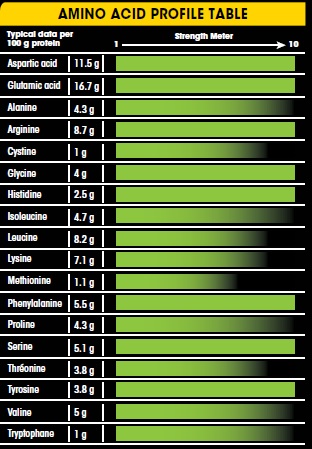
For the past 18 months I have been heavily engaged in testing a vegetable protein, which has none of the negative connotations of whey or soya associated with it. No hormone or GMO debates, no issues with lactose intolerance or digestibility.  In fact its a plant based protein which has an incredibly strong amino acid profile. With high concentrations of BCAA’s Glutamine, Lysine and Arginine. Its profile is very close to that of the ideal protein for humans as recommended by FAO/WHO
It also has an intermediate fast digestive rate which is exactly what is preferred especially for an endurance athlete.

What protein am I talking about?
Pea protein isolate 
is what I am on about. As a plant based protein it is genuinely  a very powerful, clean and healthy protein for anyone whether  pro-athlete or just a gym bunny. Aside from its strong amino acid profile, it is not unnaturally processed, it has a smooth texture and actually tastes great. It is superior not just in using it for a natural recovery shake but also in a pre training or racing meal. I feel this is the most complete protein and there can be no questions asked around allergens, hormones or food safety.

Once I was happy with the certificate of analysis from the supplier and my own testing phase. I gave it out to a large number of athletes to do some testing for me as well. The feedback was unanimous the pea protein isolate needed to come to market to provide a healthier option of protein to the health conscious consumer. It was very well received across a variety of amateur and elite athletes in various sporting disciplines. Pea protein is gaining a lot of momentum globally and it fast becoming a protein of choice.

The NEW 32Gi Recover Formula
32Gi has decided to re-formulate its 32Gi Recover. Over the next few weeks we will be rolling out our new 32Gi Recover formula to all 32Gi retailers globally. The new Pea Protein formula will be replacing our previous vegetable based protein recovery shake.

At 32Gi we are continuing to strive to provide the healthiest supplement choices to our consumers and we will continue to pioneer and innovate to ensure that all 32Gi users can be assured that we are a trusted brand in which health always comes first.

About 32Gi Recover Pea Protein Formula

32Gi Recover is a high quality ratio blend of 100% organic pea protein isolate combined with carbohydrates. 32Gi Recover contains all the essential and non-essential amino acids to maximise muscle recovery

Recover is an excellent protein supplement with no unnecessary ingredients only those critical to muscle and glycogen recovery. Recover can also be consumed as pre training or racing meal or even as a meal during a long endurance event. Recover is suitable for vegans and diabetics.

Recover Facts:

  • Assists with Muscle Repair
  • Assists with Glycogen Recovery
  • High Protein absorption rate
  • Cholesterol Free
  • Naturally High in Glutamine
  • Wheat, Gluten, Soy and Lactose Free
  • Improves Strength and Recovery
  • Strong Amino Acid profile
  • Digestive Friendly
  • Vegetarian
  • Kosher / Halaal Certified
  • Recover is available in Chocolate, Strawberry and Vanilla flavours

Image

Categories
Performance Training

The Pipe Club

Image

I often see runners get asked how can they run?

In the sporting community it usually comes from the cyclists and swimmers, and when these athletes switch to triathlon the one discipline that is sometimes the toughest for them to grasp is the dreaded run.

Pushing hard on the swim, or destroying the bike hoping one has made up enough time to hold the runners back on the run. No chance. The strong runner comes cruising by with ease, leaving you behind wondering what you did wrong. A multisport athlete that comes from a running background is often at a great advantage. I often tell people that a runner can learn to ride a bike but for a cyclist to switch to running is not so easy and it takes a lot of hard work and effort to get to a stage where you feel very comfortable.

I was fortunate to have quite a bit of swimming and running in my school days, but then for many years I let it slip away and switched my focus to weight lifting and then finally coming back to mountain biking, road cycling and then to triathlon. 
My bike was always a strong leg and with all that leg power I was very confident to sit on the bike and smash the pedals for long periods of time, but once I neared transition I used to dread that run that lay ahead.
I knew it would be a hard slog and definitely not a cruise. No matter how much time I put into my competitors especially in the longer distance races they would just eat it back and some more leaving me feeling very frustrated. 

I would hear a lot of talk from the running community about the runners high and I thought man you guys are smoking some awesome pipes because I could not imagine any such thing. I decided to make a conscious effort and switch all my core focus to running, reducing my cycling and swimming focus and seeing where it would lead me. 

Day after day I would pound the tar, searching for something which in my mind was fictitious and only existed in the minds of the “Pipe Smokers”. Months went by and I was still battling through. Muscular legs and a muscular upper body didn’t help my runners frame and the conscious effort of becoming the runner was one of hard physical training, learning proper technique and training the gut with proper nutrition. More months went by and I was convinced that no such thing as the runners high existed and if it did exist why did I not experience it on the bike or the swim, why were these “runners” so special? 

I built up speed, I built up distance and my running improved dramatically but that one single thing was still eluding me.

Two years later, on a Sunday morning I was headed out on a 25km training run, and all I could think about was my reasoning for the run was because I had to. I had some races coming up and needed the mileage. Understand one thing, running was still not enjoyable for me even though I was running well and it had improved drastically. I truly dreaded long runs, I found them tedious and boring and couldn’t wait to get to the finish to bank the session. It was in my mind a painful drag.
I headed out with some music to keep me company and at around 10km’s in I was thinking man still another 15km’s of darkness to go. I just kept pushing through, legs one in front of the other and trying to keep my focus on getting to the finish.
At around 15km’s I started to feel pretty okay and then as time went on I started to feel better. I wasn’t so much focused on the finish line anymore but the present.
Then suddenly it hit me, like a molecular nuclear explosion from absolutely nowhere. Extremely heightened senses, shivers in every single part of my body where sweat ran and my mind just completely drifted into a zone where I felt completely superhuman. My pace lifted my legs floated, and my mostly used frowning facial muscles which were always there during a run slowly eased off and put an extremely rare smile on my face, which seemed so ridiculous but there was no ways it was going anywhere it was there to stay. Complete elation and euphoria, the Runners High. 

I finally became a member of the “Pipe Club” and never doubted them again. I wondered if this was a once off, or only under certain conditions. There are many articles on the subject and the physiology behind the euphoric conditions have been explained in many ways, but as runners who cares as long as its there we love it. It allows us to contemplate to strategize, to think to dream, to create, to destress and to smile its all encompassing and makes us feel alive.

Ten years later and I can honestly say this I experience the high every single time I run, it does not matter if its track, short or long, at some point in my workout that smile hits my face and every single thing around me disappears while I relish my own little piece of heaven even if it is for a short while. 

My advice to anyone taking on running or switching their focus to running, keep turning over those legs, keep persisting and I can guarantee you that the pot of gold will eventually be waiting at the end of your rainbow. 


Categories
Nutrition Training

“If you fail to prepare, prepare to fail.”

Image

Recently I have been receiving a lot of questions on training and racing nutrition. My last blog was focused on becoming more fat efficient, keeping your fuel intake to a minimum and adapting the body to using its natural fat stores as a predominant source of fuel in an endurance session. It’s an awesome position to be in when you can just get up and go long and not worry so much about fuelling yourself.

As mentioned previously in sessions under 2 hrs you can perform extremely well at a high intensity on no fuel at all, if you do consume anything it’s purely to make your brain happy and give you that extra mental boost to up your performance. This has been shown in the famous “Carb taste not swallow test” where athletes purely rinsed the drink in their mouths without and a percentage increase in performance was demonstrated (The Effect of Carbohydrate Mouth Rinse Cycle Time Trial Performance-Jeukendrup) It shows that the mind has a lot to do with an athlete’s ability to perform and Prof. Tim Noakes has often presented the central governor theory where the brain is completely in control by the body and understands all physiological feedback mechanisms. It determines based on conditioning and ongoing readings it gets from the body during exercise as to what point it will control your ability to perform or under perform in a means of ensuring you are protected. If you are not trained to go out and race at a particular effort, the central governor will surely tire you with feelings of fatigue under those conditions in order to slow you down and ensure the body is safe. There is of course opposition to this theory, but there is one thing that both sides still agree on and that is the body needs to be trained to perform.

Last week on a whim I decided to run 42km’s to celebrate my 42nd birthday. Maybe not a normal thing to do, but my running coach said go easy and get it out the system. Even if he said no I think I would have been stubborn enough to do it. With no race pressure, and not the best night’s sleep, I got up early had a cup of strong black coffee, took a waste belt with two 250ml water bottles and headed out with a friend. I ran at a very comfortable and evenly controlled pace, I got back home in 3h19 minutes with a little water to spare and felt great.

The big question I get asked is how you can go and run for that long and not eat anything, and the answer is simple I had all the fuel I needed for that long run inside me BUT more importantly my body was conditioned and gut trained extensively to do that quite comfortably.
That run probably didn’t touch much glycogen at all, it was primarily fuelled on fat. Also the time of running was way less than say some of the rides I do on water only which can go anywhere between 5-6 hours so it wasn’t a worry.  The point is the body is trained over a long period of time with proper nutrition consumption to allow for this. The brain and body work together to understand the body’s ability and limitations and with time you will understand as your body gives you constant feedback. (Check out a previous blog “Listen to your messages”)

The big questions I got after that is if this is how I will race? My answer to that is absolutely not. This is where the title of this blog comes into play, “If you fail to prepare, prepare to fail”.  It’s very critical to properly prepare for racing conditions as well, and even though I do a lot of water training, I definitely set aside time for what I call racing “nutrition training”. It’s an important area of being able to race at your best. There is no ways any athlete can go into a race not properly prepared for what he has to consume and under which conditions to ensure that he performs at his or her best. Racing is done at a much high pace for a longer period of time than a training session and it requires a different type of fuelling.

It’s not a difficult aspect of training but I need to stress that it’s a critical aspect and something that cannot be left to the last week or two before a race, because you will want to have your race nutrition down packed way before that in order to make sure that you have a plan and you can habitually stick to it.

My recommendation is to choose a day where you test out your race nutrition. This means waking up in the morning eating a pre-training meal as if it was your pre-race meal going out for a few hours at a fairly intensive pace (slightly slower than race pace) and checking the following:

  • Digestive Comfort  
  • Palatability
  • Energy Levels
  • Ability to Perform

I generally do a session like this once every 10 days and know a few elite athletes that will do this once a week. Sessions like this must be planned, well thought out and think about mimicking it close to your race day as possible.

Nutrition of course will vary for each sport discipline and it’s important to understand that what you do on the morning of a 10km race, marathon, triathlon and cycle race can all differ and should be planned, checked and re-tested to ensure you are on track.

If you can finish that session strong and feeling good with all the check marks in the boxes you are definitely on the right track. This does not need to be done too often as you would not want to try and mimic race day efforts too much, but you need to find a winning formula.

If you are doing a stage race it requires even more effort to test your nutrition as you will need to test your day nutrition first, and once happy with it move on to testing your stage racing nutrition. The critical area of stage racing is recovery in order to be able to keep consistent performance’s each day and keeping those energy levels constant. It would be highly recommended to do at least 3 repeat performances each day including pre, during and post racing nutrition which will give you an idea of exactly how you feel day to day and whether your nutrition strategy is working for you.

Each person is unique and what works for one person won’t necessarily work for another so you need to experiment and see what is the best for you.

As a general guideline in deciding what you are going to eat on race day I can suggest the following:

Avoid any Food Consumption that can cause Digestive Issues
There a few foods than entirely ruin a race. You might think they don’t affect you generally so when you are racing they should be fine. However you need to understand that blood i.e.: oxygen is needed to perform digestion. If you are running very fast, oxygen will be diverted away from your stomach to your heart, brain and leg muscles to cater for the exertion. The stomach needs an adequate amount of electrolytes, roughly equal to that of the body tissues outside of the stomach, to perform digestion. If digestion doesn’t occur and the contents of the gastrointestinal tract don’t move, the muscles in the walls of the tract may begin to spasm, bringing on uncomfortable stomach cramps. Triathletes tend to experience more digestive issues than most sport as the positions of 3 disciplines vary. The swim is a lying down position not very conducive to easy digestion and there is buoyancy on top of that, this is usually the setup for cramping that occurs later on during the bike or run. Secondly a triathlete cannot consume during the swim or hydrate so if he or she has consumed something not suitable to that discipline a fair amount of time will pass before the first bit of water can be consumed to try to create some form of balance. In long distance events like Ironman very often consuming a glucose spiking product at the onset will cause GI distress pretty early on. A common mistake that many endurance athletes make.

Running moves the bowels around quite a bit more as the body’s movements gets the organs bouncing and shaking nicely. I am emphasizing that what you eat that’s generally comfortable will still need to be tested during exercise which is what I call digestion under stress.

The main foods to avoid before a race are definitely anything that is high in fiber as this is a certain way of getting your bowels to work nicely and that’s the last thing you need before a race or during it, especially while pre-race nerves are finding their way into every part of your body. Another recommendation I make it to avoid high lactose products. Dairy is a very common cause of digestive problems. Even if you are not lactose intolerant you don’t know what it can do to your body while under stressful conditions. Heavy meats or cheeses are a big no. You want to consume foods that are easy on the digestive system and leave you feeling comfortable.

Size of Meals
Another issue is that many athletes over eat and over hydrate pre-race leaving them feeling bloated heavy and uncomfortable. That is a guaranteed curse under racing or exercise conditions. You need to play with your portion sizes to see what your comfort zone is. I generally recommend a +-300 Calorie food portion pre-race.

Timing and Type of Meals
The timing of your pre-race meal is also critical. I can use a personal example for this one. A few weeks ago, I had a 25km trail race. I made a BIG rookie mistake. I though the start time of the actual race was 7am. There were two races that day and I for some reason just never read the details properly which is not like me, but I was chilled about it nevertheless. I woke up at 4:30am had a nice rolled oats and nut butter meal. I got a lift to the race and on route I get told the race is actually starting at 6am. I was thinking in my mind this is going to be even harder and it was. The timing of my meal to my 7am race was perfect, but to the 6am race it was not. I had to suffer some serious heart burn through the event and I expected to. At least the pain could mentally be bypassed and allow me to come out on top. I am just using this example to stress the importance of meal timing. Preferably minimum 2hrs before the race you want to be done and dusted with your pre-race meal, only requiring some top ups in between. To be honest in this case I shouldn’t have had a pre-racing meal maybe just a small shake or drink before, it wasn’t required at all especially at that time of the morning and I hadn’t run a trail race in years so my nutrition prep was not exactly where it should have been.

I guess this leads into another question. When should I eat a proper pre racing meal and when is it not absolutely necessary. In this case I always look at the type of the event, my pace and expected time. Generally any race for me taking less than 2hrs I won’t eat. I might take a small shake but I certainly don’t require any food. These shorter events as I define them will generally be raced on water. If the pace is extremely high and is closer to the 2hr mark then chances are I will consume some sugary stuff on route to keep my brain a little happier and ensuring a little bit of glycogen sparing on route.

Race Fuel
When events get longer 3hrs or more, you need to understand that at a very high pace you will deplete your glycogen levels and will need to eventually rely on fat as the predominant fuel source. Your body will naturally slow down to cater for the fuel change as fat burning requires oxygen and at too high a pace that’s not going to happen. However this is where fat efficient training plays a massive benefit, because if you have trained your body to adapt to this sort of fuelling it can be trained to do it a slightly higher intensities and this is a great benefit. Also the switch from glycogen to fat caused by glycogen depletion is a shock for some a feeling of fatigue and not being able to move any more. The trained athlete will move through this quite a lot more easily. There is another way around this and that’s to try to pace yourself properly in an endurance event where you won’t burn your glycogen completely and have saved it towards the end where you really need it. In a cycling race it’s sometimes very difficult as the effort or intensity is determined by the bunch and this is where most people get burned, as they are forced to perform at a high intensity to stick with it even if they don’t want to. The wise thing is to try to stick it out in the middle and draft as much as possible to conserve your energy stores. However in an ultra-distance triathlon or long running race you have the ability to determine your own pace and control your intake and predominant energy fuel based on that.

It’s important to remember that if you are going at a controlled pace or intensity consuming a blood glucose spiking product will mitigate you from being able to use your fat stores as energy, so keep fuel intake to lower insulin spiking products which allow for this. When performing under very high intensity conditions you are best suited to taking a blood glucose spiking product as fat is not easily accessible. There of course is a combination of both glycogen and fat being used when doing long events, as pace varies through the event, but fuel intake will ultimately determine this as well, and can upset the balance.

Another point I want to enforce is that endurance fuelling should never be complicated. The simpler you keep it the better. I advocate drip feeding in endurance events. This means smaller more frequently timed feeds as opposed to feeding every hour. It’s easier on the digestive system and it keeps the body and energy levels in a nice equilibrium. I generally will feed every 20-25 minutes in a long endurance event.

Plan and Train the Gut
I was invited to chat to the participants of Ironman 70.3 Western Australia this year as we were event sponsors. The first question I received was shouldn’t we be consuming between 60-90 grams of carbohydrate per an hour of exercise during the event. My immediate response to that was has your gut been trained to consume 60-90 grams of carbohydrates per an hour. The amount of carbohydrate consumption per an hour during exercise is not based on the number of carbs you are consuming, but more importantly how much of those carbohydrates your body is capable of absorbing and using. If your body is only capable of absorbing 50 grams of carbohydrate per an hour because that’s the food you use and that’s what you are used to, then how would your system cope under excessive intake meaning, your gut completely under-trained to deal with the increased consumption. The answer is it won’t. In long endurance events I can easily get away with between 20-50 grams of carbs per an hour in an event. I have never needed to venture into the 60-90 range ever and I don’t feel I would cope in that range either. Another thing that is important to note is the 60-90 gram carb intake is based solely on the fact that you are fuelling with carbs only which means racing at a very high intensity, its doesn’t take into account controlled pace and fat usage. Scientific studies have shown that a combination of specific carbohydrates in unique ratios can maximize the absorption rates however I have witness many an athlete opt for those test results only to be left with severe stomach issues on route. Another thing I don’t agree with is relying on drinking ones calories. I definitely feel that food solids are a far better form of fuelling. Dr Allen Lim well known scientist especially with his involvement in premier Tour de France cycling teams has shown a lot of science behind this and you can view it here.

There are many ways to approach nutrition when it comes to training and racing. It’s something that always needs to be taken into consideration and never left on the side. So the next time you sit down look at your training and racing schedule. Plan your workouts, your swims, cycle and runs, but add another training session into that called nutrition. Train your gut, get on track and make sure you give yourself the best opportunity to perform well and hassle free at your next event.


Keep at it 

all the best

M