Categories
Nutrition Performance Sports Nutrition

STRUCTURED FUELLING – FAILING TO PREPARE IS PREPARING TO FAIL

When it comes down to race preparation athletes are all about the training never the nutrition around it. It is often an after thought. However its not just nutrition in and around the training an athlete should be focussed on its also the daily nutritional intake from waking up all the way to bed time. It plays a vital roll in maintaining an energy balance, supporting the recovery process, and keeping that immune system in check.

A few weeks ago, I participated in my first race after many years in hibernation due to ongoing commitments which never afforded me the time to put in the proper preparation. But when I decide to race it’s really a test of my consistent training and I don’t race for fun. I set a goal and stick to it. This time I went for Ironman 70.3 Tiberius with the single goal of getting a category podium to qualify for world champs. I knew what I needed to do from a numbers perspective to hit the target. But aside from training numbers the nutrition had to be spot on to support the effort. Over and above the actual training my age being a tender 51 meant recovery between sessions is more challenging and so dietary changes were needed to support the increases in volume and intensity. I wont dive into the daily nutrition in this blog as its quite detailed. I will leave that for another day. The purpose of this blog is to explain the approach to race day nutrition and how I properly prepared for it. Hopefully you can take away something and use it towards your big day.

WHEN DO YOU START?
Kicking off a race day nutrition plan needs to be tried and tested in training as much as you can. This needs to start many months before the actual race. In my case it was 10 months prior to race day. A fuelling plan needs to be properly structured, and tried, tested and stuck to like glue on race day.

FIRST STEPS
The first step you need to make is to think about the disciplines of swim bike and run and in your mind put a picture together of how you want to fuel each of those three.


-SWIM

Swimming being the first discipline means a pre-race meal and possible top ups on route to the start. In my case I decided to use 32Gi Pre-Race Meal as my pre-race fuel and because it such an important part of race day I consumed it prior to all my long and hard sessions. I also ensured I consumed it prior to most of my swims to ensure my digestive system was comfortable throughout. The serving sizes varied depending on how long before a training session I consumed it.

– BIKE
Generally this is the longest leg of a triathlon and the fuelling required to hold an effort for hours means a good fuelling plan that is simple and convenient while on the go.

Often cyclists complicate bike feeding, and this is something I like to keep as simple as possible. The way to determine intake on the bike is to understand a few very important things.

1.First is how long are you planning on riding for?

2.How many calories you are wanting to take in hourly (carbs only or carbs + protein)

3.How much fluid are you planning on consuming hourly for hydration purposes (this is weather and temperature dependant with heat and or humidity which can increase fluid loss)

In my case I pegged the bike to 2h30 as a pretty good estimate based on testing and in my case I went with around 280Kcals per an hour which equates to 70gram carbohydrates per an hour. Race weight is +-66kg placing me at over 1gram carbs per kg of body weight. However, I opted to go with 32Gi Race Pro which is a carbohydrate rich drink with a protein portion. I find protein intake during a long event keeps me stable and it can mitigate the onset of gluconeogenesis which can trigger muscle fatigue. 32Gi Race Pro is a single source feed so for me it was a simple uncomplicated feed and nothing else was needed from an energy perspective. I went with the mocha flavour due to it containing caffeine. I enjoy racing on caffeine. I decided to use a 600ml bottle and test the concentrate. This meant 10 scoops of Race Pro in the bottle for a 2.5hr ride. Aside from energy we need to also think about fluid intake to remain hydrated. By placing 10 scoops of Race Pro in a 600ml bottle that has turned the drink into a hypertonic solution which will provide energy, but it is not possible to hydrate. So, to manage this I placed an 800ml bottle of 32Gi Hydrate on the bike for hydration purposes. Optimal hydration is around 80% of lost fluid in the form of sweat. How do I know this number? I weigh myself before and after training sessions to determin weight loss which equates to fluid loss. During testing all went very well and I found my digestive system tolerated everything very well. The way I fed was alternating sips of energy and hydration spaced around 10min apart meaning Race Pro intake 3 times per an hour with fluid intake in between as needed. As we moved towards much hotter weather I realised that my fluid intake was not sufficient and that my sodium intake needed to be upped a little more. This led to a slight modification. Instead of 10 scoops in the 600ml bottle I placed 4 scoops in there to keep the solution isotonic (hydrates and provides energy with a more even pull through) and then I used a soft 300ml squeeze bottle which I placed the concentrate in, and carried that in my suite pocket for easy access. I then increased my Hydrate intake to 1.5 tablets in the hydration bottle so that I could get in around +-750mg sodium per an hour.
This worked amazingly well and on all training rides energy levels as well digestive comfort was spot on. I just needed to do one more test and this was on a 90km simulation which I did around 6 weeks out from race day. I woke up ate my 32Gi Pre-Race Meal as planned, pre-hydrated a little and then went out for a hard effort on the bike with my set fuelling strategy. I completed the course in 2h27 and the fuelling was perfect. These kind of tests demonstrate not just the level of fitness you at but more importantly the fuel required to achieve that effort was correct. It takes the stress off having to worry about any changes or adjustments. When it works bank it and take it to race day with a smile.

Run
The run leg is often where athletes can make or break their race, and this is determined by how well they fuelled on the bike leg and then how they continue to fuel through the run leg. A lot of triathletes test their fuelling on the bike and that is all then very often decide to rely on the course fuel for the rest of their race. I advocate never to rely on race course nutrition. You just do not know what you are getting from a dilution factor and that everything will go smoothly on the day. At Ironman Tiberius which was also Middle Eastern Championships 32Gi was the official nutrition partner. I remember going down the run course and being offered 32Gi products at the aid station by an athlete volunteering who knew me well. I refused the feed and kept going. He was a little in shock that I didn’t take my own fuel off the course. I explained to him afterwards when you go to battle take your own weapons that way you know they will work. The run course fuel was not my chosen fuel in training. My Run fuel was simple another soft squeeze bottles this time a 250ml hydra pack with a 32Gi Race Pro concentrate. All I needed in addition was water on the course and nothing else. Again, during training, I would run with the pack in my tri suite to get used to the feel and to ensure it worked well for me. I also did testers using longer harder efforts or brick sessions to test the nutrition worked well. Once I had tested dozens of times and was confident in the fuelling, I banked it.

ADDITIONAL CONSIDERATIONS
The one thing I have not spoke about which is vital in any triathlon is always to be prepared for anything. In this case often full distances allow special need bags for those that want some insurance. In my case the transition zone becomes very important.
On race morning I place two extra bottles in the bike and run bags one is a hydration bottle which is just water and 32Gi Hydrate and the other is a 250ml bottle of Race Pro with some 32Gi G-Shot’s (caffeine shots). These bottles are there in case I need to top up on energy or hydrate between the different legs of the race. The caffeine is something I take in prior to the race start and a just in case between legs.  

In my case our event started way over an hour after transition closed and I needed to use the time wisely to keep myself topped up. I sipped on Race Pro prior to the start of the event.

PLANNED NUTRITION
Below is exactly what went to the race course

WHAT ACTUALLY HAPPENED
As they say if you fail to prepare then prepare to fail. As much as we watched the weather and had an idea of conditions, race day threw us a nice curve ball. At 4am the rain came down and a hard the wind picked up. This was going to be a tough day out for most of the field. The cooler conditions and the rain made for slight changes in my nutritional strategy. What happens when temps drop is fluid loss is not as high and so I dropped my sodium down to +-500mg an hour instead of the 750mg planned. I also decided to start the feed from the concentrated squeeze bottle in order to allow the body to hit peak temperatures to keep fluid intake nominal and not over do it early on. Later when my fluid loss was slightly higher I would switch to more fluid with the small Race Pro bottle in the bottle cage. Minor adjustments to an already tried and tested plan.

THE END RESULT
Physically it wasn’t my best day out due to a number of reasons but I am never one for excuses and regardless we soldier on. Regardless of how I felt my race times were in line for a tough day out. The nutrition was perfect down to the red carpet and I never felt any discomfort or lack of energy.

Although I wanted the top step I had to settle for second place. My podium goal achieved and that is what I set out to do from the day I decided to enter the race.

The point of this blog is really to stress the importance of proper structure not just in training but in the nutrition in and around the training. There is no ways you can reach your true potential or push any hard efforts without a tried and tested nutrition and hydration strategy.

Below is a how I structured my race day nutrition. I know some of you have never truly given the nutrition much in-depth thought and many just thumb suck their way through. But you ask any professional or elite athlete about their intake during an event they will break it down into the finest of details because they know it’s the difference between a win a loss and a hard or smoother day out.

Hopefully you learned something from this approach above and will give your nutrition some proper thought before your big day.

Yours in health always

M

Categories
Health

HARDEN YOUR HEALTH

The last few weeks has seen global efforts to thwart COVID-19 the latest Corona virus strain which is creating momentum worldwide with escalating infection rates. Over the last few days we as athletes have also seen the postponement and cancellation of some major sporting events which as hard a pill as it is to swallow , but its definitely the correct course of action to reduce high a infection risk. Plenty of training and racing goals have been thrown a curve ball and these goal posts have had to be shifted. Personally right now I feel the focus should be on our health and ensuring we are not just responsible for ourselves but for those around us.

The training for us all should continue as we do not just do this for finish line medals and kudos. For most of us it’s a lifestyle and yes racing motivates us to train. However right now we have a much more important motivating factor which should keep us on our toes and that my friends is health. As we stand without a treatment for this virus our only course of action is to boost our own immune systems and make sure that we are in excellent condition to be able to fight off any infection that comes our way.

Training and racing especially as intensity and volumes increase so does immune system suppression which makes us far more susceptible to infection and illness. In line with a real war we are just about to face, I decided to put together a short guide of how we as athletes can strengthen our health and boost our immune systems to be able to navigate this next part of our journey.

WHAT IS YOUR CURRENT HEALTH STATUS
Starting with the basics, it’s always best to get a proper snapshot of your health first. How can you hope to strengthen your immune system if you have an underlying condition? In my line of work I come across many athletes with underlying conditions such as anaemia, insufficient vitamin levels, improper organ function or underlying infections and inflammation. If you have an underlying condition and do not know about it then you basically starting on the back foot and this needs to be addressed first.

What should you do?
A full medical with a nice batch of basic bloods & some additional vitamin and mineral testing to make sure everything is in good order. Remember as an athlete you place your body under stress and if certain levels are on the low end its highly likely that you will reduce them further and impact your health. Vitamin drips in my view are a complete waste of time without understanding exactly what you are treating. There is something called excessive vitamin and mineral dosing and in some cases this can be highly toxic to the body. My advice is to see a medical professional and get it done properly without playing a guessing game. I wrote in a previous blog called Blood’s don’t Lie you can check it out by clicking here.

LISTEN TO YOUR MESSAGES
Once you get the results from your physician its best to discuss them with him or her and make sure everything is in line. Remember you are an athlete not a couch potato. So make sure the physician understands that because some might say your levels are normal. However that is the general population norm. You want to rather be on the upper end of the spectrum not on the lower end due to the amount of stress the body goes through daily. If you do have an underlying condition you have to address it. Athletes are so good at ignoring issues when it comes to injury and illness. Don’t ignore them and adhere to proper medical advice.

NUTRITION
Proper nutrition is absolutely the health fuel for your engine. Healthy nutrition allows the body to fortify and strengthen itself against illness and disease as well as ensure our energy system is kept up at all times. When we make bad food choices we place additional stresses on the body and in times of need when we should be our strongest to fight off foreign invaders this should be kept to a bare minimum. After all our own natural defences are all we have and we need to make sure that they are fortified. Eat nutrient dense meals with plenty of vegetables and fruit and ensure that you are eating properly for your unique needs. As an athlete ensure your calorie intake is not an excessive deficit so that the body gets sufficient nutrients to help with restoration and repair. Carbohydrates often get a bad rap however when it comes down to endurance sport carbohydrates are your fuel king and when it comes to recovery there is nothing that will get your fuel tank recovered quicker than carbs. Remember carbohydrates can come in healthy forms such as fruits and vegetables which are high in anti-oxidants and free radical fighting nutrients. Eat with intent and insure that whatever goes into your mouth has a purpose for strengthening your body.

TRAINING
It’s a scientific fact that exercise boosts the body’s ability to fight off infection and illness. However, one should not over do it. Endurance athletes tend to place huge stresses on the body with intense bouts of volume training. This will certainly place the immune system at risk. Over-training places any athlete at risk to infection. Rather stagger your sessions properly, reduce intensity ratios and volumes and allow the body to fortify itself without over stressing it. With most events now cancelled or postponed do yourself a favour and switch your focus to health especially in these trying times. Get outdoors more and limit your visits to the gyms in order to protect yourself more from infection risk. Most importantly just keep on going.

SUPPLEMENTATION
Alongside a healthy eating regime supplementation can play a beneficial role. I mentioned earlier blood tests can show where there are areas of deficiency and those can be addressed. Right now though our focus is on immune system strengthening and there are a number of supplements which have been shown to aid immunity.

Vitamin C
Its amazing how Vitamin C is at the top of most people’s lists when it comes to immune boosting. However it is not really the king on the list. It is an antioxidant which helps fortify and reduce inflammation however its over estimated by a large amount due to massive ongoing marketing in the supplements sector.

Vitamin D
If someone asks me what to take for immune system strength I will always advocate vitamin D as one of the best immune system defences. Vitamin D can improve immune system responses and a deficiency in vitamin D is associated with increased susceptibility to infection. Research suggests that vitamin D can help reduce the risk of respiratory infections, including colds and flu especially among people who don’t get enough of the vitamin from diet or exposure to sunlight which is most of the population. Athletes tend to train in the early morning hours and many also indoors which limits exposure to sunlight and then again sun creams further limit the body from it. It is worth dosing with vitamin D and a simple blood test.

Wellmune®
This is something you have probably never heard of but it is the bomb. Wellmune®  is a leading natural yeast beta glucan clinically proven to help strengthen your immune system. In a clinical study, marathoners taking Wellmune® for four weeks experienced a 40% reduction in upper respiratory tract infection symptoms. Wellmune® primes immune cells helping them find and kill foreign invaders.Where can you get this ingredient. 32Gi’s new plant based pure protein being launched this week contains the correct dosage of Wellmune® to ensure your immune system is properly fortified. A medically backed natural supplement is absolutely worth taking.

32Gi’s NEW Immune Boosting Pure Protein

Zinc
I think zinc is an awesome mineral . It does help the immune system fight off invading bacteria and viruses and worth dosing to keep immunity up nicely as well as it being good for the skin.

Elderberry
Elderberry is packed with antioxidants and vitamins that may boost your immune system. It can aid the reduction of inflammation, lower stress levels and help protect the heart. It is often advocated in the prevention and ease of cold and flu symptoms.

Probiotics
Probiotics are there to keep the gut healthy and to ensure the immune system functions well. Taken from a peer reviewed research publication it states that probiotics can also modulate the immune system, enhancing the body’s innate immunity. This modulating effect helps alleviate excessive inflammation in the gut, thereby boosting immune function. We know that health gut bacteria is important for proper health and immune system function and there is no harm in dosing with probiotics on a daily basis.

In short there are many avenues we can try to help fortify and improve our immune system function and health. Not all vitamins and minerals have been researched to such an extent that they are conclusively providing the best benefit. We are after all unique and what works for one individual may not work for another. One thing we do know and that is proven, is that proper healthy nutrition, plenty of good sleep and exercise goes a long way to ensure that our body’s remain physically strong and healthy to weather the storms.

all the best

M

Mark Wolff is a certified exercise & sports nutritionist, endurance nutrition and physiology expert with over 20 years experience. An endurance multi-sport athlete with a running, triathlon, mountain biking and weight lifting background, he works extensively with professional and amateur athletes in a variety of sports disciplines as well as those just wanting to change their lifestyles. He firmly believes that a person can only reach their full potential when their health and nutrition is given the proper focus. Mark’s focus on nutrition and physiology is not just on training and racing, but he places major emphasis on recovery, immune system health, emotional stability, stress management and performance. Mark is co-founder of 32Gi, a sports nutrition company, focused mainly on health and endurance nutrition. He is also co-founder of Rapid Recover focused on pneumatic compression equipment to improve circulation for recovery, rehabilitation and health.


Categories
Nutrition

INTERMITTENT FASTING & THE ENDURANCE ATHLETE

Intermittent fasting has certainly come to the forefront over the past few years and more and more I am getting asked by endurance athletes whether I think intermittent fasting is a good idea?

The question I throw back in return is why do you want to do intermittent fasting? Mostly I hear endurance athletes telling me that they want to lose weight, lean out or become more fat efficient athletes. I guess the big question is what is your actual goal? Are you trying to lose weight? Are you trying to improve your previous best marathon or Ironman time or are you just doing it for health reasons.

Firstly intermittent fasting is a form of calorie restriction, correct? So if you can restrict calories by fasting then why can’t you restrict calories by eating correctly?
When you place your body into a fasted state you begin playing with hormones specifically leptin and ghrelin. The inability to balance these hormones properly due to either over eating or fasting can cause roller coaster effects which in the end do not land up serving the correct purpose.

The main question though is as an endurance athlete why would you even consider fasting?

Weight loss comes from eating correctly meaning a calorie restricted diet and proper macronutrient intake to support you unique requirements. This could be fat loss, muscle gain or maintenance. However as an endurance athlete what about energy, immunity, recovery and performance. Intermittent fasting will not support that at all. Actually quite the opposite it will hamper the recovery process, limit your energy levels and place your immune system under stress.

Let me further explain so that you fully understand the consequences of intermittent fasting while trying to be the best possible healthy endurance athlete.

RECOVERY
When it comes to recovery there are three main aspects that I look at and these are:

Rehydration
Muscle Protein Synthesis
Glycogen Restoration and blood sugar stabilization

If an athlete does intermittent fasting then rehydration and adequate fluid intake will not be an issue. The main issues will arise when it comes to muscle protein synthesis and glycogen replenishment. Adequate protein intake for an endurance athlete is important for recovery. Generally I work on around 1.4g – 1.7g of protein per a kilogram of body weight. This will depend on the athletes goals and training. Strength work and developing more lean muscle will require a higher protein intake while maintenance and repair will be on the lower side. Take a 70kg athlete who is training on average 90min a day. His required protein intake would be around 100-120g of protein per a day. This is in animal nutrition terms 4-5 chicken breasts or plant terms 2-3 cups of raw chickpeas. That is quite a lot of food. If the fasting window is quite long it means squeezing this protein intake into a small amount of time. However as we well know when it comes down to protein the human body is only capable of processing and absorbing a certain amount of protein every +-3hrs. This is generally in the region of +- 8-10 grams per hour. So its not possible to squash large protein portions into less meals and expect the correct portion amount for proper muscle protein synthesis to take place. Actually the opposite over eating protein ultimately causes a rise in blood sugar and that can easily lead to weight gain. We also know that consuming a protein with a carbohydrate post exercise up-regulates amino acid uptake specifically leucine which is a trigger for muscle protein synthesis.

What also allows for proper muscle protein synthesis is a positive nitrogen balance. Nitrogen is the most crucial component of amino acids, which are the building blocks of protein. What this means is that if you are fasting the amount of nitrogen excreted from the body is greater than the amount of nitrogen ingested and there is no repair work taking place actually the opposite. So you are actually not recovering and triggering decent training adaptations.

EATING FOR ENERGY
The next aspect I want to look at is the energy system our primary fuel tanks being glycogen and fat. Glycogen is our rocket fuel and used at higher intensities while in lower aerobic zones fat becomes the fuel of choice.
A hard workout where glycogen depletion takes place will require carbohydrate intake post exercise to rapidly start the glycogen replenishment process and stabilise blood sugar. Extending the fasted period a few hours post exercise will delay this from happening and can lead to fatigue. This will also hamper back to back sessions. Then when it does become time to break the fast how do you know how much to consume in the form of carbohydrates and protein. If you do not ensure proper glycogen replenishment and stabilisation without triggering a roller coaster ride you will generate the the opposite effect from fat burn to fat gain by overeating.

When it comes down to the main energy system, carbohydrates are without a doubt our rocket fuel. If you are going to be doing an FTP (Functional Threshold Power) test or an interval or track session. Then how can you expect to achieve the best possible numbers without fuelling the session properly. Being able to push those sessions to the best possible effort is what ultimately will lead to better gains, as well as more fat burning post exercise by elevating the metabolic rate that much more. It has been scientifically proven many times over that a fuelled session will give better performance numbers.

When it boils down to performance gains and being a fitter faster and stronger athlete then you need to fuel your effort.
Fuelling during an exercise session or eating post exercise recovery meals is not the reason endurance athletes are overweight. Weight gain comes with overeating and inadequate macronutrient meal blends.

The Fat Efficient Athlete
In order to become a fat efficient athlete intermittent fasting is not required. Fasted training is a good way of developing this, but that is completely different from intermittent fasting. A fasted session does require a recovery meal post exercise and the volume and type of meal will be determined by the duration and intensity of the exercise session. Failing to recover from an exercise session is without a doubt failing the session itself.

To summarise my views on intermittent fasting and endurance sport. They do not go hand in hand. Endurance sport replaces a large amount of physical stress on the body. This impacts the musculoskeletal system, the immune system and energy system. The athletes body requires nutrients to fuel, repair and fortify it constantly. Failing to give the body what it needs will ultimately lead to a lack of performance and potentially illness and injury.
If you want to perform, lean out and get your own resilient Lamborghini engine and body then learn how to eat properly and avoid short cuts which don’t benefit that goal. If you are only trying to lose weight or have a medical condition which requires a calorie restricted diet then intermittent fasting can play a roll. However if you are an athlete intent on being the best version of yourself then get your nutrition right and stop playing games.

Mark Wolff is a certified exercise & sports nutritionist, endurance nutrition and physiology expert with over 20 years experience. An endurance multi-sport athlete with a running, triathlon, mountain biking and weight lifting background, he works extensively with professional and amateur athletes in a variety of sports disciplines as well as those just wanting to change their lifestyles. He firmly believes that a person can only reach their full potential when their health and nutrition is given the proper focus. Mark’s focus on nutrition and physiology is not just on training and racing, but he places major emphasis on recovery, immune system health, emotional stability, stress management and performance. Mark is co-founder of 32Gi, a sports nutrition company, focused mainly on health and endurance nutrition. He is also co-founder of Rapid Recover focused on pneumatic compression equipment to improve circulation for recovery and health.

Categories
Health

YOU MIGHT BE FIT BUT YOUR GUT CAN LET YOU DOWN

Over the last few years I have engaged with a fair amount of athletes who constantly suffer from gut issues during exercise especially on race day. It is a very important issue to touch on and through this blog I hope to shed some light on the pitfalls of GI (gastrointestinal) distress and how to try to manage it. I myself have a very sensitive stomach and over the years have developed and followed some very key methods to keep the stomach issues a bay.

It is a fact that more runners will suffer from GI distress than cyclists. It is a much higher impact sport and the digestive system takes a bit more of a beating with the foot pounding. However that is not to say cyclists do not have their issues, they certainly do and this can be related to posture on the bike which can also add to the discomfort. Let me start by saying there is no full and sure way to completely understand exactly what your unique trigger is but there definitely are plenty of reasons as to why GI distress can occur and if properly managed they can be mitigated.

There are conditions that occur during exercise which place the digestive system under stress.
The first of course is the fact that when embarking on a training or racing session blood is required to transport oxygen to the muscles that are actively working. This pulls blood away from the digestive tracts and diverts that flow to the active muscles as well as to the surface of the skin as those vessels are required for cooling the body. This is an effect called splanchnic hypoperfusion which can lead to intestinal distress and compromise the intestinal barrier function. In short this increases intestinal permeability which means that a type of leaky gut syndrome occurs which can cause major discomfort in the form of pain, bloatedness due to excess gas as well as nausea and diarrhoea. The higher the intensity you perform at the more blood is moved to the muscles and the more sensitive the digestive system becomes.

Another aspect of GI distress is the brain gastrointestinal tract communication pathway. It is a fact that when we have digestive discomfort in any form the brain is signalled but at the same time when we have certain emotions such as nervousness, anxiety, sadness, anger or happiness our brain speaks to our gut. Without a doubt stresses can play a big role in determining how the gut bacteria behave. It is a two way communication channel and our health is very much determined by our mindset. Pre-training or racing nerves can have a major influence on how your stomach will behave on the day. I am sure many of you remember training days where you get up relaxed and off with a group of friends for a nice training session. However on race day you are up and down to the loo hoping you will make it to the start line.

Sports nutrition also plays a crucial role in that highly concentrated carbohydrates such as gels or certain drink mixes can cause digestive discomfort. Believe it or not taking a high amount of carbohydrates can upset the fluid energy balance pulling more water into the digestive system and actually increasing the risk of dehydration which will certainly upset the stomach. Feelings of nausea, irritability, stomach pain can very much be associated with a build up of glucose in the gut.

A simple example is if you consume a gel during exercise you have to take in a certain amount of water with it to ensure the dilution process is correct. Some gels are pre mixed with water but those that are not need to be diluted to reduce the risk of GI distress and onset of dehydration. So for example a gel with 20-25grams of carbohydrates in it would require approximately a fluid consumption of around 100ml per 6-10grams of carbohydrate ingestion to be on the safe side. So this means around 200 – 400ml of fluid. Quite a fair amount and this is definitely one of the major pitfalls of most athletes. The failure to understand the energy / fluid requirements to ensure a balance in the body which allows for both fuelling and hydration.

Another crucial aspect of sports nutrition is the ability to oxidize carbohydrates. Many athletes train fasted or train low and race high to improve their fat burn efficiency at higher intensities and try to gain the extra benefit of carbohydrate intake on race day. However if you do not train your gut to cope with the food intake on the day of your race you will not have the ability to properly break it down and absorb it efficiently. This places you at risk.

Finally the last trigger of course can be issues with your daily diet. I am of the firm belief that if you feel discomfort with any food then you need to eliminate it. There are however some foods that can certainly cause more discomfort than others. The top of my list is dairy for those that are lactose intolerant it is certainly one of the triggers of GI distress during exercise and best to avoid if you are not sure. Many people are fibre intolerant I personally limit fibre intake from 72hrs before any long or racing session. Fibre can cause gut havoc. High fat and protein intake before a session can also cause GI distress. They are not easily broken down and as opposed to carbohydrates and in many cases this can also be a trigger. Additionally on the nutrition side of things is the method of high FODMAP food reduction.

What are FODMAP’s?
FODMAP stands for Fermentable, Oligosacchiride, Disacchiride, Monosacchiride, and Polyols.
Developed in Australia, the FODMAP diet was developed to deal with IBS (Irritable Bowel Syndrome) fairly new to other parts of the world the diet has seen some good success in reducing the symptoms associated with irritable bowel.

How does it work?
FODMAPS are basically a group of short chain carbohydrates which occur in many foods such as wheat, dates honey and milk to name a few. These short-chain carbohydrates have been shown to increase osmotic load in the small intestine which means it will pull water into it and upset the digestive system. These food types are broken down with a fermentation process by gut bacteria which creates gas and discomfort especially in an athlete that is exercising. Best is to avoid high FODMAP foods in the week leading to a race or important training sessions in an attempt to reduce the risks of GI distress. If you suffer severely from IBS or Proctitis this could be a good direction to take.

Another important item to consider which I have not touched on yet is alcohol. As much as you want to argue with me, it causes GI disruption and can be considered another major player in causing GI distress. It also causes dehydration and we know that this is another trigger of GI distress. If I cannot convince an you to reduce or quit  then you should take jump and read a previous blog I wrote Endurance vs Alcohol. My personal opinion is that you should never have any alcohol in a race week or anywhere close to long training sessions.

So with all this in mind how do we tackle the dreaded tummy troubles that impact so many athletes across the globe.

A number of steps need to be adhered to:

No eating foods that negatively impact you
If eating any food impacts you negatively just avoid it. Identify those foods that you are emotionally attached to however cause tummy trouble, list them and avoid them. Just find a replacement there are plenty of options available.

Avoid dairy, fibre high fat and protein meals close to your important training or racing sessions.
We know these food types put more strain on the digestive system especially when under stress. So best is to avoid them to be sure. Proper experimentation will guide you, but rather start off clean and introduce to test and monitor the impact.

Train the gut
Do not just train low (low carbohydrate or fasted) you also need to train high. There is a benefit to fasted or low carbohydrate training in order to became more fat burn efficient. However failing to train the gut to adapt to fuel intake on the day will certainly cause issues. It is a fact that increasing carbohydrate intake during exercise will also allow your digestive system to become more efficient at oxidizing those carbohydrates. Make sure you are using the correct product for you and that you know exactly how to use it. You want to get the best of both worlds. Check out my previous blog So You Really Think you have Your Sports Nutrition Right?

Avoid high FODMAP foods
As mentioned above this has shown to quite successful in many that suffer from irritable bowl syndrome. Here is a link to an application which can be installed to help with food selection when it comes to FODMAP eating
FODMAP Mobile App

Avoid Alcohol
Check out my blog for a more in-depth discussion on this Click Here

During Exercise
I am a firm advocate of drip feeding during an endurance event. Taking in small amounts of carbohydrates more frequently over a longer period of time reduces the risk of GI distress caused by a glucose overload. Separate out your hydration and energy requirements and ensure there is balance. I am an advocate of mineral loading to help with fluid absorption and reduce the risks associated with dehydration which is also a major factor in GI distress. Check out my blog on Simply Hydrate if you are wanting more information on proper hydration.

Relax Relax Relax
We know so well that endurance sport is very much a mental game. As mentioned above anxiety and nervousness can absolutely trigger an irritable bowel. Find ways to calm yourself and stay relaxed. Maybe its speaking to others, or putting on your favourite playlist to shut out the world. Whatever your coping mechanism find one that works to keep you happy, content, confident and relaxed.

I hope this helps, please feel free to email me if you have any questions

all the best

M

Yours in Health and Fitness

Mark Wolff is a certified exercise & sports nutritionist, endurance nutrition and physiology expert with over 20 years experience. An endurance multi-sport athlete with a running, triathlon, mountain biking and weight lifting background, he works extensively with professional and amateur athletes in a variety of sports disciplines as well as those just wanting to change their lifestyles. He firmly believes that a person can only reach their full potential when their health and nutrition is given the proper focus. Mark’s focus on nutrition and physiology is not just on training and racing, but he places major emphasis on recovery, immune system health, emotional stability, stress management and performance. Mark is co-founder of 32Gi, a sports nutrition company, focused mainly on health and endurance nutrition. He is also co-founder of Rapid Recover focussed on pneumatic compression equipment to improve circulation for recovery and health.


Categories
Nutrition Performance Training

3 SURE WAY’S NOT TO HIT THE WALL DURING RACING OR TRAINING

In the world of endurance sport the term “Hitting the Wall” or ‘Bonking” is quite common among athletes. Most of us have experienced it at some time or another and then others quite frequently. To explain what “Hitting the Wall” is in short is the point at which your muscle and liver glycogen stores are completely depleted. It leaves one feeling fatigued, in a world of hurt and pain with absolutely no energy or will and desire to continue. Its not a pleasant experience and certainly a moment we would rather not be in.  You see the human body has two main fuel tanks, glycogen and fat. Glycogen which is mainly stored in the muscle and liver has around 2000 calories of fuel while our fat stores contain around 40 000 Calories of energy. If you think about it in logical terms burning off around >1000 calories of glycogen fuel per an hour of exercise is not going to not last you very long. During exercise though a combination of fuel tanks are used BUT this is dependent on intensity, time and type of fuel consumption. To really understand this Click Here to watch my explanation of fuel tank usage in detail.Everyone fears hitting the wall, BUT I am going to advise you how to prevent it ;-).

1. TRAIN PROPERLY
I always say train as you are going to race. Over time, this will adapt the body and work the muscles holistically enabling you to cope with the distance and the terrain on the day. Ensure that you incorporate the same speed work in your training that you will be racing at and make sure you do the necessary hill and speed work as well! Ever heard of the expression “train hard race easy”? This takes weeks of preparation; so don’t leave it to the last minute!

2. PACE YOURSELF CORRECTLY
Too many egos cause havoc. Don’t push yourself over your limits to prove a point. Race at the pace you have trained at! It is important to make sure not to race at a faster pace than your body can cope with because the minute that happens you will start depleting your glycogen fuel rapidly. This could result in the inevitable bonk that will hit you when you least expect it.

3. TRAIN YOUR GUT (NUTRITION)
Make sure you fuel properly! Basically you need to understand what is required from a nutrition perspective on the day to ensure your energy levels are topped up and carry you through the event. You need to prepare for this in advance, as its not something you can decide to leave for the week of the event. Nutrition preparation needs to begin way before the event. Weeks in advance of the event you should have a proper fuelling plan in place and stick to it on the day. 

I have given you three major ways on how not to bonk, but I am going to expand on the nutrition training and explain where your focus needs to be. Whether a race snake or a weekend warrior there are considerations to meet your needs.

FUEL CAN EITHER GIVE YOU ENERGY OR ROLLER COASTER YOU AND DEPLETE YOU, SO YOU NEED TO CHOOSE WISELY.

The 3 main points on proper fuelling is:

  1. Keep it Simple
  2. Take in controlled amounts to achieve the greatest result (DO NOT OVERDO IT)
  3. Plan, Test, Use.

WHETHER YOU ARE DOING A 3HR OR A 6HR EVENT YOUR FUELING NEEDS TO BE CORRECT.
Of course, the way a race snake fuels in comparison to a weekend warrior is very different and each method needs to work according to what you want to achieve.
The pace and time you are going at will ultimately determine the type of fuel you require. I see way too many cyclist or runners going at lower to medium intensities and they start to fuel themselves with very high intensity fuel. All this does is creates havoc with the system, causing dreaded spikes, crashes and very often leading to symptoms of digestive discomfort and nausea.

There is no one fix all fueling approach and no matter what anyone tells you what to take and how to take it, you need to look at fueling from your own unique requirements. Many supplement companies advise athletes what to consume and how often, to get to the finish line. However, many of these companies don’t consider the actual type of athlete, their individual capabilities, the duration and intensity of their performance as well as their personal preferences. This is where we I differ completely. I get to know an athlete before advising them on any fueling strategy.

Unfortunately, it’s difficult for me to speak to you each as individuals in a knowledge sharing piece like this, but I will do my best to provide you with a direction and options you can consider as part of your own fueling strategy.

The first thing you need to ask yourself realistically is what sort of time goal are you going for during your race? Duration and intensity will ultimately determine your fuel intake. Then you need to decide what your dietary preferences are from a texture point of view. Are you the kind of athlete that likes to eat solids, or the kind that prefers a liquid feed or a combination of both as nutritional comfort is an important factor to consider. If you are going at a really high intensity and breathing is extremely heavy during the event you might want to consider a liquid or combination feed as chewing is not so simple and the airways need to be kept open. However if you are going at a controlled pace or a combination pace then you will have the ability to consume food solids.

WHATS NEXT ?

1. How often should you fuel?
Timing of nutrition intake is critical in any endurance sport. This should be frequent and planned.

2. How much should you be consuming?
The amount of nutrition consumed will be determined by a few factors mainly based on weight, duration and intensity.

3. What fuel should I be using?
Type of fuel is personal, as mentioned above. Lets break this down some more.

FUEL TIMING
Eat small and frequently (measure your food intake by time). Frequent consumption is the key to a decent endurance event. Once you are in a comfort zone, meaning a point of equilibrium where aerobic engine is stable, breathing is regulated and comfortable and you are in a rhythm, it’s time to feed. Generally I would say around 20 minutes or more you will start to hit this but it depends on the individual. Staggered or drip feeding is the best way to fuel as it keeps the energy system a lot more stable over time and its far easier on the digestive system. On the other hand, planning your nutrition intake by time makes it very structured and easy to stick to there is no guess work involved.

HOW MUCH FUEL ?
In endurance events there are many theories around the 60-90 grams of carbs per an hour. Maximizing absorption rate with the correct combination of carbohydrates and even trying to go beyond that. It’s certainly not about how many carbs you can fit in your mouth but what your unique body is capable of absorbing and utilising. Do not fall into this category of can over eater it will ruin your day. Plan this properly. If you consume 60 grams of carbs per an hour or less in training and then on race day take 90 grams of carbs in per an hour you will head for absolute disaster. You have not trained your gut to deal with this volume of nutrition intake. In the fuel guide I will provide you I have worked out an average amount of consumption based on the type of athlete you are. Most importantly is to test this out during training and not to arrive at the event without having tested the fuelling strategy a few times. Failing to arrive prepared from a nutrition point of view will not be a pleasant day out. Ensure the volume of carbohydrates per an hour is consumed over time and its the correct amount that your digestive system coped with in training

WHAT TYPE OF FUEL?
As explained earlier the human body has a large amount of fat (40 000 calories) as an incredible source of energy and most nutrition experts forget to take that into account as well. The glycogen tank contains around 2000 calories of fuel when topped up. As shown in my video on the Fuel Tank explanation if you are going at a high intensity and burning off approximately 1200 calories per an hour you know your glycogen tank is not going to last more than 90 minutes. However at a slightly lower or controlled or combination pace your tank will use a higher combination of fat with glycogen and your tank will last longer. The other way to spare glycogen is to take in nutrition and this can spare it to around approximately 30%.
I think you get the picture here which is a high intensity performing athlete will require a fast releasing carbohydrate feed while a lower intensity athlete can use more stabilizing carbohydrates which are non-spiking. But I bet no one has ever told you this. All they said is take gels no matter what kind of an athlete you are. Its the worst possible advice. You need to fuel your effort and duration correctly but also with the right combination of correct carbohydrates for the type of person that you are. Again, I cannot stress the point enough to test out your nutrition in training and many weeks before the event to get familiar and comfortable with the fuelling strategy.

Now I am not going to leave you there ;-).

Along with 32Gi I have designed a basic cycling fuelling guide for your big day.
Your job is to be realistic about your personal performance goals, consider the personal factors and then select the right fuelling guide for you. Of course if you have any questions I am there to help.  NOT ONLY have I provided you an awesome guide to fuelling but I managed to twist the arms of the  head honchos at 32Gi who have agreed to offer some one time incredible deals to take advantage of should you decide to take your fuelling strategy in that direction.

I have TWO Options for you to choose from:

Are you a WEEKEND WARRIOR or a RACE SNAKE (Click on the relevant option to get your Fuel Guide)


Once you are satisfied with your FUEL GUIDE you can

JUST CLICK HERE TO GAIN ACCESS TO YOUR UNIQUE OFFER

Train Safe, Plan Properly


All the best

M

Categories
Health Nutrition Performance Training

PREPARE TO PERFORM

No matter what sport you participate in from gym goers to endurance junkie’s preparation for a session require not just a wake up and go but an actual strategy for how you are going to fuel yourself before during and after your session.

I often get asked the question of what and it ultimately depends on a few factors which need to be seriously taken into consideration.

These are:

What time are you training?

How long are you training for?

What intensity are you training at?

When are you training again?

Without clearly understanding the objectives of your workout how can you possible achieve the desired outcome. Secondly, what is your main goal?

Weight loss?

More lean muscle mass and a better physique?

Better fitness and endurance?

More muscle mass?

Less body fat?

Health?


Did you know that just training without the proper nutrition around it is just a complete waste of time? You really need to take this into consideration if you want to achieve your goals especially from a health point of view.

I have often used the analogy of comparing a human body to a vehicle. So, you want the body of a Ferrari which is awesome. But instead of having high performance fuel you use a very low-grade petrol and oil. You don’t take care of the engine yet you expect the “Ferrari” to perform. That is ridiculous. You think you can treat your engine like a VW beetle and perform like a Ferrari. Sorry friend it isn’t going to happen. If you look at it from a health perspective imagine placing really bad fuel into the engine and then trying to get it to accelerate to an extremely high speed, with barely any water in the engine. Yes, that’s you, the athlete or lifter who thinks they can eat KFC in moderation and then push out huge weights or high wattage. Eventually the pipe will burst, the engine will blow something will have to give and it always does. Maybe not immediately but certainly over time.  If you have a high-performance vehicle you will go out of your way to make sure that the best fuel, oil and tires are used. Same with your own body, if you treat it with high performance fuel and give it the best, you can only expect it to perform at its best.

Do you know what the advantage of being human is?

We might not look like a high performing vehicle or have that lean muscular or fast physique, but one thing we have which a vehicle doesn’t is we can change our shape. We can completely reshape ourselves inside and out and that all boils down to the fuel we place in our engines. It should be the best. I am not talking about illegal substances and quick fixes which impact your health. I am speaking about proper nutrition which will keep you on the journey from a health and performance perspective to reach your goal.

I often hear people saying everything in moderation. What rubbish. If I ate everything I enjoyed in moderation it would be disastrous. Imagine I drank wine, coke and beer in moderation, ate pizza in moderation and the followed that up with some chocolate in moderation. My eating week would be hell. Moderation is an absolute excuse for the lazy to sacrifice their health and goals for emotional attempts at making their serotonin levels rise to fill their minds with awesomeness. In the end it’s a losing battle. You are what you eat and it couldn’t be more accurate than that.

Now with all this in mind I have completely drifted away from the discussion of actual fueling and now that we know how important nutrition is let’s go back to that awesome topic of where to start.


Today we are going to focus on the pre-workout nutrition. It’s going to be critical when trying to achieve a certain training goal.

I asked many questions above? Let’s review them and decide how to tackle our pre-training nutrition.

Time of the training session:

This is crucial as if you are waking up at the crack of dawn and going straight out on an exercise session do you really feel like eating so early on. Is it absolutely necessary to consume something at 4am. Well the truth is it depends on the next question.

How long and how intense is your workout going to be.

Only 60-90minutes long or maybe up to 2hrs or longer. This will certainly make a difference.

Now look at the objective. Weight gain weight loss, body fat burn, fat efficiency for endurance. These all play a part of the puzzle.

Considering the above scenarios, I would suggest any workout lasting up to 90min does not need much fuel at all. The human body has natural energy stores which can keep you going at a high intensity for that period and you can pretty much do a fasted training session.

Check out my video explaining the Fuel Tanks of the Human Body https://www.youtube.com/watch?v=h3egjhBpfo0&t=2s this will explain clearly how your own natural energy stores work.

Training fasted will allow you to burn off body fat quite early on depending on the session you are doing and simultaneously allow you to become a fat efficient athlete. Many people battle mentally with this. They don’t feel so great and this is only because of habit and what I call the brain train. You have trained your body in a certain way, and its adapted to that. Attempting this is confusing and a shock to the system and so it takes shorter sessions over time building up to longer sessions to become better at it.

If you ever do a fasted training session you must know how to recover properly from it. Without proper recovery you will battle to make the gains you need and if there was a second session later that day you will be fatigued to turn out another quality workout.

I often get asked about muscle catabolism as opposed to anabolism with fasted training. My answer to that is for a session this short you certainly won’t catabolize your own muscle you have plenty of other fuel to work with. If you are a body builder and require a minimum daily protein intake which is much higher than an endurance athlete then a protein is most likely required at wake up and again later after for recovery however that is a different topic completely.

So, I threw a spanner in the works now telling you to train fasted. I am not saying it’s a must. As I do advise athletes on pre-workout nutrition prep to increase fat burn, naturally of course, make the brain happier and provide far better mental focus.  There are many meal ideas and natural supplements which can be used to enhance the workout and allow you to perform very well while being rewarded with the same benefits.

I bet your next question is what are these and what I will do is give you a little insight into how I fuel my sessions to explain it a little further.

Not many people know but I did come from a weight lifting background into endurance sport, I once weight 112kg now only 66kg. So, I understand both worlds quite intimately, and how the body suffers in both. Each is unique. I train for endurance but I also do strength and both have their challenges.

At wake up my primary objective is to ensure I am alert and focused. Early morning sessions often sacrifice the final sleeping hours of major hormonal release and final deep sleep cycles. I won’t get into discussing the science of sleep now, however I can say this. Waking up in a deep sleep cycle can leave you feeling fatigued and tired. It’s not a pleasant feeling.

What are my goals as an endurance athlete?

Maintain a lean healthy muscle mass
Keep my immune system strong
Make sure I am a fat burning machine (fat efficiency is an endurance athlete’s best friend)
Ensure my energy levels are consistent

Wow what a list you might say
They are in no order of preference. Each of these are important to overall health strength and speed.

So, I will tell you how I do it.

It’s quite Simple. Firstly, for any athlete, the mental aspect plays a critical role. Strength of mind can get us through almost anything. However, this requires mental focus. This is where my favorite friend caffeine comes into play. This doesn’t mean any caffeine it means measurable caffeine. I use TrueStart performance coffee for this. It carries an accurate 95mg of caffeine per a serving and it’s a natural caffeine releasing for close to 6hrs which completely covers my workout. The best thing is its completely natural and as anyone knows I hate synthetic products.

I know per a kilogram of bodyweight how much caffeine I need before a workout and how long it will last me in order to provide me the right amount of focus to cover my session. TrueStart Coffee does the trick.  What else does caffeine do? I free up more free fatty-acids which allow me more access to free energy floating around my body in simple terms more fat for fuel. I also like to load myself with green tea in the mornings. Research has shown that green tea can assist in decreasing fat storage and assisting with fat burn BUT to achieve this quite a fair amount needs to be consumed. I can drink anywhere from 6-20 cups a day depending on my mood. One cup is not going to do the trick but I love waking up to it. I like the taste and use it as a form of hydration.

Generally a session of up to 90-120min for me will be covered by the above due to my fat efficiency. However on slightly longer sessions. I make a little energy bomb and generally this is concoction of pure MCT oil, caffeine, nut butter and vanilla powder. Oh its s a BOMB and a tablespoon kickstarts my engine rapidly, of course I could add some BCAA’s and Beta Alinine to add more fuel to the fire, BUT that’s again for another discussion. I keep it simple depending on my goal. If I don’t feel like eating then I just add pure vanilla flavoured MCT oil or MCT oil with Vanilla powder to my TrueStart Coffee and that’s enough fire to get me going from the mug.

Another product I use when I am on the go is the 32Gi G-Shot, 60mg of caffeine per a serving in a simple snap sachet and easy to stack in my wallet, makes it a very convenient carry and use.

This type of pre-workout ensures I can churn out a quality session with-out compromising what I need. It is so effective you won’t believe the results after a few weeks. I often get asked what about carbs before your workout? Why?

I have natural carbohydrates stores in my body 2000 calories worth and they will easily see me for up to 2hrs of a high intensity exercise (Check out my video link I mentioned earlier) I use what I have no need to douse my flames. Raising my blood glucose levels before a session will just mitigate my fat burning ability so if my goal is to burn more fat why would I start my session off on the wrong foot? It doesn’t make sense. If workouts are much longer then that’s a completely different story and we will get to that in another blog. As for strength training the above would work just as well. So, weight lifters go crazy.

This is just a small share into my morning routine before a session, I will cover more topics of longer endurance sessions, fueling during and post exercise recovery. But for now, keep training hard, sleep well and eat even harder 😉

             The Fitness Freak

P.S. I FORGOT

If you are keen on TrueStart Coffee there is a great deal at the moment Just Click Here 

32Gi’s GShot is available online at the 32Gi Store Just Click Here

As far as MCT oil go there are a few, but Battle Brew and Natures Choice are two I have used which are awesome Dis-Chem stock Natures Choice and Chrome Battle Brew. Natures choice has a Vanilla flavour which is pretty decent.

As far as my nut butter bomb goes well I will certainly be giving you a recipe in the near future as I make it all myself 😉


Categories
Health Nutrition

The Protein Factor

There is one aspect of nutrition that traverses all sports conversations and that is the topic of protein. No matter what kind of athlete you talk to and even non-athletes there are always discussions revolving around protein supplementation and meal replacements. The protein market is one that is incredibly misunderstood and highly over marketed with so much sugar coating that any consumer will automatically feel there is a benefit to consuming it without really knowing why, how much and when. The entire idea of type of protein intake is completely misunderstood by most and I decided to write this blog to provide the necessary facts so that you as the consumer can make the right decision for yourself.

There are two main types of protein sources and these are animal based protein or plant based protein. The most common animal based proteins are dairy and egg. We can further break down the dairy based proteins into:

Dairy Proteins
Milk Concentrates
Whey Protein Isolate
Whey Protein Concentrate
Whey Protein Hydrolysate
Casein / Caseinates

Whey protein is a milk derivative which has a very strong amino acid profile. There is a major difference between whey protein isolate and concentrate. The concentrate is derived from a simple filtering process which contains a varying amount of protein, carbohydrates and fats in the form of lactose.The structure of whey concentrate is that it is not denatured and therefore provides health benefits in its natural form.
Whey isolate is derived from further processing and purification of whey concentrate. When this is done most of the biological structures that exist in whey concentrate are broken down and only the protein chains and amino acid structures remain. This makes whey protein isolate a higher concentration of pure protein. It also generally lands up being more expensive due to the further processing involved in getting it to this stage, however it does lack some nutritional benefits due to the denaturing process.

What about whey hydrolysate or hydrolyzed protein as its called. Unlike whey concentrate or whey isolate hydrolysates are enzymatically predigested for maximal speed of absorption. There are a few methods which are utilised in breaking down the whey into a pre-digested state. Personally I am completely opposed this type of protein as its completely unnatural and as humans with a digestive system our bodies are completely capable of breaking down and digesting protein in  the unique manner for which we were created.

1. Acid Hydrolysis
Acid hydrolysis is a fairly harsh process, usually carried out at high temperature. This process attacks all peptide bonds in the protein substrate, destroying some of the individual amino acids.For example, tryptophan is usually totally lost in an acid hydrolysis. Cystine, serine and threonine are partially broken down and asparagine and glutamine are converted to their acidic forms. Vitamins are mostly destroyed by acid hydrolysis. Salt may be formed during neutralization of an acid hydrolysis, resulting in a product with high salt content.

2. Enzymatic Hydrolysis
Proteolytic enzymes hydrolyze proteins more gently than acids, do not require high temperature and usually target specific peptide bonds.The material that results from a proteolytic digestion is a mixture of amino acids and polypeptides of varying lengths.For example, the enzyme pepsin will cut an amino acid chain where there is a phenylalanine or leucine bond. Papain will cut the chain adjacent to arginine, lysine and phenylalanine. Pancreatin shows activity at arginine, lysine, tyrosine, tryptophan, phenylalanine and leucine bonds.

3. Microbial Hydrolysis
Microbial proteases, proteolytic enzymes secreted by microorganisms, are becoming more widely used in peptone production. Proteases from bacterial, algal, fungal and yeast sources offer a wide variety of enzyme activities, can be produced in large scale, and usually require only simple purification. As far as I am concerned hydrolyzed protein is a chemical treatment process. Its completely unnatural and from a health point of view its completely struck off my personal list of animal proteins.

Casein protein is another milk derivative. Its not very water soluble and the attractive property of the casein molecule is its ability to form a gel or clot in the stomach, which makes it very efficient in nutrient supply. This means it is able to provide a sustained slow release of amino acids into the blood stream, sometimes lasting for several hours. It is often recommended as a pre-bed time protein snack or for weight loss when that keep you full feeling lasts for many hours. As a post exercise recovery it is too slow as far as digestion and absorption is concerned and would serve best if it was blended with a faster digesting protein to provide some post exercise stability and reduce the hunger cravings.

Plant Based Proteins
There are a number of plant based proteins on the market. The most popular vegetable proteins are of course soy and wheat protein which make up for more than 90% of the plant base protein market. Soy protein being the most popular is a vegetable protein made from soybeans. While most vegetable proteins are “incomplete” proteins, soy protein is a “complete” protein, and it is comparable in quality to many animal-based sources. Soy protein is low in saturated fat, and it has powerful antioxidant properties that have been shown to play a role in lowering cholesterol and preventing heart disease. Soy like Whey comes in a concentrate and isolate option. The soy isolate of course provides a much higher and purer form of protein content as opposed to the concentrate version.

The Soy / Whey Debate
For many years there has been an ongoing debate on which protein is better soy or whey.
There is no doubt that whey protein has a slightly stronger amino acid profile than soya. It is a faster digesting protein and quicker absorbed. Soya digests slower than whey but is 100% digested and absorbed. There has always been a lot of conversation and reference to phytoestrogens in soy however over the years this has never actually been shown to be an issue based on any solid scientific evidence. One of the things to be concerned about around hormones is actually often missed in the whey protein industry which also needs to be highlighted. Whey is a derivative of milk, which comes from cows which means high hormone levels. Its a fact that cows produce milk while pregnant which is over a large portion of the year, but moreover cows have been treated with hormones A large percentage of milk comes from cows injected with bovine growth hormone (rBGH), along with a vast array of antibiotics and other drugs. There is an expression which states a cows milk is for calf’s not for humans. Just take a look at the size of a cow. Cows milk is there to help their calf’s grow and strengthen. It was uniquely designed for a calf but not uniquely designed for a human.

Another critical element which has been pointed out is that whey of course contains IGF-1 (Insulin Growth Factor). IGF-1 has been shown in a number of medical studies to be a major contributor to cancer risk and cancer cell growth. Ref sites: (http://nutritionfacts.org/video/igf-1-as-one-stop-cancer-shop/ & http://www.enerex.ca/sk/articles/say-no-way-to-whey)

Personally I avoid dairy. I suffered the affects of dairy without realizing it for so long and once I eliminated it from my diet I began to see major benefits.

Another shadow hanging over the plant based proteins like soy was the introduction of GMO (Genetically Modified) version. Again this was another huge minus in the case of soy’s fight to stay credible as a vegetable protein in the market. Once the anti-GMO organizations began to expose the risks of GMO food (specifically soy and corn) consumption and the possible health risks, soy again became a protein to cast aside. I actually agree in that if a food is genetically modified then it should be completely avoided. This is not to say that all soy products are GMO, there are many on the market that are GMO free it just needs to be researched before purchase.

Both whey and soya have their issues and neither is perfect from a protein source point of view. In short I have provided some insight on the benefits of the major animal and plant based proteins and at the same time I have basically said avoid them.

What options does that leave us with from a protein perspective?

Well to be honest your major source of protein should be derived from proper and healthy nutrient consumption. What you consume in the form of protein from the time you get up in the morning until you go to bed at night will play the most major role in ensuring you are getting enough protein in your diet.

However as active people or someone looking for a quick protein fix, especially in the form of post workout recovery what other options are available since both whey and soya leave me with a lot of questions in my mind.

Well this is where I am headed and you can join me if you like.

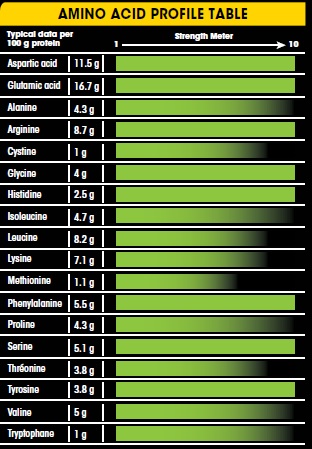
For the past 18 months I have been heavily engaged in testing a vegetable protein, which has none of the negative connotations of whey or soya associated with it. No hormone or GMO debates, no issues with lactose intolerance or digestibility.  In fact its a plant based protein which has an incredibly strong amino acid profile. With high concentrations of BCAA’s Glutamine, Lysine and Arginine. Its profile is very close to that of the ideal protein for humans as recommended by FAO/WHO
It also has an intermediate fast digestive rate which is exactly what is preferred especially for an endurance athlete.

What protein am I talking about?
Pea protein isolate 
is what I am on about. As a plant based protein it is genuinely  a very powerful, clean and healthy protein for anyone whether  pro-athlete or just a gym bunny. Aside from its strong amino acid profile, it is not unnaturally processed, it has a smooth texture and actually tastes great. It is superior not just in using it for a natural recovery shake but also in a pre training or racing meal. I feel this is the most complete protein and there can be no questions asked around allergens, hormones or food safety.

Once I was happy with the certificate of analysis from the supplier and my own testing phase. I gave it out to a large number of athletes to do some testing for me as well. The feedback was unanimous the pea protein isolate needed to come to market to provide a healthier option of protein to the health conscious consumer. It was very well received across a variety of amateur and elite athletes in various sporting disciplines. Pea protein is gaining a lot of momentum globally and it fast becoming a protein of choice.

The NEW 32Gi Recover Formula
32Gi has decided to re-formulate its 32Gi Recover. Over the next few weeks we will be rolling out our new 32Gi Recover formula to all 32Gi retailers globally. The new Pea Protein formula will be replacing our previous vegetable based protein recovery shake.

At 32Gi we are continuing to strive to provide the healthiest supplement choices to our consumers and we will continue to pioneer and innovate to ensure that all 32Gi users can be assured that we are a trusted brand in which health always comes first.

About 32Gi Recover Pea Protein Formula

32Gi Recover is a high quality ratio blend of 100% organic pea protein isolate combined with carbohydrates. 32Gi Recover contains all the essential and non-essential amino acids to maximise muscle recovery

Recover is an excellent protein supplement with no unnecessary ingredients only those critical to muscle and glycogen recovery. Recover can also be consumed as pre training or racing meal or even as a meal during a long endurance event. Recover is suitable for vegans and diabetics.

Recover Facts:

  • Assists with Muscle Repair
  • Assists with Glycogen Recovery
  • High Protein absorption rate
  • Cholesterol Free
  • Naturally High in Glutamine
  • Wheat, Gluten, Soy and Lactose Free
  • Improves Strength and Recovery
  • Strong Amino Acid profile
  • Digestive Friendly
  • Vegetarian
  • Kosher / Halaal Certified
  • Recover is available in Chocolate, Strawberry and Vanilla flavours

Image

Categories
Performance Training

The Pipe Club

Image

I often see runners get asked how can they run?

In the sporting community it usually comes from the cyclists and swimmers, and when these athletes switch to triathlon the one discipline that is sometimes the toughest for them to grasp is the dreaded run.

Pushing hard on the swim, or destroying the bike hoping one has made up enough time to hold the runners back on the run. No chance. The strong runner comes cruising by with ease, leaving you behind wondering what you did wrong. A multisport athlete that comes from a running background is often at a great advantage. I often tell people that a runner can learn to ride a bike but for a cyclist to switch to running is not so easy and it takes a lot of hard work and effort to get to a stage where you feel very comfortable.

I was fortunate to have quite a bit of swimming and running in my school days, but then for many years I let it slip away and switched my focus to weight lifting and then finally coming back to mountain biking, road cycling and then to triathlon. 
My bike was always a strong leg and with all that leg power I was very confident to sit on the bike and smash the pedals for long periods of time, but once I neared transition I used to dread that run that lay ahead.
I knew it would be a hard slog and definitely not a cruise. No matter how much time I put into my competitors especially in the longer distance races they would just eat it back and some more leaving me feeling very frustrated. 

I would hear a lot of talk from the running community about the runners high and I thought man you guys are smoking some awesome pipes because I could not imagine any such thing. I decided to make a conscious effort and switch all my core focus to running, reducing my cycling and swimming focus and seeing where it would lead me. 

Day after day I would pound the tar, searching for something which in my mind was fictitious and only existed in the minds of the “Pipe Smokers”. Months went by and I was still battling through. Muscular legs and a muscular upper body didn’t help my runners frame and the conscious effort of becoming the runner was one of hard physical training, learning proper technique and training the gut with proper nutrition. More months went by and I was convinced that no such thing as the runners high existed and if it did exist why did I not experience it on the bike or the swim, why were these “runners” so special? 

I built up speed, I built up distance and my running improved dramatically but that one single thing was still eluding me.

Two years later, on a Sunday morning I was headed out on a 25km training run, and all I could think about was my reasoning for the run was because I had to. I had some races coming up and needed the mileage. Understand one thing, running was still not enjoyable for me even though I was running well and it had improved drastically. I truly dreaded long runs, I found them tedious and boring and couldn’t wait to get to the finish to bank the session. It was in my mind a painful drag.
I headed out with some music to keep me company and at around 10km’s in I was thinking man still another 15km’s of darkness to go. I just kept pushing through, legs one in front of the other and trying to keep my focus on getting to the finish.
At around 15km’s I started to feel pretty okay and then as time went on I started to feel better. I wasn’t so much focused on the finish line anymore but the present.
Then suddenly it hit me, like a molecular nuclear explosion from absolutely nowhere. Extremely heightened senses, shivers in every single part of my body where sweat ran and my mind just completely drifted into a zone where I felt completely superhuman. My pace lifted my legs floated, and my mostly used frowning facial muscles which were always there during a run slowly eased off and put an extremely rare smile on my face, which seemed so ridiculous but there was no ways it was going anywhere it was there to stay. Complete elation and euphoria, the Runners High. 

I finally became a member of the “Pipe Club” and never doubted them again. I wondered if this was a once off, or only under certain conditions. There are many articles on the subject and the physiology behind the euphoric conditions have been explained in many ways, but as runners who cares as long as its there we love it. It allows us to contemplate to strategize, to think to dream, to create, to destress and to smile its all encompassing and makes us feel alive.

Ten years later and I can honestly say this I experience the high every single time I run, it does not matter if its track, short or long, at some point in my workout that smile hits my face and every single thing around me disappears while I relish my own little piece of heaven even if it is for a short while. 

My advice to anyone taking on running or switching their focus to running, keep turning over those legs, keep persisting and I can guarantee you that the pot of gold will eventually be waiting at the end of your rainbow. 


Categories
Nutrition Training

“If you fail to prepare, prepare to fail.”

Image

Recently I have been receiving a lot of questions on training and racing nutrition. My last blog was focused on becoming more fat efficient, keeping your fuel intake to a minimum and adapting the body to using its natural fat stores as a predominant source of fuel in an endurance session. It’s an awesome position to be in when you can just get up and go long and not worry so much about fuelling yourself.

As mentioned previously in sessions under 2 hrs you can perform extremely well at a high intensity on no fuel at all, if you do consume anything it’s purely to make your brain happy and give you that extra mental boost to up your performance. This has been shown in the famous “Carb taste not swallow test” where athletes purely rinsed the drink in their mouths without and a percentage increase in performance was demonstrated (The Effect of Carbohydrate Mouth Rinse Cycle Time Trial Performance-Jeukendrup) It shows that the mind has a lot to do with an athlete’s ability to perform and Prof. Tim Noakes has often presented the central governor theory where the brain is completely in control by the body and understands all physiological feedback mechanisms. It determines based on conditioning and ongoing readings it gets from the body during exercise as to what point it will control your ability to perform or under perform in a means of ensuring you are protected. If you are not trained to go out and race at a particular effort, the central governor will surely tire you with feelings of fatigue under those conditions in order to slow you down and ensure the body is safe. There is of course opposition to this theory, but there is one thing that both sides still agree on and that is the body needs to be trained to perform.

Last week on a whim I decided to run 42km’s to celebrate my 42nd birthday. Maybe not a normal thing to do, but my running coach said go easy and get it out the system. Even if he said no I think I would have been stubborn enough to do it. With no race pressure, and not the best night’s sleep, I got up early had a cup of strong black coffee, took a waste belt with two 250ml water bottles and headed out with a friend. I ran at a very comfortable and evenly controlled pace, I got back home in 3h19 minutes with a little water to spare and felt great.

The big question I get asked is how you can go and run for that long and not eat anything, and the answer is simple I had all the fuel I needed for that long run inside me BUT more importantly my body was conditioned and gut trained extensively to do that quite comfortably.
That run probably didn’t touch much glycogen at all, it was primarily fuelled on fat. Also the time of running was way less than say some of the rides I do on water only which can go anywhere between 5-6 hours so it wasn’t a worry.  The point is the body is trained over a long period of time with proper nutrition consumption to allow for this. The brain and body work together to understand the body’s ability and limitations and with time you will understand as your body gives you constant feedback. (Check out a previous blog “Listen to your messages”)

The big questions I got after that is if this is how I will race? My answer to that is absolutely not. This is where the title of this blog comes into play, “If you fail to prepare, prepare to fail”.  It’s very critical to properly prepare for racing conditions as well, and even though I do a lot of water training, I definitely set aside time for what I call racing “nutrition training”. It’s an important area of being able to race at your best. There is no ways any athlete can go into a race not properly prepared for what he has to consume and under which conditions to ensure that he performs at his or her best. Racing is done at a much high pace for a longer period of time than a training session and it requires a different type of fuelling.

It’s not a difficult aspect of training but I need to stress that it’s a critical aspect and something that cannot be left to the last week or two before a race, because you will want to have your race nutrition down packed way before that in order to make sure that you have a plan and you can habitually stick to it.

My recommendation is to choose a day where you test out your race nutrition. This means waking up in the morning eating a pre-training meal as if it was your pre-race meal going out for a few hours at a fairly intensive pace (slightly slower than race pace) and checking the following:

  • Digestive Comfort  
  • Palatability
  • Energy Levels
  • Ability to Perform

I generally do a session like this once every 10 days and know a few elite athletes that will do this once a week. Sessions like this must be planned, well thought out and think about mimicking it close to your race day as possible.

Nutrition of course will vary for each sport discipline and it’s important to understand that what you do on the morning of a 10km race, marathon, triathlon and cycle race can all differ and should be planned, checked and re-tested to ensure you are on track.

If you can finish that session strong and feeling good with all the check marks in the boxes you are definitely on the right track. This does not need to be done too often as you would not want to try and mimic race day efforts too much, but you need to find a winning formula.

If you are doing a stage race it requires even more effort to test your nutrition as you will need to test your day nutrition first, and once happy with it move on to testing your stage racing nutrition. The critical area of stage racing is recovery in order to be able to keep consistent performance’s each day and keeping those energy levels constant. It would be highly recommended to do at least 3 repeat performances each day including pre, during and post racing nutrition which will give you an idea of exactly how you feel day to day and whether your nutrition strategy is working for you.

Each person is unique and what works for one person won’t necessarily work for another so you need to experiment and see what is the best for you.

As a general guideline in deciding what you are going to eat on race day I can suggest the following:

Avoid any Food Consumption that can cause Digestive Issues
There a few foods than entirely ruin a race. You might think they don’t affect you generally so when you are racing they should be fine. However you need to understand that blood i.e.: oxygen is needed to perform digestion. If you are running very fast, oxygen will be diverted away from your stomach to your heart, brain and leg muscles to cater for the exertion. The stomach needs an adequate amount of electrolytes, roughly equal to that of the body tissues outside of the stomach, to perform digestion. If digestion doesn’t occur and the contents of the gastrointestinal tract don’t move, the muscles in the walls of the tract may begin to spasm, bringing on uncomfortable stomach cramps. Triathletes tend to experience more digestive issues than most sport as the positions of 3 disciplines vary. The swim is a lying down position not very conducive to easy digestion and there is buoyancy on top of that, this is usually the setup for cramping that occurs later on during the bike or run. Secondly a triathlete cannot consume during the swim or hydrate so if he or she has consumed something not suitable to that discipline a fair amount of time will pass before the first bit of water can be consumed to try to create some form of balance. In long distance events like Ironman very often consuming a glucose spiking product at the onset will cause GI distress pretty early on. A common mistake that many endurance athletes make.

Running moves the bowels around quite a bit more as the body’s movements gets the organs bouncing and shaking nicely. I am emphasizing that what you eat that’s generally comfortable will still need to be tested during exercise which is what I call digestion under stress.

The main foods to avoid before a race are definitely anything that is high in fiber as this is a certain way of getting your bowels to work nicely and that’s the last thing you need before a race or during it, especially while pre-race nerves are finding their way into every part of your body. Another recommendation I make it to avoid high lactose products. Dairy is a very common cause of digestive problems. Even if you are not lactose intolerant you don’t know what it can do to your body while under stressful conditions. Heavy meats or cheeses are a big no. You want to consume foods that are easy on the digestive system and leave you feeling comfortable.

Size of Meals
Another issue is that many athletes over eat and over hydrate pre-race leaving them feeling bloated heavy and uncomfortable. That is a guaranteed curse under racing or exercise conditions. You need to play with your portion sizes to see what your comfort zone is. I generally recommend a +-300 Calorie food portion pre-race.

Timing and Type of Meals
The timing of your pre-race meal is also critical. I can use a personal example for this one. A few weeks ago, I had a 25km trail race. I made a BIG rookie mistake. I though the start time of the actual race was 7am. There were two races that day and I for some reason just never read the details properly which is not like me, but I was chilled about it nevertheless. I woke up at 4:30am had a nice rolled oats and nut butter meal. I got a lift to the race and on route I get told the race is actually starting at 6am. I was thinking in my mind this is going to be even harder and it was. The timing of my meal to my 7am race was perfect, but to the 6am race it was not. I had to suffer some serious heart burn through the event and I expected to. At least the pain could mentally be bypassed and allow me to come out on top. I am just using this example to stress the importance of meal timing. Preferably minimum 2hrs before the race you want to be done and dusted with your pre-race meal, only requiring some top ups in between. To be honest in this case I shouldn’t have had a pre-racing meal maybe just a small shake or drink before, it wasn’t required at all especially at that time of the morning and I hadn’t run a trail race in years so my nutrition prep was not exactly where it should have been.

I guess this leads into another question. When should I eat a proper pre racing meal and when is it not absolutely necessary. In this case I always look at the type of the event, my pace and expected time. Generally any race for me taking less than 2hrs I won’t eat. I might take a small shake but I certainly don’t require any food. These shorter events as I define them will generally be raced on water. If the pace is extremely high and is closer to the 2hr mark then chances are I will consume some sugary stuff on route to keep my brain a little happier and ensuring a little bit of glycogen sparing on route.

Race Fuel
When events get longer 3hrs or more, you need to understand that at a very high pace you will deplete your glycogen levels and will need to eventually rely on fat as the predominant fuel source. Your body will naturally slow down to cater for the fuel change as fat burning requires oxygen and at too high a pace that’s not going to happen. However this is where fat efficient training plays a massive benefit, because if you have trained your body to adapt to this sort of fuelling it can be trained to do it a slightly higher intensities and this is a great benefit. Also the switch from glycogen to fat caused by glycogen depletion is a shock for some a feeling of fatigue and not being able to move any more. The trained athlete will move through this quite a lot more easily. There is another way around this and that’s to try to pace yourself properly in an endurance event where you won’t burn your glycogen completely and have saved it towards the end where you really need it. In a cycling race it’s sometimes very difficult as the effort or intensity is determined by the bunch and this is where most people get burned, as they are forced to perform at a high intensity to stick with it even if they don’t want to. The wise thing is to try to stick it out in the middle and draft as much as possible to conserve your energy stores. However in an ultra-distance triathlon or long running race you have the ability to determine your own pace and control your intake and predominant energy fuel based on that.

It’s important to remember that if you are going at a controlled pace or intensity consuming a blood glucose spiking product will mitigate you from being able to use your fat stores as energy, so keep fuel intake to lower insulin spiking products which allow for this. When performing under very high intensity conditions you are best suited to taking a blood glucose spiking product as fat is not easily accessible. There of course is a combination of both glycogen and fat being used when doing long events, as pace varies through the event, but fuel intake will ultimately determine this as well, and can upset the balance.

Another point I want to enforce is that endurance fuelling should never be complicated. The simpler you keep it the better. I advocate drip feeding in endurance events. This means smaller more frequently timed feeds as opposed to feeding every hour. It’s easier on the digestive system and it keeps the body and energy levels in a nice equilibrium. I generally will feed every 20-25 minutes in a long endurance event.

Plan and Train the Gut
I was invited to chat to the participants of Ironman 70.3 Western Australia this year as we were event sponsors. The first question I received was shouldn’t we be consuming between 60-90 grams of carbohydrate per an hour of exercise during the event. My immediate response to that was has your gut been trained to consume 60-90 grams of carbohydrates per an hour. The amount of carbohydrate consumption per an hour during exercise is not based on the number of carbs you are consuming, but more importantly how much of those carbohydrates your body is capable of absorbing and using. If your body is only capable of absorbing 50 grams of carbohydrate per an hour because that’s the food you use and that’s what you are used to, then how would your system cope under excessive intake meaning, your gut completely under-trained to deal with the increased consumption. The answer is it won’t. In long endurance events I can easily get away with between 20-50 grams of carbs per an hour in an event. I have never needed to venture into the 60-90 range ever and I don’t feel I would cope in that range either. Another thing that is important to note is the 60-90 gram carb intake is based solely on the fact that you are fuelling with carbs only which means racing at a very high intensity, its doesn’t take into account controlled pace and fat usage. Scientific studies have shown that a combination of specific carbohydrates in unique ratios can maximize the absorption rates however I have witness many an athlete opt for those test results only to be left with severe stomach issues on route. Another thing I don’t agree with is relying on drinking ones calories. I definitely feel that food solids are a far better form of fuelling. Dr Allen Lim well known scientist especially with his involvement in premier Tour de France cycling teams has shown a lot of science behind this and you can view it here.

There are many ways to approach nutrition when it comes to training and racing. It’s something that always needs to be taken into consideration and never left on the side. So the next time you sit down look at your training and racing schedule. Plan your workouts, your swims, cycle and runs, but add another training session into that called nutrition. Train your gut, get on track and make sure you give yourself the best opportunity to perform well and hassle free at your next event.


Keep at it 

all the best

M

Categories
Health Nutrition Training

Listen to your messages……………..

Man-with-hand-to-ear-006

I am a very military oriented personality, just the kind of life I have lead since birth. A naval officer father, nutrition strict mother and then my own life experiences which followed very much similar routes. My clients know when I take them on there is black and white, tolerance levels are low and I demand results.

I travel quite a bit and come into contact with all types of cultures and personalities on many different levels. South Africans generally I see as quite a soft sort of courteous kind of nation, mainly rule followers and breaking them will definitely command some sort of reaction but generally in a very subtle kind of a way to start. In Israel where I currently am it’s a completely different ball game, you can be sure people will be telling you what to do on a daily basis, because they always know better, yet the rules are consistently broken by the big mouths.

It often gets my back up and I am often in a defensive mode which in military terms means strike them down before they even get close to doing or saying something, that way you won’t have to defend. It’s an aggressive approach but generally one that has won many warsJ.

So my resistant personality wherever I am is constantly ready to go to war, don’t tell me what to do or else, because I know my boundaries, I know what I am doing and if I need your advice I will ask for it. Most people tend to similar so I am not unique ;-).

Yesterday I was out on a training ride, I was around 80minutes into the ride, in the country side and just started a climb out of the valley, music in my ears and really just soaking up the view when all of a sudden a car slows down next to me the window open and I can see muttering and hands waving. The sound completely drowned out by some Armin van Burin ASOT in my ears.

My instinctive thoughts was to tell her to shut the hell up and leave me to my training session, I know the rules of the road and I am within my right to ride here. Instead I just ignored her completely she tried several times to shout at me, but Armin kept me calm. Eventually she just drove off and I carried on with my ride.

This is not an unusual situation for me, when running, swimming or cycling, I get told why you riding here, why you running without a water bottle, where is your hat. I know sometimes they mean good but geeeez most of these people have never trained in their lives and they talking to someone that lives it. The frustration of being told what to do just wants to put me into war, sometimes I long for it hoping it will result in vented anger and then some more peace of mind.

Just the other day I was doing a swim session, I did my warm ups and some drills. By the way in South Africa 2 swimmers to a lane is like max, unless you are group training, however in Israel you have to swim counterclockwise, and if you need to overtake then do it with caution because 3, 4 or 5 people can get in your lane without warning, because it’s their right and they know better. I have had many head bashings here and the fast lane means nothing. Even though it’s labelled for fast swimmers you get back floaters, because they consider themselves fast. Anyway back to my story on my swim session. So I get into nice rhythm and start with some clockwork intervals. I was focused on my set, however at around the 4th interval I noticed something strange. Each time I swam passed a woman in the other lane “slow lane” she splashed water on my face as I turned to breathe. I thought ok she is doing some sort of exercise creating splashing, giving her the benefit of the doubt. However as my session continued I realized this was intentional splashing she kept shoving water in my face every time I did a pass. I just ignored her put my head down and finished my set. While taking a breather at the end of the pool I waited for her to reach my side. When she arrived, I asked her why she was splashing me. Of course sniper rifle in my hands ready to take aim and blow her away. She said to me I was splashing her eyes when I swam????? WTF, you in a pool lady wear some goggles and learn to swim. You afraid of water I asked. She said no but my splashes were irritating her and I must get out the pool, and she threw more water at me??

I went a little mad, I unleashed my M23A4 on her, it was locked loaded and I sent a couple of waves in her direction ensuring the water bullets hit her right between the eyes. Of course she carried on throwing water at me. I took a step back and thought no ways, is this what I am resorting to a water fight between 40 and 50yr olds in a pool no ways I was like in shock, like kids having a tantrum in a pool.

I just motioned the rest of my unit “The Lifeguard” and said tell her to stop or get out I need to train. He did just that, war over. I felt an empty victory, thinking could I have handled this slightly differently, but then I thought no screw her, I was within my right.

Anyway back to my training ride. I kept wondering about the car stopping next to me screaming and shouting at me and here I had made judgment and executed her. Something just did not seem right, but I kept on going. Eventually it hit me, I reach around to my rear bottle cage and there it was, the reason for my insubordination. My 600ml water bottle had been flung out of the cage. Leaving me with only 600ml’s of water in 33degrees of heat on a long ride. I should have maybe listened to this driver, however I was stubborn, in attack mode waiting just waiting to unleash my ammunition once again. How mistaken could I have been this time as it was a call to help.

I kept riding conserving my water, and thinking over and over about what had just happened. How stubborn I was and how I had made judgment without listening and giving someone the benefit of the doubt. Eventually at the turn around point I made my way back to that climb out the valley and tried to climb it again from the halfway point and reenact what happened to see if I could track my bottle. There it was lying in the ditch just where that lady was attempting to inform me of the incident. In the end I listened to my message, however the lesson learned was I needed to listen a lot earlier.

I guess you are wondering why I am writing about this?

The truth is most of us are very much the same. Every single day, messages come our way and each and every single one has a meaning. The thing is how many of us actually listen to these messages. We don’t we ignore them because we know better.

I especially see this when it comes to health and wellness. When injured we don’t listen we always know better we focus on the race, on the end goal and absolutely nothing will stop us from getting to the start line. When sick, we brush it off as a head cold, we can’t stop training we cannot lose fitness we just push through it. The overweight will keep eating their pizzas because a large stomach or a double chin is not a strong enough message to make them change their ways.

So which messages do make us change? It’s the messages that come with severity or shock when it’s a little too late to listen and we need to face the consequences of our actions.

When an injury becomes unbearable and crippling, when an illness becomes severe and bed ridding, and when weight issues lead to organ, heart problems or blood pressure and cholesterol worries. Why is human nature generally so stubborn as to know better when it comes to interpreting messages?

A wise man once said ” The most basic of all human needs is the need to understand and be understood. The best way to understand people is to listen to them”, and another

“Big egos have little ears”

The basis of this blog was to instill some thoughts into your minds and get you to understand the importance of listening. Listen to your messages whether from the mouth of another or from your body signaling your brain. You cannot go wrong you can only become wiser stronger, fitter and healthier.

Keep Going……………………..

all the best

m