Categories
Health Nutrition Performance

CAFFEINE – BENEFIT OR DRAWBACK?

Except for the odd few, most people I know are coffee or tea drinkers. I myself am a green tea addict however I love the occasional Americano in its most natural form.

Caffeine itself is quite an interesting debate. It’s impossible to tell how much caffeine there is in a cup of coffee or tea the variants are huge. Many say they can drink coffee and go straight to sleep. Yeah, whatever, just because the coffee tasted strong doesn’t mean that the caffeine content itself is high. It’s purely the roast and flavour of the beans and of course the preparation. That cup of coffee that tasted so strong could have had a tiny 20mg caffeine content which in all honesty could put most people to sleep.

Flavours of coffee’s and teas is one thing but let’s talk about caffeine.

Caffeine is a mild stimulant that occurs naturally in a variety of plant species. There are people who view caffeine as a useful stimulant that increases ones concentration and awareness as well as many other physical traits.  The important thing to remember is that caffeine affects each and every individual very differently depending on the amount consumed, the frequency of consumption, and a person’s individual metabolism.

LETS GET TO THE FACTS:

Scientific proof of caffeine and sports performance is being debated constantly and there are definitely benefits. So much so that at one stage caffeine was banned by WADA (World Anti-Doping Agency) and its now legal but currently on the watch list.

There are advantages that caffeine has which I will go into in a little bit of detail shortly but lets take a look at both sides of the coin.

Caffeine is a stimulant and it does have addictive properties. In a healthy diet, your consumption should be limited and health professionals will recommend around 7 – 10 cups of coffee per a week as a limit. However most people can do this in a day. One thing is certain caffeine does stimulate and it plays with one’s emotional and energy stability. Stimulant drinks such as coffee are also known to be one of the biggest role players in a person gaining weight when blended with awesome syrups and sugars and loaded with milk. Another important consideration is that caffeine impacts the ability to sleep properly and this is crucial from a health and sports recovery point of view. Caffeine also causes a rise in acidity in the digestive system, and from a health perspective one should try to consume a diet that is more alkaline, acid of course can lead to health issues as well as during exercise. Caffeine has mild diuretic properties causing loss of fluid in some people but each person is unique and in others not so much. An athlete that consumes caffeine consistently is actually doing himself a complete disservice.  Caffeine does boost blood pressure medical researchers have found. Although the rise is temporary, researches question whether it’s good for you when it occurs over and over again in other words in excess. However, research has also shown caffeine to be beneficial to the heart long term. Again, this is in moderation and not in excess. My biggest worry is about the boost in blood glucose levels that accompanies caffeine intake with syrups or sugars.

WHATS GOOD ABOUT CAFFEINE?

Looking at research coffee has shown to reduce the risk of type 2 diabetes as well as fatty liver disease. Caffeine can improve memory, decrease fatigue, improve your mental functioning, which plenty of studies suggest. It can improve your short-term memory and speed up your reaction times, according to a study presented in 2005 at the Radiological Society of North America. Moderate coffee consumption — defined as three or four cups a day, providing 300 or 400 milligrams of caffeine (assuming it contains this much because remember it’s impossible to know the exact amount) — carries “little evidence of health risks and some evidence of health benefits,” conclude researchers from the Linus Pauling Institute at Oregon State University in Corvalis.

Coffee drinking, the researchers say, may help prevent type 2 diabetes, Parkinson’s disease, and liver disease, including liver cancer. And it doesn’t appear to significantly increase heart disease risk or cancer. But, they warn, those with high blood pressure, as well as children, teens, and the elderly, may be more vulnerable to caffeine’s adverse effects.


What about caffeine in Sport or Physical Exercise?

Well there are two major benefits that caffeine has, the first is that when consumed on its own without sugar it has demonstrated a rise in the amount of free fatty acids available for use as a source of fuel. Fat of course is an incredibly powerful form of fuel and the more free fatty acids you have available for use in an endurance event the more you are able to benefit from it. There is one slight consideration though? That in order for this to work well, a person should be more caffeine intolerant, meaning if you consume a lot of caffeine per a day you won’t benefit as much as someone who takes in less caffeine in a day. In other words not an excessive caffeine drinker. Second thing is the timing of consumption before an event. In scientific testing it’s been shown a consumption of around 1-2mg of caffeine per a kilogram of bodyweight around 3-4hrs before an event is best. It gives the body time to mobilise free fatty acids for use as well as being long enough before the event to remove the acid from the system and of course negate the risk of dehydration if you fall into that category.

Then caffeine during an event has shown to improve mental performance and from personal experience in endurance sport mental performance = physical performance.

The second major benefit is caffeine for recovery. Yes, believe it. It’s been shown that having caffeine with a complex carbohydrate after exercise has shown to speed up the time taken for glycogen replenishment. Under testing it’s been shown to speed up the process by as much as 60%. As an example, a rolled oats meal and a very strong coffee or two (with a decent amount of caffeine of course). Just remember to hydrate yourself consistently after a session as well. I usually blend the coffee directly into my smoothie if that’s my choice for recovery for awesome flavour and the caffeine

Finally, there is another slight benefit, and this is the wake up effect. If you are feeling tired or fatigued caffeine has the ability to wake up the brain a little. Of course it’s a temporary effect, but during a sporting event this slight feeling of euphoria can give you a lift. Taking caffeine around 60 minutes before a workout will also have a benefit in assisting with mental focus and helping with a better quality driven workout. It takes around an hour for the caffeine to be completely metabolized in the body to become effectively utilized.

If during an endurance race you are wanting a caffeine boost, it can assist with a wake up effect and sense of euphoria however the amount and timing of the caffeine intake needs to be tested in training before a race to get an understanding of your thresholds and digestive system response.

In conclusion caffeine has certain benefits, but it should not be abused because it then becomes a detriment from a health perspective.

On a personal note I will explain how I use coffee or green tea to give me my benefit. Firstly the caffeine in green tea is pretty mild I don’t use that as a caffeine source. It’s the catechins I want which of course contain EGCG which can aid fat burn but also antioxidants for general immune system strength and of course the taste is why I like it. If I want caffeine I switch to coffee BUT I use a coffee where I know exactly how much caffeine there is per a serving.

When do I consume coffee? Generally, before a long hard workout I take in around 90-100mg of caffeine. I use TrueStart as I know that it has that amount of caffeine per a serving it also has a 5-6hr release (natural caffeine from a hydrous process) where all normal anhydrous caffeine is metabolized within 60min on average, so I prefer the stability.

During a session, I also take caffeine but only if its longer than 3-4hrs then I use a 32Gi G-Shot on the go or can drop TrueStart in a shake however I usually train fasted unless gearing for an event and need to train my gut for fuel. I like to take it in regularly. At Challenge Roth last yearas an example, I consumed 10 x 60mg caffeine shots in a 5hr bike ride taking in one every 30 minutes. This needs to be tried and tested however and I never do something I haven’t trained for. I train properly from a nutrition point of view and know exactly how my body responds to anything I consume.

Then post exercise if it has been a tough session and I feel glycogen store depletion I will consume more caffeine to aid the recovery process. On workouts under 2hrs a single serving of TrueStart will suffice. However, on sessions lasting longer I sometimes will go up to 180-200mg of caffeine in my recovery meal to give me a boost and I blend it into a smoothie, or my porridge or pancakes as it helps with flavour as well. Sometimes I just add it to an ice cold 32Gi Recover Chocolate shake on a hot day and make a mochaccino which goes down extremely well.

The point I am making is I understand how much and when to consume coffee / caffeine. It has taken time and  practice to test everything properly. Of course, I consume it for enjoyment as well. I don’t believe in taking in something you don’t enjoy. There those days where I enjoy a good java after a session. But knowing how much and when to consume it will place you in a position of power from a health and a performance perspective.


Finally keep your coffee or caffeine drink sugar free, adding sugars have more detriment than benefit.

 

If you are interested in TrueStart Coffee and 32Gi’s G-SHOT they are available at leading Dis-Chem outlets and online at

www.truestartcoffeesa.co.za

www.32Gi.com


Mark Wolff is an endurance, nutrition and physiology expert with over 20yrs experience.

An endurance multisport athlete with a triathlon, mountain biking and weightlifting background Mark works extensively with professional and amateur athletes in a variety of sports disciplines as well as people with health and weight issues.
He firmly believes that an athlete can only reach their full potential when their health and nutrition is down packed. Marks focus on nutrition and physiology is not just on training and racing, but he places major emphasis on recovery, immune system health, emotional stability, weight, stress management and performance. Mark is co-founder of 32Gi a sports nutrition company focused mainly on health and endurance nutrition. He is a certified sports nutrition expert as well as a marathon, track, triathlon and cycling coach. He spends most of his time guiding athletes with a very holistic approach to blending training and nutrition for performance and health.

 

Categories
Health Nutrition

The Protein Factor

There is one aspect of nutrition that traverses all sports conversations and that is the topic of protein. No matter what kind of athlete you talk to and even non-athletes there are always discussions revolving around protein supplementation and meal replacements. The protein market is one that is incredibly misunderstood and highly over marketed with so much sugar coating that any consumer will automatically feel there is a benefit to consuming it without really knowing why, how much and when. The entire idea of type of protein intake is completely misunderstood by most and I decided to write this blog to provide the necessary facts so that you as the consumer can make the right decision for yourself.

There are two main types of protein sources and these are animal based protein or plant based protein. The most common animal based proteins are dairy and egg. We can further break down the dairy based proteins into:

Dairy Proteins
Milk Concentrates
Whey Protein Isolate
Whey Protein Concentrate
Whey Protein Hydrolysate
Casein / Caseinates

Whey protein is a milk derivative which has a very strong amino acid profile. There is a major difference between whey protein isolate and concentrate. The concentrate is derived from a simple filtering process which contains a varying amount of protein, carbohydrates and fats in the form of lactose.The structure of whey concentrate is that it is not denatured and therefore provides health benefits in its natural form.
Whey isolate is derived from further processing and purification of whey concentrate. When this is done most of the biological structures that exist in whey concentrate are broken down and only the protein chains and amino acid structures remain. This makes whey protein isolate a higher concentration of pure protein. It also generally lands up being more expensive due to the further processing involved in getting it to this stage, however it does lack some nutritional benefits due to the denaturing process.

What about whey hydrolysate or hydrolyzed protein as its called. Unlike whey concentrate or whey isolate hydrolysates are enzymatically predigested for maximal speed of absorption. There are a few methods which are utilised in breaking down the whey into a pre-digested state. Personally I am completely opposed this type of protein as its completely unnatural and as humans with a digestive system our bodies are completely capable of breaking down and digesting protein in  the unique manner for which we were created.

1. Acid Hydrolysis
Acid hydrolysis is a fairly harsh process, usually carried out at high temperature. This process attacks all peptide bonds in the protein substrate, destroying some of the individual amino acids.For example, tryptophan is usually totally lost in an acid hydrolysis. Cystine, serine and threonine are partially broken down and asparagine and glutamine are converted to their acidic forms. Vitamins are mostly destroyed by acid hydrolysis. Salt may be formed during neutralization of an acid hydrolysis, resulting in a product with high salt content.

2. Enzymatic Hydrolysis
Proteolytic enzymes hydrolyze proteins more gently than acids, do not require high temperature and usually target specific peptide bonds.The material that results from a proteolytic digestion is a mixture of amino acids and polypeptides of varying lengths.For example, the enzyme pepsin will cut an amino acid chain where there is a phenylalanine or leucine bond. Papain will cut the chain adjacent to arginine, lysine and phenylalanine. Pancreatin shows activity at arginine, lysine, tyrosine, tryptophan, phenylalanine and leucine bonds.

3. Microbial Hydrolysis
Microbial proteases, proteolytic enzymes secreted by microorganisms, are becoming more widely used in peptone production. Proteases from bacterial, algal, fungal and yeast sources offer a wide variety of enzyme activities, can be produced in large scale, and usually require only simple purification. As far as I am concerned hydrolyzed protein is a chemical treatment process. Its completely unnatural and from a health point of view its completely struck off my personal list of animal proteins.

Casein protein is another milk derivative. Its not very water soluble and the attractive property of the casein molecule is its ability to form a gel or clot in the stomach, which makes it very efficient in nutrient supply. This means it is able to provide a sustained slow release of amino acids into the blood stream, sometimes lasting for several hours. It is often recommended as a pre-bed time protein snack or for weight loss when that keep you full feeling lasts for many hours. As a post exercise recovery it is too slow as far as digestion and absorption is concerned and would serve best if it was blended with a faster digesting protein to provide some post exercise stability and reduce the hunger cravings.

Plant Based Proteins
There are a number of plant based proteins on the market. The most popular vegetable proteins are of course soy and wheat protein which make up for more than 90% of the plant base protein market. Soy protein being the most popular is a vegetable protein made from soybeans. While most vegetable proteins are “incomplete” proteins, soy protein is a “complete” protein, and it is comparable in quality to many animal-based sources. Soy protein is low in saturated fat, and it has powerful antioxidant properties that have been shown to play a role in lowering cholesterol and preventing heart disease. Soy like Whey comes in a concentrate and isolate option. The soy isolate of course provides a much higher and purer form of protein content as opposed to the concentrate version.

The Soy / Whey Debate
For many years there has been an ongoing debate on which protein is better soy or whey.
There is no doubt that whey protein has a slightly stronger amino acid profile than soya. It is a faster digesting protein and quicker absorbed. Soya digests slower than whey but is 100% digested and absorbed. There has always been a lot of conversation and reference to phytoestrogens in soy however over the years this has never actually been shown to be an issue based on any solid scientific evidence. One of the things to be concerned about around hormones is actually often missed in the whey protein industry which also needs to be highlighted. Whey is a derivative of milk, which comes from cows which means high hormone levels. Its a fact that cows produce milk while pregnant which is over a large portion of the year, but moreover cows have been treated with hormones A large percentage of milk comes from cows injected with bovine growth hormone (rBGH), along with a vast array of antibiotics and other drugs. There is an expression which states a cows milk is for calf’s not for humans. Just take a look at the size of a cow. Cows milk is there to help their calf’s grow and strengthen. It was uniquely designed for a calf but not uniquely designed for a human.

Another critical element which has been pointed out is that whey of course contains IGF-1 (Insulin Growth Factor). IGF-1 has been shown in a number of medical studies to be a major contributor to cancer risk and cancer cell growth. Ref sites: (http://nutritionfacts.org/video/igf-1-as-one-stop-cancer-shop/ & http://www.enerex.ca/sk/articles/say-no-way-to-whey)

Personally I avoid dairy. I suffered the affects of dairy without realizing it for so long and once I eliminated it from my diet I began to see major benefits.

Another shadow hanging over the plant based proteins like soy was the introduction of GMO (Genetically Modified) version. Again this was another huge minus in the case of soy’s fight to stay credible as a vegetable protein in the market. Once the anti-GMO organizations began to expose the risks of GMO food (specifically soy and corn) consumption and the possible health risks, soy again became a protein to cast aside. I actually agree in that if a food is genetically modified then it should be completely avoided. This is not to say that all soy products are GMO, there are many on the market that are GMO free it just needs to be researched before purchase.

Both whey and soya have their issues and neither is perfect from a protein source point of view. In short I have provided some insight on the benefits of the major animal and plant based proteins and at the same time I have basically said avoid them.

What options does that leave us with from a protein perspective?

Well to be honest your major source of protein should be derived from proper and healthy nutrient consumption. What you consume in the form of protein from the time you get up in the morning until you go to bed at night will play the most major role in ensuring you are getting enough protein in your diet.

However as active people or someone looking for a quick protein fix, especially in the form of post workout recovery what other options are available since both whey and soya leave me with a lot of questions in my mind.

Well this is where I am headed and you can join me if you like.

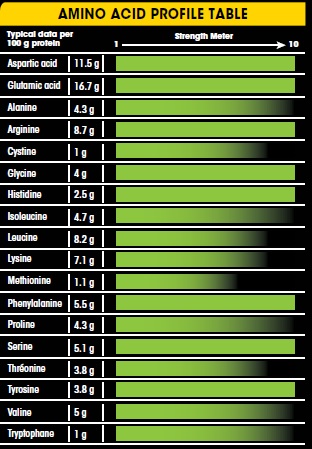
For the past 18 months I have been heavily engaged in testing a vegetable protein, which has none of the negative connotations of whey or soya associated with it. No hormone or GMO debates, no issues with lactose intolerance or digestibility.  In fact its a plant based protein which has an incredibly strong amino acid profile. With high concentrations of BCAA’s Glutamine, Lysine and Arginine. Its profile is very close to that of the ideal protein for humans as recommended by FAO/WHO
It also has an intermediate fast digestive rate which is exactly what is preferred especially for an endurance athlete.

What protein am I talking about?
Pea protein isolate 
is what I am on about. As a plant based protein it is genuinely  a very powerful, clean and healthy protein for anyone whether  pro-athlete or just a gym bunny. Aside from its strong amino acid profile, it is not unnaturally processed, it has a smooth texture and actually tastes great. It is superior not just in using it for a natural recovery shake but also in a pre training or racing meal. I feel this is the most complete protein and there can be no questions asked around allergens, hormones or food safety.

Once I was happy with the certificate of analysis from the supplier and my own testing phase. I gave it out to a large number of athletes to do some testing for me as well. The feedback was unanimous the pea protein isolate needed to come to market to provide a healthier option of protein to the health conscious consumer. It was very well received across a variety of amateur and elite athletes in various sporting disciplines. Pea protein is gaining a lot of momentum globally and it fast becoming a protein of choice.

The NEW 32Gi Recover Formula
32Gi has decided to re-formulate its 32Gi Recover. Over the next few weeks we will be rolling out our new 32Gi Recover formula to all 32Gi retailers globally. The new Pea Protein formula will be replacing our previous vegetable based protein recovery shake.

At 32Gi we are continuing to strive to provide the healthiest supplement choices to our consumers and we will continue to pioneer and innovate to ensure that all 32Gi users can be assured that we are a trusted brand in which health always comes first.

About 32Gi Recover Pea Protein Formula

32Gi Recover is a high quality ratio blend of 100% organic pea protein isolate combined with carbohydrates. 32Gi Recover contains all the essential and non-essential amino acids to maximise muscle recovery

Recover is an excellent protein supplement with no unnecessary ingredients only those critical to muscle and glycogen recovery. Recover can also be consumed as pre training or racing meal or even as a meal during a long endurance event. Recover is suitable for vegans and diabetics.

Recover Facts:

  • Assists with Muscle Repair
  • Assists with Glycogen Recovery
  • High Protein absorption rate
  • Cholesterol Free
  • Naturally High in Glutamine
  • Wheat, Gluten, Soy and Lactose Free
  • Improves Strength and Recovery
  • Strong Amino Acid profile
  • Digestive Friendly
  • Vegetarian
  • Kosher / Halaal Certified
  • Recover is available in Chocolate, Strawberry and Vanilla flavours

Image