Categories
Nutrition Performance Sports Nutrition

STRUCTURED FUELLING – FAILING TO PREPARE IS PREPARING TO FAIL

When it comes down to race preparation athletes are all about the training never the nutrition around it. It is often an after thought. However its not just nutrition in and around the training an athlete should be focussed on its also the daily nutritional intake from waking up all the way to bed time. It plays a vital roll in maintaining an energy balance, supporting the recovery process, and keeping that immune system in check.

A few weeks ago, I participated in my first race after many years in hibernation due to ongoing commitments which never afforded me the time to put in the proper preparation. But when I decide to race it’s really a test of my consistent training and I don’t race for fun. I set a goal and stick to it. This time I went for Ironman 70.3 Tiberius with the single goal of getting a category podium to qualify for world champs. I knew what I needed to do from a numbers perspective to hit the target. But aside from training numbers the nutrition had to be spot on to support the effort. Over and above the actual training my age being a tender 51 meant recovery between sessions is more challenging and so dietary changes were needed to support the increases in volume and intensity. I wont dive into the daily nutrition in this blog as its quite detailed. I will leave that for another day. The purpose of this blog is to explain the approach to race day nutrition and how I properly prepared for it. Hopefully you can take away something and use it towards your big day.

WHEN DO YOU START?
Kicking off a race day nutrition plan needs to be tried and tested in training as much as you can. This needs to start many months before the actual race. In my case it was 10 months prior to race day. A fuelling plan needs to be properly structured, and tried, tested and stuck to like glue on race day.

FIRST STEPS
The first step you need to make is to think about the disciplines of swim bike and run and in your mind put a picture together of how you want to fuel each of those three.


-SWIM

Swimming being the first discipline means a pre-race meal and possible top ups on route to the start. In my case I decided to use 32Gi Pre-Race Meal as my pre-race fuel and because it such an important part of race day I consumed it prior to all my long and hard sessions. I also ensured I consumed it prior to most of my swims to ensure my digestive system was comfortable throughout. The serving sizes varied depending on how long before a training session I consumed it.

– BIKE
Generally this is the longest leg of a triathlon and the fuelling required to hold an effort for hours means a good fuelling plan that is simple and convenient while on the go.

Often cyclists complicate bike feeding, and this is something I like to keep as simple as possible. The way to determine intake on the bike is to understand a few very important things.

1.First is how long are you planning on riding for?

2.How many calories you are wanting to take in hourly (carbs only or carbs + protein)

3.How much fluid are you planning on consuming hourly for hydration purposes (this is weather and temperature dependant with heat and or humidity which can increase fluid loss)

In my case I pegged the bike to 2h30 as a pretty good estimate based on testing and in my case I went with around 280Kcals per an hour which equates to 70gram carbohydrates per an hour. Race weight is +-66kg placing me at over 1gram carbs per kg of body weight. However, I opted to go with 32Gi Race Pro which is a carbohydrate rich drink with a protein portion. I find protein intake during a long event keeps me stable and it can mitigate the onset of gluconeogenesis which can trigger muscle fatigue. 32Gi Race Pro is a single source feed so for me it was a simple uncomplicated feed and nothing else was needed from an energy perspective. I went with the mocha flavour due to it containing caffeine. I enjoy racing on caffeine. I decided to use a 600ml bottle and test the concentrate. This meant 10 scoops of Race Pro in the bottle for a 2.5hr ride. Aside from energy we need to also think about fluid intake to remain hydrated. By placing 10 scoops of Race Pro in a 600ml bottle that has turned the drink into a hypertonic solution which will provide energy, but it is not possible to hydrate. So, to manage this I placed an 800ml bottle of 32Gi Hydrate on the bike for hydration purposes. Optimal hydration is around 80% of lost fluid in the form of sweat. How do I know this number? I weigh myself before and after training sessions to determin weight loss which equates to fluid loss. During testing all went very well and I found my digestive system tolerated everything very well. The way I fed was alternating sips of energy and hydration spaced around 10min apart meaning Race Pro intake 3 times per an hour with fluid intake in between as needed. As we moved towards much hotter weather I realised that my fluid intake was not sufficient and that my sodium intake needed to be upped a little more. This led to a slight modification. Instead of 10 scoops in the 600ml bottle I placed 4 scoops in there to keep the solution isotonic (hydrates and provides energy with a more even pull through) and then I used a soft 300ml squeeze bottle which I placed the concentrate in, and carried that in my suite pocket for easy access. I then increased my Hydrate intake to 1.5 tablets in the hydration bottle so that I could get in around +-750mg sodium per an hour.
This worked amazingly well and on all training rides energy levels as well digestive comfort was spot on. I just needed to do one more test and this was on a 90km simulation which I did around 6 weeks out from race day. I woke up ate my 32Gi Pre-Race Meal as planned, pre-hydrated a little and then went out for a hard effort on the bike with my set fuelling strategy. I completed the course in 2h27 and the fuelling was perfect. These kind of tests demonstrate not just the level of fitness you at but more importantly the fuel required to achieve that effort was correct. It takes the stress off having to worry about any changes or adjustments. When it works bank it and take it to race day with a smile.

Run
The run leg is often where athletes can make or break their race, and this is determined by how well they fuelled on the bike leg and then how they continue to fuel through the run leg. A lot of triathletes test their fuelling on the bike and that is all then very often decide to rely on the course fuel for the rest of their race. I advocate never to rely on race course nutrition. You just do not know what you are getting from a dilution factor and that everything will go smoothly on the day. At Ironman Tiberius which was also Middle Eastern Championships 32Gi was the official nutrition partner. I remember going down the run course and being offered 32Gi products at the aid station by an athlete volunteering who knew me well. I refused the feed and kept going. He was a little in shock that I didn’t take my own fuel off the course. I explained to him afterwards when you go to battle take your own weapons that way you know they will work. The run course fuel was not my chosen fuel in training. My Run fuel was simple another soft squeeze bottles this time a 250ml hydra pack with a 32Gi Race Pro concentrate. All I needed in addition was water on the course and nothing else. Again, during training, I would run with the pack in my tri suite to get used to the feel and to ensure it worked well for me. I also did testers using longer harder efforts or brick sessions to test the nutrition worked well. Once I had tested dozens of times and was confident in the fuelling, I banked it.

ADDITIONAL CONSIDERATIONS
The one thing I have not spoke about which is vital in any triathlon is always to be prepared for anything. In this case often full distances allow special need bags for those that want some insurance. In my case the transition zone becomes very important.
On race morning I place two extra bottles in the bike and run bags one is a hydration bottle which is just water and 32Gi Hydrate and the other is a 250ml bottle of Race Pro with some 32Gi G-Shot’s (caffeine shots). These bottles are there in case I need to top up on energy or hydrate between the different legs of the race. The caffeine is something I take in prior to the race start and a just in case between legs.  

In my case our event started way over an hour after transition closed and I needed to use the time wisely to keep myself topped up. I sipped on Race Pro prior to the start of the event.

PLANNED NUTRITION
Below is exactly what went to the race course

WHAT ACTUALLY HAPPENED
As they say if you fail to prepare then prepare to fail. As much as we watched the weather and had an idea of conditions, race day threw us a nice curve ball. At 4am the rain came down and a hard the wind picked up. This was going to be a tough day out for most of the field. The cooler conditions and the rain made for slight changes in my nutritional strategy. What happens when temps drop is fluid loss is not as high and so I dropped my sodium down to +-500mg an hour instead of the 750mg planned. I also decided to start the feed from the concentrated squeeze bottle in order to allow the body to hit peak temperatures to keep fluid intake nominal and not over do it early on. Later when my fluid loss was slightly higher I would switch to more fluid with the small Race Pro bottle in the bottle cage. Minor adjustments to an already tried and tested plan.

THE END RESULT
Physically it wasn’t my best day out due to a number of reasons but I am never one for excuses and regardless we soldier on. Regardless of how I felt my race times were in line for a tough day out. The nutrition was perfect down to the red carpet and I never felt any discomfort or lack of energy.

Although I wanted the top step I had to settle for second place. My podium goal achieved and that is what I set out to do from the day I decided to enter the race.

The point of this blog is really to stress the importance of proper structure not just in training but in the nutrition in and around the training. There is no ways you can reach your true potential or push any hard efforts without a tried and tested nutrition and hydration strategy.

Below is a how I structured my race day nutrition. I know some of you have never truly given the nutrition much in-depth thought and many just thumb suck their way through. But you ask any professional or elite athlete about their intake during an event they will break it down into the finest of details because they know it’s the difference between a win a loss and a hard or smoother day out.

Hopefully you learned something from this approach above and will give your nutrition some proper thought before your big day.

Yours in health always

M

Categories
Health

HARDEN YOUR HEALTH

The last few weeks has seen global efforts to thwart COVID-19 the latest Corona virus strain which is creating momentum worldwide with escalating infection rates. Over the last few days we as athletes have also seen the postponement and cancellation of some major sporting events which as hard a pill as it is to swallow , but its definitely the correct course of action to reduce high a infection risk. Plenty of training and racing goals have been thrown a curve ball and these goal posts have had to be shifted. Personally right now I feel the focus should be on our health and ensuring we are not just responsible for ourselves but for those around us.

The training for us all should continue as we do not just do this for finish line medals and kudos. For most of us it’s a lifestyle and yes racing motivates us to train. However right now we have a much more important motivating factor which should keep us on our toes and that my friends is health. As we stand without a treatment for this virus our only course of action is to boost our own immune systems and make sure that we are in excellent condition to be able to fight off any infection that comes our way.

Training and racing especially as intensity and volumes increase so does immune system suppression which makes us far more susceptible to infection and illness. In line with a real war we are just about to face, I decided to put together a short guide of how we as athletes can strengthen our health and boost our immune systems to be able to navigate this next part of our journey.

WHAT IS YOUR CURRENT HEALTH STATUS
Starting with the basics, it’s always best to get a proper snapshot of your health first. How can you hope to strengthen your immune system if you have an underlying condition? In my line of work I come across many athletes with underlying conditions such as anaemia, insufficient vitamin levels, improper organ function or underlying infections and inflammation. If you have an underlying condition and do not know about it then you basically starting on the back foot and this needs to be addressed first.

What should you do?
A full medical with a nice batch of basic bloods & some additional vitamin and mineral testing to make sure everything is in good order. Remember as an athlete you place your body under stress and if certain levels are on the low end its highly likely that you will reduce them further and impact your health. Vitamin drips in my view are a complete waste of time without understanding exactly what you are treating. There is something called excessive vitamin and mineral dosing and in some cases this can be highly toxic to the body. My advice is to see a medical professional and get it done properly without playing a guessing game. I wrote in a previous blog called Blood’s don’t Lie you can check it out by clicking here.

LISTEN TO YOUR MESSAGES
Once you get the results from your physician its best to discuss them with him or her and make sure everything is in line. Remember you are an athlete not a couch potato. So make sure the physician understands that because some might say your levels are normal. However that is the general population norm. You want to rather be on the upper end of the spectrum not on the lower end due to the amount of stress the body goes through daily. If you do have an underlying condition you have to address it. Athletes are so good at ignoring issues when it comes to injury and illness. Don’t ignore them and adhere to proper medical advice.

NUTRITION
Proper nutrition is absolutely the health fuel for your engine. Healthy nutrition allows the body to fortify and strengthen itself against illness and disease as well as ensure our energy system is kept up at all times. When we make bad food choices we place additional stresses on the body and in times of need when we should be our strongest to fight off foreign invaders this should be kept to a bare minimum. After all our own natural defences are all we have and we need to make sure that they are fortified. Eat nutrient dense meals with plenty of vegetables and fruit and ensure that you are eating properly for your unique needs. As an athlete ensure your calorie intake is not an excessive deficit so that the body gets sufficient nutrients to help with restoration and repair. Carbohydrates often get a bad rap however when it comes down to endurance sport carbohydrates are your fuel king and when it comes to recovery there is nothing that will get your fuel tank recovered quicker than carbs. Remember carbohydrates can come in healthy forms such as fruits and vegetables which are high in anti-oxidants and free radical fighting nutrients. Eat with intent and insure that whatever goes into your mouth has a purpose for strengthening your body.

TRAINING
It’s a scientific fact that exercise boosts the body’s ability to fight off infection and illness. However, one should not over do it. Endurance athletes tend to place huge stresses on the body with intense bouts of volume training. This will certainly place the immune system at risk. Over-training places any athlete at risk to infection. Rather stagger your sessions properly, reduce intensity ratios and volumes and allow the body to fortify itself without over stressing it. With most events now cancelled or postponed do yourself a favour and switch your focus to health especially in these trying times. Get outdoors more and limit your visits to the gyms in order to protect yourself more from infection risk. Most importantly just keep on going.

SUPPLEMENTATION
Alongside a healthy eating regime supplementation can play a beneficial role. I mentioned earlier blood tests can show where there are areas of deficiency and those can be addressed. Right now though our focus is on immune system strengthening and there are a number of supplements which have been shown to aid immunity.

Vitamin C
Its amazing how Vitamin C is at the top of most people’s lists when it comes to immune boosting. However it is not really the king on the list. It is an antioxidant which helps fortify and reduce inflammation however its over estimated by a large amount due to massive ongoing marketing in the supplements sector.

Vitamin D
If someone asks me what to take for immune system strength I will always advocate vitamin D as one of the best immune system defences. Vitamin D can improve immune system responses and a deficiency in vitamin D is associated with increased susceptibility to infection. Research suggests that vitamin D can help reduce the risk of respiratory infections, including colds and flu especially among people who don’t get enough of the vitamin from diet or exposure to sunlight which is most of the population. Athletes tend to train in the early morning hours and many also indoors which limits exposure to sunlight and then again sun creams further limit the body from it. It is worth dosing with vitamin D and a simple blood test.

Wellmune®
This is something you have probably never heard of but it is the bomb. Wellmune®  is a leading natural yeast beta glucan clinically proven to help strengthen your immune system. In a clinical study, marathoners taking Wellmune® for four weeks experienced a 40% reduction in upper respiratory tract infection symptoms. Wellmune® primes immune cells helping them find and kill foreign invaders.Where can you get this ingredient. 32Gi’s new plant based pure protein being launched this week contains the correct dosage of Wellmune® to ensure your immune system is properly fortified. A medically backed natural supplement is absolutely worth taking.

32Gi’s NEW Immune Boosting Pure Protein

Zinc
I think zinc is an awesome mineral . It does help the immune system fight off invading bacteria and viruses and worth dosing to keep immunity up nicely as well as it being good for the skin.

Elderberry
Elderberry is packed with antioxidants and vitamins that may boost your immune system. It can aid the reduction of inflammation, lower stress levels and help protect the heart. It is often advocated in the prevention and ease of cold and flu symptoms.

Probiotics
Probiotics are there to keep the gut healthy and to ensure the immune system functions well. Taken from a peer reviewed research publication it states that probiotics can also modulate the immune system, enhancing the body’s innate immunity. This modulating effect helps alleviate excessive inflammation in the gut, thereby boosting immune function. We know that health gut bacteria is important for proper health and immune system function and there is no harm in dosing with probiotics on a daily basis.

In short there are many avenues we can try to help fortify and improve our immune system function and health. Not all vitamins and minerals have been researched to such an extent that they are conclusively providing the best benefit. We are after all unique and what works for one individual may not work for another. One thing we do know and that is proven, is that proper healthy nutrition, plenty of good sleep and exercise goes a long way to ensure that our body’s remain physically strong and healthy to weather the storms.

all the best

M

Mark Wolff is a certified exercise & sports nutritionist, endurance nutrition and physiology expert with over 20 years experience. An endurance multi-sport athlete with a running, triathlon, mountain biking and weight lifting background, he works extensively with professional and amateur athletes in a variety of sports disciplines as well as those just wanting to change their lifestyles. He firmly believes that a person can only reach their full potential when their health and nutrition is given the proper focus. Mark’s focus on nutrition and physiology is not just on training and racing, but he places major emphasis on recovery, immune system health, emotional stability, stress management and performance. Mark is co-founder of 32Gi, a sports nutrition company, focused mainly on health and endurance nutrition. He is also co-founder of Rapid Recover focused on pneumatic compression equipment to improve circulation for recovery, rehabilitation and health.


Categories
Nutrition

ARE YOU FUELLING TO FAIL?

The world of sports nutrition is quite an interesting space to be in. I often get to hear sob stories of failed races due stomach issues, lack of energy, severe cramping and nausea. Just this past week I stood at the 32Gi Sports Nutrition and Dis-Chem expo stands at the Cape Town Cycle Tour advising athletes on fuelling strategies based on their needs. The common theme I got from the few days there was that most athletes create very interesting meals but they have absolutely no idea how to cook. If you are going to make a chicken soup then why add lamb, beef and fish to it?

When it comes down to proper fuelling it needs to be a well thought out simple recipe of success. Complicating fuelling will only lead to issues whether rebound hypoglycemia, gastrointestinal distress, fatigue, nausea dehydration and a complete lack of energy.

Sports Nutrition products are designed to be a convenient fuelling source which meets a specific need. The carbohydrate blends, mineral levels and recommended volumes of consumption are calculated and designed to have a desired function. The minute you take that product and start to add other nutrients and blends into the mix there is absolutely no ways the desired effect will take place as you are changing the recipe for the successful pot of soup.

As an example 32Gi’s new Race Pro drink is designed so it can be a single bottle energy source feed for an entire event. I had an athlete tell me he tried it and along with the drink he consumed gels and nougat bars. He said the drink did not sit well with him and he felt terrible. I asked why he did that and his response was because he needed them.
Of course he would feel terrible. Here he is drinking a product that has a much higher gastric emptying rate than a gel and its designed to be used in a certain way for a desired effect, yet he throws a gel and nougat bar into the mix. That is just plain stupid and to explain it to him in simple terms I asked him if he likes peanut butter sandwiches? He said yes. So I told him the next time he makes a peanut butter sandwich add some broccoli and cauliflower with it between the two slices of bread and if he really wants it to taste great and make him feel better he should add some egg and chocolate to it. He looked at me and said you kidding right?
I said no not at all it seems you the kind of person that enjoys this mix. The point I was making was that this is exactly what he did with his fuelling. He concocted an unscientific complicated recipe for disaster which led to his fuelling failure.

When it comes to proper fuelling you need to make sure you know exactly what you are taking in, how much you are taking in and when you should be taking it.

So how do I develop a proper fuelling strategy?
Firstly you need to separate your energy and hydration requirements.
Energy requirements are unique to an individual and each person will have to figure out what works best for them. Energy required in endurance events comes mainly in the form of carbohydrates and protein. Short hard events 3 hours or under would not need protein intake but mainly carbohydrate intake to fuel the level of effort. As the duration of exercise increases carbohydrates together with a small portion of protein would play a bigger benefit in sparing glycogen and slowing amino acid breakdown due to gluconeogenisis which can lead to muscle fatigue.

Step 1: Determine the Energy Requirements
In terms of sports nutrition it’s important to understand that a balance between energy and digestive comfort is required. What you consume needs to be processed and each person is unique in how adaptive the digestive system is based on genetics and diet.
It’s best to start with the type of discipline you are wanting to do. Cycling provides more stability to the digestive system so generally a higher dosage of fuel can be tolerated. Running however generates a lot more sensitivity around the digestive system and smaller feeds are generally tolerated a lot better. Lower intensity exercise as well as lighter athletes can look at a lower carbohydrate intake while higher intensity exercise and heavier athletes will look at a much higher carbohydrate intake to support the efforts. This can range from 0.8g/kg bodyweight up to 1.5g/kg body weight per an hour. General Guidelines look at a protocol of 30g-60g of carbohydrates per an hour which equates to 120Kcals – 240kcals per an hour. Only in very specific carbohydrate blends can higher dosages be tolerated to support long duration exercise but this is not recommended without proper testing in training first.
The below chart is an approximate guideline of how you can approach your fuelling strategy but make sure to test it in training. Always start low and then build higher to ensure comfort and digestive system adaption.

SportWeight Hourly Carbohydrate / Protein Dosage
Running50-60kg30 – 50g (120 – 200Kcals)
Low GI Distress Risk
 60-70kg30 – 60g (120 – 240Kcals)
Low GI Distress Risk
 70-80kg30 – 65g (160kcals-260Kcals)
Medium GI distress Risk
 80kg >40 -70g (160Kcals -280Kcals)
Medium GI distress Risk
Cycling 50-60kg30 – 60g (120 – 240Kcals)
Low GI Distress Risk
 60-70kg40 – 70g (160 – 280Kcals)
Medium GI distress Risk
 70-80kg50 – 80g (200kcals -320Kcals)
Higher GI Distress Risk
 80kg >50 -90g (200Kcals -360Kcals)
High GI Distress Risk

Start with the lower volume zones and gradually increase the dosage in training to see what the best balance is of energy to digestive comfort. If the digestive system takes strain with higher dosages, then lower them. That is your tipping point. It’s best to consume in a drip feeding manner meaning more frequent feeds to get the desired amount. This reduces the risk of the digestive system going into distress as it’s easier to process smaller amounts at once. It also stabilises you better over time mitigating the roller coaster effect of highs and lows.

As mentioned above the fuel needs to support the effort. This is based on time and intensity. If we take a look at the basic training zones from zone 1 to zone 5 we know that lower intensity efforts will require a lower carbohydrate intake to support it as the body will have the ability to maximize fat usage as a source of fuel. However as we move through the zones which can also happen over time due to cardiac drift the carbohydrate volume will need to increase to support the efforts. As an simple example a slow Zone 1/2 ride of 2-3hrs will not need much carbohydrate support so in the case of a product recommendation 32Gi Endure and or 32Gi Hydrate electrolyte fizzies would be able to support this session. But take a hard quality session of say 90min to 2hrs with hitting Zone’s 3 – 5 where glycogen becomes the main fuel source then a higher dosage of carbohydrate intake is required to support that effort. To truly meet training adaptations meaning supporting your full potential properly when doing quality workouts it is important to fuel that effort properly. In this case a drink like 32Gi Race Pro, Race and 32Gi Gels would provide better fuelling support. I created a video a while back explaining the fuel tanks relative to zone training. It is worth a watch just Click Here to view.

Step 2: Choose your Energy Source to Meet your Fuelling Requirements
What format of fuel are you wanting to use to achieve your energy requirements. Do you prefer a liquid feed or a solid feed or do you prefer a combination of both?
The most important thing to remember is that you need to adhere to simplicity and a proper measured value to ensure you get exactly what you need as well as the correct absorption rates. Check the ingredients carefully you want it to be as clean and simple as possible. After all your stomach needs to process what you putting into it. Keep it carbohydrate dominant and very clean avoid fats they slow down the rate of absorption and especially avoid trans fats you only asking for trouble by mixing that into you fuelling strategy.

As a simple example if you are going with a concentrated energy feed like 32Gi Race Pro that will provide you with all your energy requirements in a single bottle then there is no need to take anything else with it. Its specifically designed to be absorbed at a certain rate in its current format and mixing it with another product will impact that. So the only thing required along side it would be a hydration drink such as 32Gi Hydrate or water. If you are wanting to use say an isotonic drink such as 32Gi Endure you need to have in mind that a bottle contains 44 grams of carbohydrates per a serving and if you drank 3/4 of that bottle in an hour you would only get around 33grams of carbohydrates per an hour which could be a serious energy deficit if you are aiming for a 60gram per an hour feed. So now you need to consider an external energy source which can be used with Endure which wont impact its efficacy but give you the required energy outcome. In this case adding in Chews or Gels would plug the gap in required hourly carbohydrate intake.

Step 3: How to Hydrate Properly
Once you have chosen your energy source you need to think about hydration very carefully. If you are using an isotonic drink which is providing you both energy and minerals to hydrate then you need to make sure that you will be able to take in the desired amount hourly to meet your hydration and energy needs. One of the reasons I advocate separating energy and hydration is because of weather conditions. On a hot day it will probably be easier to consume a bottle of an isotonic solution, however over consuming would mean knowing how many carbs you are taking externally to that and adjusting the feed accordingly. But what if its a cooler day? You don’t lose as much fluid in the form of sweat and you drink less fluid. However now your energy system is impacted by the calorie deficit and you need to adjust the feed accordingly. This might leave you consuming more energy in the form of gels which if not combined with the correct amounts of fluid can leave you with GI distress. The simplest feed is the easiest feed that does not require mathematical calculations during a session. In this case a single source feed and a single source hydration system are in my mind the simplest solution. From a hydration perspective you need to understand the conditions you will be exercising in and hydrate accordingly. Meaning the type of hydration drink will need to be determined according to the your sweat rate under various conditions. The idea is to try to replenish 80% of lost fluid. Water on its own is not as easily absorbed as a hypotonic drink and this is why I advocate a hypotonic solution to maximise fluid absorption and not take a chance. I wrote a blog Simply Hydrate explaining hydration in detail you can click here to take a read.

In summary I want you to understand that nutrition and proper fuelling are so critical not just in sports performance but also recovery and overall health. Many athletes focus on the training and wake up way too late to give the nutrition the proper focus it needs to perform, recover faster and remain in good health. Don’t be the athlete that spoils the soup and fuels your race to failure. Plan it properly, test it over and over in training, tweak it, bank it and take it to race day.

All the best

M

Mark Wolff is a certified exercise & sports nutritionist, endurance nutrition and physiology expert with over 20 years experience. An endurance multi-sport athlete with a running, triathlon, mountain biking and weight lifting background, he works extensively with professional and amateur athletes in a variety of sports disciplines as well as those just wanting to change their lifestyles. He firmly believes that a person can only reach their full potential when their health and nutrition is given the proper focus. Mark’s focus on nutrition and physiology is not just on training and racing, but he places major emphasis on recovery, immune system health, emotional stability, stress management and performance. Mark is co-founder of 32Gi, a sports nutrition company, focused mainly on health and endurance nutrition. He is also co-founder of Rapid Recover focused on pneumatic compression equipment to improve circulation for recovery, rehabilitation and health.

Categories
Nutrition

INTERMITTENT FASTING & THE ENDURANCE ATHLETE

Intermittent fasting has certainly come to the forefront over the past few years and more and more I am getting asked by endurance athletes whether I think intermittent fasting is a good idea?

The question I throw back in return is why do you want to do intermittent fasting? Mostly I hear endurance athletes telling me that they want to lose weight, lean out or become more fat efficient athletes. I guess the big question is what is your actual goal? Are you trying to lose weight? Are you trying to improve your previous best marathon or Ironman time or are you just doing it for health reasons.

Firstly intermittent fasting is a form of calorie restriction, correct? So if you can restrict calories by fasting then why can’t you restrict calories by eating correctly?
When you place your body into a fasted state you begin playing with hormones specifically leptin and ghrelin. The inability to balance these hormones properly due to either over eating or fasting can cause roller coaster effects which in the end do not land up serving the correct purpose.

The main question though is as an endurance athlete why would you even consider fasting?

Weight loss comes from eating correctly meaning a calorie restricted diet and proper macronutrient intake to support you unique requirements. This could be fat loss, muscle gain or maintenance. However as an endurance athlete what about energy, immunity, recovery and performance. Intermittent fasting will not support that at all. Actually quite the opposite it will hamper the recovery process, limit your energy levels and place your immune system under stress.

Let me further explain so that you fully understand the consequences of intermittent fasting while trying to be the best possible healthy endurance athlete.

RECOVERY
When it comes to recovery there are three main aspects that I look at and these are:

Rehydration
Muscle Protein Synthesis
Glycogen Restoration and blood sugar stabilization

If an athlete does intermittent fasting then rehydration and adequate fluid intake will not be an issue. The main issues will arise when it comes to muscle protein synthesis and glycogen replenishment. Adequate protein intake for an endurance athlete is important for recovery. Generally I work on around 1.4g – 1.7g of protein per a kilogram of body weight. This will depend on the athletes goals and training. Strength work and developing more lean muscle will require a higher protein intake while maintenance and repair will be on the lower side. Take a 70kg athlete who is training on average 90min a day. His required protein intake would be around 100-120g of protein per a day. This is in animal nutrition terms 4-5 chicken breasts or plant terms 2-3 cups of raw chickpeas. That is quite a lot of food. If the fasting window is quite long it means squeezing this protein intake into a small amount of time. However as we well know when it comes down to protein the human body is only capable of processing and absorbing a certain amount of protein every +-3hrs. This is generally in the region of +- 8-10 grams per hour. So its not possible to squash large protein portions into less meals and expect the correct portion amount for proper muscle protein synthesis to take place. Actually the opposite over eating protein ultimately causes a rise in blood sugar and that can easily lead to weight gain. We also know that consuming a protein with a carbohydrate post exercise up-regulates amino acid uptake specifically leucine which is a trigger for muscle protein synthesis.

What also allows for proper muscle protein synthesis is a positive nitrogen balance. Nitrogen is the most crucial component of amino acids, which are the building blocks of protein. What this means is that if you are fasting the amount of nitrogen excreted from the body is greater than the amount of nitrogen ingested and there is no repair work taking place actually the opposite. So you are actually not recovering and triggering decent training adaptations.

EATING FOR ENERGY
The next aspect I want to look at is the energy system our primary fuel tanks being glycogen and fat. Glycogen is our rocket fuel and used at higher intensities while in lower aerobic zones fat becomes the fuel of choice.
A hard workout where glycogen depletion takes place will require carbohydrate intake post exercise to rapidly start the glycogen replenishment process and stabilise blood sugar. Extending the fasted period a few hours post exercise will delay this from happening and can lead to fatigue. This will also hamper back to back sessions. Then when it does become time to break the fast how do you know how much to consume in the form of carbohydrates and protein. If you do not ensure proper glycogen replenishment and stabilisation without triggering a roller coaster ride you will generate the the opposite effect from fat burn to fat gain by overeating.

When it comes down to the main energy system, carbohydrates are without a doubt our rocket fuel. If you are going to be doing an FTP (Functional Threshold Power) test or an interval or track session. Then how can you expect to achieve the best possible numbers without fuelling the session properly. Being able to push those sessions to the best possible effort is what ultimately will lead to better gains, as well as more fat burning post exercise by elevating the metabolic rate that much more. It has been scientifically proven many times over that a fuelled session will give better performance numbers.

When it boils down to performance gains and being a fitter faster and stronger athlete then you need to fuel your effort.
Fuelling during an exercise session or eating post exercise recovery meals is not the reason endurance athletes are overweight. Weight gain comes with overeating and inadequate macronutrient meal blends.

The Fat Efficient Athlete
In order to become a fat efficient athlete intermittent fasting is not required. Fasted training is a good way of developing this, but that is completely different from intermittent fasting. A fasted session does require a recovery meal post exercise and the volume and type of meal will be determined by the duration and intensity of the exercise session. Failing to recover from an exercise session is without a doubt failing the session itself.

To summarise my views on intermittent fasting and endurance sport. They do not go hand in hand. Endurance sport replaces a large amount of physical stress on the body. This impacts the musculoskeletal system, the immune system and energy system. The athletes body requires nutrients to fuel, repair and fortify it constantly. Failing to give the body what it needs will ultimately lead to a lack of performance and potentially illness and injury.
If you want to perform, lean out and get your own resilient Lamborghini engine and body then learn how to eat properly and avoid short cuts which don’t benefit that goal. If you are only trying to lose weight or have a medical condition which requires a calorie restricted diet then intermittent fasting can play a roll. However if you are an athlete intent on being the best version of yourself then get your nutrition right and stop playing games.

Mark Wolff is a certified exercise & sports nutritionist, endurance nutrition and physiology expert with over 20 years experience. An endurance multi-sport athlete with a running, triathlon, mountain biking and weight lifting background, he works extensively with professional and amateur athletes in a variety of sports disciplines as well as those just wanting to change their lifestyles. He firmly believes that a person can only reach their full potential when their health and nutrition is given the proper focus. Mark’s focus on nutrition and physiology is not just on training and racing, but he places major emphasis on recovery, immune system health, emotional stability, stress management and performance. Mark is co-founder of 32Gi, a sports nutrition company, focused mainly on health and endurance nutrition. He is also co-founder of Rapid Recover focused on pneumatic compression equipment to improve circulation for recovery and health.

Categories
Health Nutrition Performance

ENDURANCE VS ALCOHOL

Over the years I have had the good fortune of engaging with endurance athletes constantly. The talks I give around endurance health and sports nutrition always come up with a common question surrounding alcohol consumption. I am not going to sugar coat my answer, I say it as it is and in this blog I will spell out the good, bad and ugly around the issues associated with alcohol consumption and endurance sport.

Firstly we know from medical research that frequent consumption of alcohol can increase the risk of mortality and this should not come as a surprise to anyone. Men can tolerate a higher intake than women so relatively speaking women have a higher mortality rate for equal consumption volume than men. This does not mean the male population should go out and start racking up a large amount either because a small unit amount is the cut off before the mortality risk begins to rise and it seems men are far worse for wear as far as the stats go. Globally a large percentage of deaths are directly associated with alcohol consumption and one of the latest research reports on the global burden of disease study in the medical journal The Lancet states the following

“Our results show that the safest level of drinking is none. This level is in conflict with most health guidelines, which espouse health benefits associated with consuming up to two drinks per day. Alcohol use contributes to health loss from many causes and exacts its toll across the lifespan, particularly among men. Policies that focus on reducing population-level consumption will be most effective in reducing the health loss from alcohol use”. The full publication can be read here.

However alcohol or no alcohol my focus in this blog is around the impact of alcohol in endurance sport.

So let’s begin with the fact that it is the pleasure of most athletes to enjoy a beer or plenty more after the finish line of a race. When I raced overseas in Germany which is a big beer drinking nation I also had the pleasure of being offered a beer at the finish line however it was an alcohol free beer, which of course would not have had any negative impact on my recovery. However the alcohol certainly will.

Let us have a look at my major topics of recovery and see how in each case what the impact is.

Hydration 
Athletes finish training sessions or races in a dehydrated state. First step of recovery is to rehydrate properly.
Alcohol however is a diuretic. Basically this means what you take in will not aid hydration but hamper it and cause more fluid loss. Failing to hydrate properly post event will leave you feeling terrible the day after and the delayed onset of muscle soreness will be in an exaggerated state.

Glycogen Replenishment
One of the human body’s most important fuel tanks is the glycogen tank. A major source of energy supply and certainly a main contributor to fuelling the energy system during exercise and especially racing. Glycogen of course is primarily stored in the form of water, so failing to hydrate properly post session will definitely mitigate the proper replenishment of glycogen stores. In actual fact alcohol will definitely inhibit the re-synthesis of liver glycogen  and research has shown that it can take nearly twice as long to replenish the glycogen stores in an athlete that has consumed alcohol in comparison to an athlete that has not. This means if you are in the middle of peak training or back to back racing you can rest assured this will impact you significantly. Over and above this I often get told beer and wine is an excellent source of carbohydrates. You joking right? It is absolutely not a good carbohydrate source required to replenish glycogen.

Muscle Protein Synthesis (MPS)
An important part of recovery post exercise is of course muscle tissue repair. This requires proper nutrition meaning the building blocks of muscle being in the form or branch chain amino acids to be able to properly do their job. Some research has demonstrated that consuming alcohol post-exercise can suppress anabolic responses in muscles which means failure to repair properly and of course this prevents progress in the form of gains from exercise sessions. So yes this means your beer in one hand and steak in the other won’t cut it, your process is flawed.

Rest
The best way to recover post exercise of course is rest. I often stress one of the window periods of recovery is the sleep window and protein consumption prior to sleep can be of major benefit in enabling proper restoration and repair to the body. That is of course assuming you do sleep. However alcohol consumption interferes with proper sleep and completely removes the benefit of proper rest to recover between sessions.

Inflammation Reduction
Post exercise niggles often occur especially in field sport and areas of the body are often in an inflamed state which means that sometimes a reduction in inflammation is required. The sporting teams I work with use many types of methods to try to reduce inflammation post exercise one being an ice bath. However the problem is alcohol is a vasodilator which means it allows a rush of blood to the areas completely contradicting the treatment to reduce inflammation. This explains quite clearly that if you are injured and consuming alcohol it will slow down that healing process.

The Mental Game
Its a fact that endurance performance is very much mind driven. The ability to perform at a high level comes with complete focus and determination. Alcohol of course removes the ability to focus properly as well impairs co-ordination which can lead to the risk of irregular plane movement increasing the risk of injury.

Now that you understand the benefits of alcohol consumption in endurance sport its quite easy to decide how to use it to your advantage. Oh wait a minute I did not give you any benefits ;-).

Ok, lets be clear alcohol is not the best for sports performance and yes I am sure you will tell me many stories of athletes who performed under the influence of alcohol and it is their go to fuel and recovery meal. On the other hand I can assure you the stats are not in their favour from a health perspective and their later years will most likely see issues arising. I will admit though that alcohol does have a very large part to play in social circles and get togethers where people will relax, smile, laugh and interact. Of course happiness and stress relief is an important part of life and can offer longevity.

My advice as an athlete is to limit your intake significantly. Once in a while enjoy a glass of wine or a beer. Keep it as far away from long or quality sessions as possible and absolutely keep it out of race week. Most importantly ensure for every unit of alcohol you consume you take in a much larger amount of fluid to counteract the dehydrating effects.

Moderation is key and health always comes first.

Below is a nice infographic by Dr. Yann Le Meur (Sports Scientist)
Showing the impact Alcohol has on Sports Performance & Recovery in male athletes

all the best

M

Mark Wolff is a certified exercise & sports nutritionist, endurance nutrition and physiology expert with over 20 years experience. An endurance multi-sport athlete with a running, triathlon, mountain biking and weight lifting background, he works extensively with professional and amateur athletes in a variety of sports disciplines as well as those just wanting to change their lifestyles. He firmly believes that a person can only reach their full potential when their health and nutrition is given the proper focus. Mark’s focus on nutrition and physiology is not just on training and racing, but he places major emphasis on recovery, immune system health, emotional stability, stress management and performance. Mark is co-founder of 32Gi, a sports nutrition company, focused mainly on health and endurance nutrition. He is also co-founder of Rapid Recover focussed on pneumatic compression equipment to improve circulation for recovery and health.


Categories
Performance Training

COMRADES MARATHON – THE FINAL DAYS – The Do’s and Don’t’s (Part 1)

Comrades marathon is just around the corner and with the final days approaching the training is basically done, the fitness levels are banked and now all you can do is get to race day healthy, in good shape and ensure your nutrition and sleep is spot on over the next week because that is now going to be the biggest difference you can make on race day.

I am going to give you a number of tips on how to approach race day properly to guide you to your best day out.

Lets take a look at the important aspects of the final few days.

  1. The Do’s & Don’t’s
  2. Race Week Eating and the Carbo-loading debate
  3. The Hours Before Race Day
  4. Race Day Fuelling –  Carbohydrates, Hydration, Cramping and Caffeine

In this first part we talk about the basics and the Do’s and Don’t’s as we get closer to race day.

SLEEP
Sleep is without a doubt crucial. Its the time when the body needs to recover. Very often athletes underestimate the importance of sleep and the critical role it plays in sports performance. Sleep is the time where the body repairs and restores. Its a well know fact that “sleep deprivation leads to depression, high blood pressure, weight gain, heart disease, and probably mortality,” says Dr. Steven Feinsilver, the director of the Center for Sleep Medicine at Mt. Sinai School of Medicine in New York City. Additionally, a 2012 study detailed how sleep deprivation increases a person’s risk of developing Type 2 diabetes. Earlier studies have shown that reaction time nearly triples when a person pulls an all-nighter. Normally about a quarter of a second, it increases to 800 to 900 milliseconds. It’s about the same as the difference between being sober and being legally drunk. For elite athletes, emergency room doctors, and cab drivers, among others, losing that half of a second is costly never mind minutes over many hours due to the inability to focus due to poor cognitive function and physical fatigue.

If night sleep is still limited then try adding some power naps during the day. It’s been shown that taking in a large amount of caffeine before  power nap is best as consuming caffeine will eventually pass into the small intestine and get absorbed into the blood stream. It then begins a chemical reaction in the brain which blocks the receptors which are filled with Adenosine (energy transferring molecules) which actually cause drowsiness. Adenosine will make you feel very sleepy and by consuming caffeine the opposite happens when it binds to the receptors. This will trigger an effect of alertness and focus. Many people that have a power nap feel lethargic afterwards but the 20 minute coffee nap as we call it will allow you to rest for a nominal time with a feeling of energy after.

Over the next days you should ensure you give yourself complete focus on getting the most sleep you can each night to ensure your body and mind are ready for the big day ahead.

NUTRITION
The training now will be behind you but the nutrition is far from over. Training your gut, in other words eating correctly is paramount to arriving at your race healthy, in good shape and ready to tackle it.

Lets start with what you must avoid first in leading up to race day.

Lay off the Alcohol in Race Week
Make sure you hydrate properly. The recommendation is 30-40ml of fluid per kg of body weight and that is not by any means alcohol. Do not consume anything that would dehydrate you. If you do drink alcohol, keep it out of race week. It will impact you on race day, there’s absolutely no doubt. Alcohol pulls the fluid out of the system and dehydrates you and this is something you definitely want to avoid.

Avoid too much Caffeine
Coffee and tea can also have a diuretic effect and it would be advisable to keep this to a minimum. Stimulants also caused sleep disturbances and it would be best to keep these to mornings as opposed to afternoons to ensure you get a good nights sleep without any impact. If you plan on using caffeine on race day then it would be best to minimize your intake prior to race day to ensure you get the best benefit possible. Being overly tolerant to caffeine will minimize the effect it has during the race.

Avoid Eating Out
As much as possible try to ensure you are in complete control of your own nutrition. Eating out can put you at risk of digestive issues or potential illness. The more prepared you are and in control of your own eating the far lower the potential for any food triggering discomfort. Many athletes travel to foreign cities to race and in this case you should plan ahead and make sure you take with foods which you would generally consume and are used to. Trying foods because they are available and you don’t have a choice will only place you at risk. I’ve often seen people get stomach bugs close to an event due to eating out or consuming foods they are not used to.

If you could not find a hotel or accommodation where you have got the ability to self-cater it makes it a lot easier to take with your own food and not be stuck without decent options. If you are in a hotel and they’re not cooking foods to your liking, ask for foods that do agree with you or take a page out of my book where I go into the kitchen and do it myself or use powdered based foods where a hotel kettle is all that is needed to prep.

Avoid Overeating
Tapering for an event means lowered training volumes which equates to a lower calorie burn rate which means lowering your calorie intake and not over eating. This is one of the biggest mistakes athletes make in that they land up eating in excess of their calorie burn rate and actually land up gaining weight for race day. This is a problem as it means placing more stress on the body due to doing the event at a heavier than training weight which will only lead to issues and possibly more pain and suffering than you bargained for.

No to Sugar
Keep the sugar out of the nutrition equation please. Pastries, chocolates, sweets and other forms of sugars should be avoided as much as possible. It just creates havoc with the energy system and can trigger cravings leading to roller coaster riding, energy level dips and physical and mental fatigue patterns.

Avoid Processed Foods
Processed foods should be avoided at all costs. They mostly contain an abundance of unhealthy hydrogenated fats, sugars and additives which play havoc with the body. Opt for natural foods which provide benefit to the body and not foods that are detrimental to your over all health and well being.

Now lets take a look at what we should do leading up to the big day

THE DO’S

Eat Healthy
Eating nutrient dense meals which provide benefit are always the way to go. Incorporate a nice mixture of foods which are high in antioxidants, healthy carbohydrates such as nutrient rich vegetables and fruits, lean proteins and healthy fats to keep the immune system strong and the body energized.

Eat Consistently
Try to eat consistent regular meals as opposed to overly large gaps between the meals through the day. The body requires nutrients to keep it fortified as you head towards race day and its not a good time to place it into any form of starvation mode prior to a race.

Hydrate Constantly
Hydration is one of the most critical factors around any sporting event. To arrive at race day completely hydrated is important. You don’t want to be in a dehydrated state. You need to eliminate anything that would possibly dehydrate you as mentioned above anything such as diuretics excessive intake of stimulants such as caffeine and or alcohol certainly will.

Proper hydration requires regular fluid consumption preferably in the form of water or a hypotonic solution
( hydration solution such as 32Gi Hydrate) want more info on hypotonic drinks then click here

In part 2 of my Comrades Marathon prep we will discuss carbo-loading the pro’s and con’s as well as race week nutrition.

all the best

M

Mark Wolff is a certified sports nutritionist and an endurance nutrition and physiology expert with over 20 years experience. An endurance multi-sport athlete with a triathlon, mountain biking and weight lifting background, he works extensively with professional and amateur athletes in a variety of sports disciplines as well as those just wanting to change their lifestyles. He firmly believes that a person can only reach their full potential when their health and nutrition is down packed. Mark’s focus on nutrition and physiology is not just on training and racing, but he places major emphasis on recovery, immune system health, emotional stability, stress management and performance. Mark is co-founder of 32Gi, a sports nutrition company, focused mainly on health and endurance nutrition.

Categories
Health Nutrition

The Protein Factor

There is one aspect of nutrition that traverses all sports conversations and that is the topic of protein. No matter what kind of athlete you talk to and even non-athletes there are always discussions revolving around protein supplementation and meal replacements. The protein market is one that is incredibly misunderstood and highly over marketed with so much sugar coating that any consumer will automatically feel there is a benefit to consuming it without really knowing why, how much and when. The entire idea of type of protein intake is completely misunderstood by most and I decided to write this blog to provide the necessary facts so that you as the consumer can make the right decision for yourself.

There are two main types of protein sources and these are animal based protein or plant based protein. The most common animal based proteins are dairy and egg. We can further break down the dairy based proteins into:

Dairy Proteins
Milk Concentrates
Whey Protein Isolate
Whey Protein Concentrate
Whey Protein Hydrolysate
Casein / Caseinates

Whey protein is a milk derivative which has a very strong amino acid profile. There is a major difference between whey protein isolate and concentrate. The concentrate is derived from a simple filtering process which contains a varying amount of protein, carbohydrates and fats in the form of lactose.The structure of whey concentrate is that it is not denatured and therefore provides health benefits in its natural form.
Whey isolate is derived from further processing and purification of whey concentrate. When this is done most of the biological structures that exist in whey concentrate are broken down and only the protein chains and amino acid structures remain. This makes whey protein isolate a higher concentration of pure protein. It also generally lands up being more expensive due to the further processing involved in getting it to this stage, however it does lack some nutritional benefits due to the denaturing process.

What about whey hydrolysate or hydrolyzed protein as its called. Unlike whey concentrate or whey isolate hydrolysates are enzymatically predigested for maximal speed of absorption. There are a few methods which are utilised in breaking down the whey into a pre-digested state. Personally I am completely opposed this type of protein as its completely unnatural and as humans with a digestive system our bodies are completely capable of breaking down and digesting protein in  the unique manner for which we were created.

1. Acid Hydrolysis
Acid hydrolysis is a fairly harsh process, usually carried out at high temperature. This process attacks all peptide bonds in the protein substrate, destroying some of the individual amino acids.For example, tryptophan is usually totally lost in an acid hydrolysis. Cystine, serine and threonine are partially broken down and asparagine and glutamine are converted to their acidic forms. Vitamins are mostly destroyed by acid hydrolysis. Salt may be formed during neutralization of an acid hydrolysis, resulting in a product with high salt content.

2. Enzymatic Hydrolysis
Proteolytic enzymes hydrolyze proteins more gently than acids, do not require high temperature and usually target specific peptide bonds.The material that results from a proteolytic digestion is a mixture of amino acids and polypeptides of varying lengths.For example, the enzyme pepsin will cut an amino acid chain where there is a phenylalanine or leucine bond. Papain will cut the chain adjacent to arginine, lysine and phenylalanine. Pancreatin shows activity at arginine, lysine, tyrosine, tryptophan, phenylalanine and leucine bonds.

3. Microbial Hydrolysis
Microbial proteases, proteolytic enzymes secreted by microorganisms, are becoming more widely used in peptone production. Proteases from bacterial, algal, fungal and yeast sources offer a wide variety of enzyme activities, can be produced in large scale, and usually require only simple purification. As far as I am concerned hydrolyzed protein is a chemical treatment process. Its completely unnatural and from a health point of view its completely struck off my personal list of animal proteins.

Casein protein is another milk derivative. Its not very water soluble and the attractive property of the casein molecule is its ability to form a gel or clot in the stomach, which makes it very efficient in nutrient supply. This means it is able to provide a sustained slow release of amino acids into the blood stream, sometimes lasting for several hours. It is often recommended as a pre-bed time protein snack or for weight loss when that keep you full feeling lasts for many hours. As a post exercise recovery it is too slow as far as digestion and absorption is concerned and would serve best if it was blended with a faster digesting protein to provide some post exercise stability and reduce the hunger cravings.

Plant Based Proteins
There are a number of plant based proteins on the market. The most popular vegetable proteins are of course soy and wheat protein which make up for more than 90% of the plant base protein market. Soy protein being the most popular is a vegetable protein made from soybeans. While most vegetable proteins are “incomplete” proteins, soy protein is a “complete” protein, and it is comparable in quality to many animal-based sources. Soy protein is low in saturated fat, and it has powerful antioxidant properties that have been shown to play a role in lowering cholesterol and preventing heart disease. Soy like Whey comes in a concentrate and isolate option. The soy isolate of course provides a much higher and purer form of protein content as opposed to the concentrate version.

The Soy / Whey Debate
For many years there has been an ongoing debate on which protein is better soy or whey.
There is no doubt that whey protein has a slightly stronger amino acid profile than soya. It is a faster digesting protein and quicker absorbed. Soya digests slower than whey but is 100% digested and absorbed. There has always been a lot of conversation and reference to phytoestrogens in soy however over the years this has never actually been shown to be an issue based on any solid scientific evidence. One of the things to be concerned about around hormones is actually often missed in the whey protein industry which also needs to be highlighted. Whey is a derivative of milk, which comes from cows which means high hormone levels. Its a fact that cows produce milk while pregnant which is over a large portion of the year, but moreover cows have been treated with hormones A large percentage of milk comes from cows injected with bovine growth hormone (rBGH), along with a vast array of antibiotics and other drugs. There is an expression which states a cows milk is for calf’s not for humans. Just take a look at the size of a cow. Cows milk is there to help their calf’s grow and strengthen. It was uniquely designed for a calf but not uniquely designed for a human.

Another critical element which has been pointed out is that whey of course contains IGF-1 (Insulin Growth Factor). IGF-1 has been shown in a number of medical studies to be a major contributor to cancer risk and cancer cell growth. Ref sites: (http://nutritionfacts.org/video/igf-1-as-one-stop-cancer-shop/ & http://www.enerex.ca/sk/articles/say-no-way-to-whey)

Personally I avoid dairy. I suffered the affects of dairy without realizing it for so long and once I eliminated it from my diet I began to see major benefits.

Another shadow hanging over the plant based proteins like soy was the introduction of GMO (Genetically Modified) version. Again this was another huge minus in the case of soy’s fight to stay credible as a vegetable protein in the market. Once the anti-GMO organizations began to expose the risks of GMO food (specifically soy and corn) consumption and the possible health risks, soy again became a protein to cast aside. I actually agree in that if a food is genetically modified then it should be completely avoided. This is not to say that all soy products are GMO, there are many on the market that are GMO free it just needs to be researched before purchase.

Both whey and soya have their issues and neither is perfect from a protein source point of view. In short I have provided some insight on the benefits of the major animal and plant based proteins and at the same time I have basically said avoid them.

What options does that leave us with from a protein perspective?

Well to be honest your major source of protein should be derived from proper and healthy nutrient consumption. What you consume in the form of protein from the time you get up in the morning until you go to bed at night will play the most major role in ensuring you are getting enough protein in your diet.

However as active people or someone looking for a quick protein fix, especially in the form of post workout recovery what other options are available since both whey and soya leave me with a lot of questions in my mind.

Well this is where I am headed and you can join me if you like.

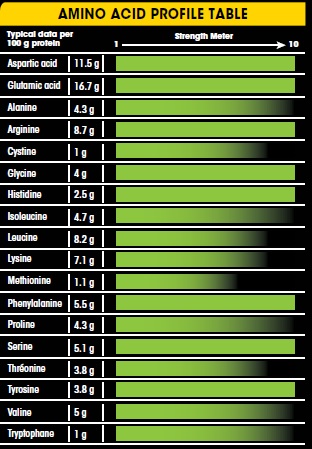
For the past 18 months I have been heavily engaged in testing a vegetable protein, which has none of the negative connotations of whey or soya associated with it. No hormone or GMO debates, no issues with lactose intolerance or digestibility.  In fact its a plant based protein which has an incredibly strong amino acid profile. With high concentrations of BCAA’s Glutamine, Lysine and Arginine. Its profile is very close to that of the ideal protein for humans as recommended by FAO/WHO
It also has an intermediate fast digestive rate which is exactly what is preferred especially for an endurance athlete.

What protein am I talking about?
Pea protein isolate 
is what I am on about. As a plant based protein it is genuinely  a very powerful, clean and healthy protein for anyone whether  pro-athlete or just a gym bunny. Aside from its strong amino acid profile, it is not unnaturally processed, it has a smooth texture and actually tastes great. It is superior not just in using it for a natural recovery shake but also in a pre training or racing meal. I feel this is the most complete protein and there can be no questions asked around allergens, hormones or food safety.

Once I was happy with the certificate of analysis from the supplier and my own testing phase. I gave it out to a large number of athletes to do some testing for me as well. The feedback was unanimous the pea protein isolate needed to come to market to provide a healthier option of protein to the health conscious consumer. It was very well received across a variety of amateur and elite athletes in various sporting disciplines. Pea protein is gaining a lot of momentum globally and it fast becoming a protein of choice.

The NEW 32Gi Recover Formula
32Gi has decided to re-formulate its 32Gi Recover. Over the next few weeks we will be rolling out our new 32Gi Recover formula to all 32Gi retailers globally. The new Pea Protein formula will be replacing our previous vegetable based protein recovery shake.

At 32Gi we are continuing to strive to provide the healthiest supplement choices to our consumers and we will continue to pioneer and innovate to ensure that all 32Gi users can be assured that we are a trusted brand in which health always comes first.

About 32Gi Recover Pea Protein Formula

32Gi Recover is a high quality ratio blend of 100% organic pea protein isolate combined with carbohydrates. 32Gi Recover contains all the essential and non-essential amino acids to maximise muscle recovery

Recover is an excellent protein supplement with no unnecessary ingredients only those critical to muscle and glycogen recovery. Recover can also be consumed as pre training or racing meal or even as a meal during a long endurance event. Recover is suitable for vegans and diabetics.

Recover Facts:

  • Assists with Muscle Repair
  • Assists with Glycogen Recovery
  • High Protein absorption rate
  • Cholesterol Free
  • Naturally High in Glutamine
  • Wheat, Gluten, Soy and Lactose Free
  • Improves Strength and Recovery
  • Strong Amino Acid profile
  • Digestive Friendly
  • Vegetarian
  • Kosher / Halaal Certified
  • Recover is available in Chocolate, Strawberry and Vanilla flavours

Image

Categories
Nutrition Training

“If you fail to prepare, prepare to fail.”

Image

Recently I have been receiving a lot of questions on training and racing nutrition. My last blog was focused on becoming more fat efficient, keeping your fuel intake to a minimum and adapting the body to using its natural fat stores as a predominant source of fuel in an endurance session. It’s an awesome position to be in when you can just get up and go long and not worry so much about fuelling yourself.

As mentioned previously in sessions under 2 hrs you can perform extremely well at a high intensity on no fuel at all, if you do consume anything it’s purely to make your brain happy and give you that extra mental boost to up your performance. This has been shown in the famous “Carb taste not swallow test” where athletes purely rinsed the drink in their mouths without and a percentage increase in performance was demonstrated (The Effect of Carbohydrate Mouth Rinse Cycle Time Trial Performance-Jeukendrup) It shows that the mind has a lot to do with an athlete’s ability to perform and Prof. Tim Noakes has often presented the central governor theory where the brain is completely in control by the body and understands all physiological feedback mechanisms. It determines based on conditioning and ongoing readings it gets from the body during exercise as to what point it will control your ability to perform or under perform in a means of ensuring you are protected. If you are not trained to go out and race at a particular effort, the central governor will surely tire you with feelings of fatigue under those conditions in order to slow you down and ensure the body is safe. There is of course opposition to this theory, but there is one thing that both sides still agree on and that is the body needs to be trained to perform.

Last week on a whim I decided to run 42km’s to celebrate my 42nd birthday. Maybe not a normal thing to do, but my running coach said go easy and get it out the system. Even if he said no I think I would have been stubborn enough to do it. With no race pressure, and not the best night’s sleep, I got up early had a cup of strong black coffee, took a waste belt with two 250ml water bottles and headed out with a friend. I ran at a very comfortable and evenly controlled pace, I got back home in 3h19 minutes with a little water to spare and felt great.

The big question I get asked is how you can go and run for that long and not eat anything, and the answer is simple I had all the fuel I needed for that long run inside me BUT more importantly my body was conditioned and gut trained extensively to do that quite comfortably.
That run probably didn’t touch much glycogen at all, it was primarily fuelled on fat. Also the time of running was way less than say some of the rides I do on water only which can go anywhere between 5-6 hours so it wasn’t a worry.  The point is the body is trained over a long period of time with proper nutrition consumption to allow for this. The brain and body work together to understand the body’s ability and limitations and with time you will understand as your body gives you constant feedback. (Check out a previous blog “Listen to your messages”)

The big questions I got after that is if this is how I will race? My answer to that is absolutely not. This is where the title of this blog comes into play, “If you fail to prepare, prepare to fail”.  It’s very critical to properly prepare for racing conditions as well, and even though I do a lot of water training, I definitely set aside time for what I call racing “nutrition training”. It’s an important area of being able to race at your best. There is no ways any athlete can go into a race not properly prepared for what he has to consume and under which conditions to ensure that he performs at his or her best. Racing is done at a much high pace for a longer period of time than a training session and it requires a different type of fuelling.

It’s not a difficult aspect of training but I need to stress that it’s a critical aspect and something that cannot be left to the last week or two before a race, because you will want to have your race nutrition down packed way before that in order to make sure that you have a plan and you can habitually stick to it.

My recommendation is to choose a day where you test out your race nutrition. This means waking up in the morning eating a pre-training meal as if it was your pre-race meal going out for a few hours at a fairly intensive pace (slightly slower than race pace) and checking the following:

  • Digestive Comfort  
  • Palatability
  • Energy Levels
  • Ability to Perform

I generally do a session like this once every 10 days and know a few elite athletes that will do this once a week. Sessions like this must be planned, well thought out and think about mimicking it close to your race day as possible.

Nutrition of course will vary for each sport discipline and it’s important to understand that what you do on the morning of a 10km race, marathon, triathlon and cycle race can all differ and should be planned, checked and re-tested to ensure you are on track.

If you can finish that session strong and feeling good with all the check marks in the boxes you are definitely on the right track. This does not need to be done too often as you would not want to try and mimic race day efforts too much, but you need to find a winning formula.

If you are doing a stage race it requires even more effort to test your nutrition as you will need to test your day nutrition first, and once happy with it move on to testing your stage racing nutrition. The critical area of stage racing is recovery in order to be able to keep consistent performance’s each day and keeping those energy levels constant. It would be highly recommended to do at least 3 repeat performances each day including pre, during and post racing nutrition which will give you an idea of exactly how you feel day to day and whether your nutrition strategy is working for you.

Each person is unique and what works for one person won’t necessarily work for another so you need to experiment and see what is the best for you.

As a general guideline in deciding what you are going to eat on race day I can suggest the following:

Avoid any Food Consumption that can cause Digestive Issues
There a few foods than entirely ruin a race. You might think they don’t affect you generally so when you are racing they should be fine. However you need to understand that blood i.e.: oxygen is needed to perform digestion. If you are running very fast, oxygen will be diverted away from your stomach to your heart, brain and leg muscles to cater for the exertion. The stomach needs an adequate amount of electrolytes, roughly equal to that of the body tissues outside of the stomach, to perform digestion. If digestion doesn’t occur and the contents of the gastrointestinal tract don’t move, the muscles in the walls of the tract may begin to spasm, bringing on uncomfortable stomach cramps. Triathletes tend to experience more digestive issues than most sport as the positions of 3 disciplines vary. The swim is a lying down position not very conducive to easy digestion and there is buoyancy on top of that, this is usually the setup for cramping that occurs later on during the bike or run. Secondly a triathlete cannot consume during the swim or hydrate so if he or she has consumed something not suitable to that discipline a fair amount of time will pass before the first bit of water can be consumed to try to create some form of balance. In long distance events like Ironman very often consuming a glucose spiking product at the onset will cause GI distress pretty early on. A common mistake that many endurance athletes make.

Running moves the bowels around quite a bit more as the body’s movements gets the organs bouncing and shaking nicely. I am emphasizing that what you eat that’s generally comfortable will still need to be tested during exercise which is what I call digestion under stress.

The main foods to avoid before a race are definitely anything that is high in fiber as this is a certain way of getting your bowels to work nicely and that’s the last thing you need before a race or during it, especially while pre-race nerves are finding their way into every part of your body. Another recommendation I make it to avoid high lactose products. Dairy is a very common cause of digestive problems. Even if you are not lactose intolerant you don’t know what it can do to your body while under stressful conditions. Heavy meats or cheeses are a big no. You want to consume foods that are easy on the digestive system and leave you feeling comfortable.

Size of Meals
Another issue is that many athletes over eat and over hydrate pre-race leaving them feeling bloated heavy and uncomfortable. That is a guaranteed curse under racing or exercise conditions. You need to play with your portion sizes to see what your comfort zone is. I generally recommend a +-300 Calorie food portion pre-race.

Timing and Type of Meals
The timing of your pre-race meal is also critical. I can use a personal example for this one. A few weeks ago, I had a 25km trail race. I made a BIG rookie mistake. I though the start time of the actual race was 7am. There were two races that day and I for some reason just never read the details properly which is not like me, but I was chilled about it nevertheless. I woke up at 4:30am had a nice rolled oats and nut butter meal. I got a lift to the race and on route I get told the race is actually starting at 6am. I was thinking in my mind this is going to be even harder and it was. The timing of my meal to my 7am race was perfect, but to the 6am race it was not. I had to suffer some serious heart burn through the event and I expected to. At least the pain could mentally be bypassed and allow me to come out on top. I am just using this example to stress the importance of meal timing. Preferably minimum 2hrs before the race you want to be done and dusted with your pre-race meal, only requiring some top ups in between. To be honest in this case I shouldn’t have had a pre-racing meal maybe just a small shake or drink before, it wasn’t required at all especially at that time of the morning and I hadn’t run a trail race in years so my nutrition prep was not exactly where it should have been.

I guess this leads into another question. When should I eat a proper pre racing meal and when is it not absolutely necessary. In this case I always look at the type of the event, my pace and expected time. Generally any race for me taking less than 2hrs I won’t eat. I might take a small shake but I certainly don’t require any food. These shorter events as I define them will generally be raced on water. If the pace is extremely high and is closer to the 2hr mark then chances are I will consume some sugary stuff on route to keep my brain a little happier and ensuring a little bit of glycogen sparing on route.

Race Fuel
When events get longer 3hrs or more, you need to understand that at a very high pace you will deplete your glycogen levels and will need to eventually rely on fat as the predominant fuel source. Your body will naturally slow down to cater for the fuel change as fat burning requires oxygen and at too high a pace that’s not going to happen. However this is where fat efficient training plays a massive benefit, because if you have trained your body to adapt to this sort of fuelling it can be trained to do it a slightly higher intensities and this is a great benefit. Also the switch from glycogen to fat caused by glycogen depletion is a shock for some a feeling of fatigue and not being able to move any more. The trained athlete will move through this quite a lot more easily. There is another way around this and that’s to try to pace yourself properly in an endurance event where you won’t burn your glycogen completely and have saved it towards the end where you really need it. In a cycling race it’s sometimes very difficult as the effort or intensity is determined by the bunch and this is where most people get burned, as they are forced to perform at a high intensity to stick with it even if they don’t want to. The wise thing is to try to stick it out in the middle and draft as much as possible to conserve your energy stores. However in an ultra-distance triathlon or long running race you have the ability to determine your own pace and control your intake and predominant energy fuel based on that.

It’s important to remember that if you are going at a controlled pace or intensity consuming a blood glucose spiking product will mitigate you from being able to use your fat stores as energy, so keep fuel intake to lower insulin spiking products which allow for this. When performing under very high intensity conditions you are best suited to taking a blood glucose spiking product as fat is not easily accessible. There of course is a combination of both glycogen and fat being used when doing long events, as pace varies through the event, but fuel intake will ultimately determine this as well, and can upset the balance.

Another point I want to enforce is that endurance fuelling should never be complicated. The simpler you keep it the better. I advocate drip feeding in endurance events. This means smaller more frequently timed feeds as opposed to feeding every hour. It’s easier on the digestive system and it keeps the body and energy levels in a nice equilibrium. I generally will feed every 20-25 minutes in a long endurance event.

Plan and Train the Gut
I was invited to chat to the participants of Ironman 70.3 Western Australia this year as we were event sponsors. The first question I received was shouldn’t we be consuming between 60-90 grams of carbohydrate per an hour of exercise during the event. My immediate response to that was has your gut been trained to consume 60-90 grams of carbohydrates per an hour. The amount of carbohydrate consumption per an hour during exercise is not based on the number of carbs you are consuming, but more importantly how much of those carbohydrates your body is capable of absorbing and using. If your body is only capable of absorbing 50 grams of carbohydrate per an hour because that’s the food you use and that’s what you are used to, then how would your system cope under excessive intake meaning, your gut completely under-trained to deal with the increased consumption. The answer is it won’t. In long endurance events I can easily get away with between 20-50 grams of carbs per an hour in an event. I have never needed to venture into the 60-90 range ever and I don’t feel I would cope in that range either. Another thing that is important to note is the 60-90 gram carb intake is based solely on the fact that you are fuelling with carbs only which means racing at a very high intensity, its doesn’t take into account controlled pace and fat usage. Scientific studies have shown that a combination of specific carbohydrates in unique ratios can maximize the absorption rates however I have witness many an athlete opt for those test results only to be left with severe stomach issues on route. Another thing I don’t agree with is relying on drinking ones calories. I definitely feel that food solids are a far better form of fuelling. Dr Allen Lim well known scientist especially with his involvement in premier Tour de France cycling teams has shown a lot of science behind this and you can view it here.

There are many ways to approach nutrition when it comes to training and racing. It’s something that always needs to be taken into consideration and never left on the side. So the next time you sit down look at your training and racing schedule. Plan your workouts, your swims, cycle and runs, but add another training session into that called nutrition. Train your gut, get on track and make sure you give yourself the best opportunity to perform well and hassle free at your next event.


Keep at it 

all the best

M