Categories
Health Nutrition Performance

The Guilty Athlete

A new day dawns, signs of first light begin to show and a sudden rush of endorphin’s begin to stimulate my brain. The mind is on a mission, to go out and train and put in another solid workout to get keep me on track with my racing goals. This day is different however, as what the mind wants the body is actually fighting.  I lie there in an awkward state between reality and want. The want being to get out and train and the reality being that my body just won’t move in that direction. Inner conflict and emotional turmoil begin to take over with a hint of frustration and depression. The questioning starts and in the end it’s either a victory for foolishness or wisdom.  This however is where experience counts, and with a wry smile on my face I go back to sleep and decide to listen to my body.

Comrades 2014 was exactly the same. I had prepped for many months for a race I was determined to participate in and silver status my goal. Everything was on track, perfect build, perfect qualifying marathon and all my focus on the main goal had paid off completely in race readiness. However 10 days prior to the race an infection hit my system which got worse with time and eventually a strong antibiotic course and not feeling great forced me to make the wise decision to withdraw. Many people I spoke to said run anyway, just see how you feel while running. My answer to that is its not worth the risk, there will always be another Comrades and its just a matter of shifting the goal posts and targeting something else. Just yesterday I heard of the sad passing away of an athlete from this years Comrades Marathon and the cause pointed to viral infection.

Everyday across the globe athletes whether professional or amateur are faced with difficult decisions on whether to train or race based on how they feel. The biggest problem is that most of the time they don’t listen to their bodies and put themselves at risk. It’s the most painful experience when you have worked so hard towards a racing goal and when that day approaches our bodies tell us that it’s not to be.

So in light of all of this how do we know what signs to look for and how do we cope with emotional stress of dealing with what we seem to feel is failure and embarrassment. Let’s face it no one wants to be a race dropout.

The first and most important advice I can give is that no matter whether you are a professional or amateur athlete, your health always comes first. It is not ever worth putting yourself at risk for something that will always be there for you to achieve. Listening to your body’s symptoms is the most unbelievable struggle between good and evil, and a number of very important factors if ignored can put you at serious risk. The big question of course is when is it alright for me to train or race, and when should I avoid it. Once you understand this we can discuss how to cope with it.

Illness aside, when did you go for your last medical check up? Are you 100% sure your body is ready for stress? I make it a priority to have a complete medical before racing season and then after my racing season is over I go for another medical. Firstly to ensure that my engine is in good shape to actually train and race and second to ensure that after my season it is still in good working order and that no damage was done. Remember the body undergoes extreme physical stress especially when training hard and racing. Once you have a solid foundation of knowledge about your physical well being you will have a peace of mind when placing your body under stress and also be in a position to understand your body very well when it communicates to you. Its amazing how a person who is going on a drive down to the coast on a holiday will take extra special care to service the vehicle and have the tires checked and changed if needed to ensure the journey is a safe one. However most people will neglect to service their own engines when embarking on a tough endurance event.

The first consideration you need to take into account is to understand how you feel the second you wake up. Simply put you need to do a self health check upon waking. When you open your eyes are you experiencing any strange symptoms which could include pain, fever, dizziness, nausea, cramps or are you feeling good and on top of the world, without any suspicious signs of illness. If any of these symptoms do exist then you really need to think twice before doing any form of exercise. If feeling good then perform another check, which I have been doing over the years and its shown me how valuable technology can be. I take my RHR (resting heart rate) as I open my eyes in the morning, and if there are any signs of elevation I return to sleep. An elevated resting heart rate can pinpoint a sign of fatigue or overtraining as well as illness. Get into a habit of measuring your rest heart rate over a period of time, and once that is done use it as a baseline to determine RHR elevation. Its of course not very convenient to strap on a heart rate monitor at the crack of dawn, so take it manually with your fingers and a clock, or if you are one of the lucky few that possess an iPhone or Android Smartphone, they have a neat little app called Instant Heart Rate (www.instantheartrate.com) it makes it even easier and its very accurate.

If you are ill in other words failing the checks above and still wanting to train think again.

A major risk that can emerge when putting the body under stress while ill is organ failure, the heart specifically. Ever wondered how it is a person who has a high level of fitness can just collapse from heart failure. Over the years I have witnessed and heard of many athletes who have ended their lives by not listening to their bodies and the signs and symptoms were definitely there.

The heart can definitely provide you with sure symptoms and if recognized it should force you to rest and visit your medical practitioner. Shortness of breath, chest pain, palpitations and dizziness are the most logical signs that something is not right. However sometimes the symptoms can be more subtle, and in the case of myocarditis, which is basically an infection of the heart this can very much be true. Myocarditis can be onset due to a viral illness. An athlete that has a viral infection and yet insists on training will be the most obvious suspect at risk, and it’s an unnecessary gamble. Another type of heart attack which does not have any symptoms is referred to as a myocardial infarction, this is usually predominant in those suffering from diabetes which is why we should always know our health status and a regular medical checkup is something that should never be delayed.

Something I have never believed in is training for the sake of training. The experts call it “junk mileage”. If you enter into a training session it’s to achieve a certain training goal, if you are not able to achieve that goal then why train? Ask yourself am I feeling up to achieving my training goal, if your body is fatigued or ill then best you avoid it until such time as you can. Giving up training for a few days is not critical, no fitness will be lost and you will return to strength in no time. The worst disappointment though is the onset of a viral infection which could plague you for days or weeks. The first reaction of the person experiencing the illness is total denial, and the hope that it will only be a day or two, but as time wears on and the symptoms get worse you eventually start to fall into an area of depression, resentment and frustration.

Emotionally and physically how do we cope with this, and overcome the illness period in the best way possible? It’s not simple, but here are some suggestions which over the years I have used as a coping mechanism. The first thing you need to do is just accept you are ill, accept the fact that your God given body has a way of voicing its opinion and this is it. If serious of course a doctor will need to guide you on the treatment options and there should be no delays getting into this immediately.

There is a famous quote by Edward Stanley that says “Those who think they have no time for healthy eating will sooner or later have to find time for illness.” This is an area that will specifically be able to get attention when ill. Immediately assess your daily nutrition and with steadfastness make the best possible changes you can to it. Clean out the bad and bring in the good, it’s the one time where you can push your training goals aside and give full attention to your nutrition goals. Your nutrition should be guided by a focus on eating for immune system strength, balanced energy levels and overall health. If you are not sure where to begin consult with a proper nutritionist who understands your needs and requirements and can guide you in the proper direction. Along with improving your nutrition you should be resting and when I say resting I mean feet up and flat on your back. Your immune system only functions at its peak when you are not putting your body under any stress. This means staying out of the office environment for a while. Working while ill is not going to help at all, in actual fact it will most likely increase the illness period and you also run the risk of making others sick which is selfish in its own right. Bottom line, stay in bed.

While pursuing this rest and recovery stage, set yourself some post recovery goals. Each day take your body’s feelings as they come don’t get despondent or down, as there will come a day when your eyes will open and you start to feel like a human again. Your body will let you know when it is ready and if you pay careful attention to its needs you cannot go wrong. Remember to value your health more than your desires, because without it you cannot pursue them.

Below is a small checklist of items that I recommend to ensure good health status for placing your body under physical stress:
There are of course many more but these are what I personally go through.

Self Examination
Energy Levels
– Fatigue
Sleeping Patterns
– Digestive Function
– Mood (Stress, Depression, Hyperactivity, Disappointment)

Medical Examination
ECG, Heart Ultrasound, Lung Function, Thyroid, Cholesterol (LDL, HDL), Blood Sugar, General Check Up

Bloods 
– CBC = Complete Blood Count (Including Hematocrit, Whites, Platelets)
– Liver Function
– Ferritin
– Red Cell Magnesium
– Allergy Testing
– Inflammatory Markers
– Glucose Tolerance Test

medical_coverage


Categories
Nutrition Performance Training

Comrades Marathon 2014 – The Nutrition Factors (Post Mortem)

Comrades Marathon Post Mortem

Comrades Marathon this past Sunday as usual did not disappoint. The elite men’s race was exciting from beginning to end and in the ladies the twins 11 year domination came to an abrupt halt with Eli Greenwood completing an amazing final 10km split one of the fastest on the day. Many viewers looked at the twins walking for the first time and initial comments were that they are past their prime, they are too old and their days are numbered. I also heard many stories of nausea and cramping.

I was supposed to run Comrades 2014 but due to a chest infection and a prolonged course of antibiotics I had to unfortunately withdraw, remember health always comes first no matter what. However my day was incredibly good. I did what I do best, I got into the official Nedbank seconding vehicle with Nick Bester and made sure our athletes were fed & hydrated from start to finish.  I work with Mr. Price Maxed Elite and some of the Toyota athletes as well and I supported and advised all that I could on the tough 90km route. I often get asked what did the elite athletes use, how did they feed and what did they hydrate on. It’s always a very interesting discussion, and in previous years when I have seconded them I have measured fluid and carbohydrate intake along the route to see exactly what goes into a gold medalist’s body. The day itself was an extremely difficult one for most and I will expand in more detail on the pitfalls and reasons many saw nausea, dizziness and cramping on the route.

Let’s first start with the main rule of thumb. If you train a certain way then you race exactly the same. You never ever attempt to try new tactics or nutrition on race day. If you do you only have yourself to blame when falling ill. Not only is race day nutrition critical, BUT the entire week leading up to the event. Eat what you would normally eat, don’t suddenly decide a few days before or the morning of to try a new food or drink that you have never tried before you are truly asking for trouble. Since Comrades I have spoken to 5 athletes who had a very hard first half during the marathon and all 5 had one thing in common, their pre-race meal was not something they had done before. In actual fact it was severely impacting they tried a new beverage or meal on race day. When you prepare so hard and long for a race and in 5 minutes completely throw it out the window it just doesn’t make sense. Train how you would race I cannot emphasize this enough.

What else went wrong on Comrades day?
Race day fuelling was a big factor. Many athletes take in a whopping load of sugar during the first half only to succumb to it later on. I have always said this and will continue to stand by it. Comrades Race is a slower paced race, meaning you will predominantly use your fat stores for energy. There is no need to over consume blood glucose spiking products such as gels early on, if you do well then you are just asking for trouble. In my buildup to the race, my 38-40km runs were done purely on water. I would wake up have a cup of green tea and go out. I would only have some water if I felt like it. There was no need for taking on major fuel, my pace was around 4:45/km – 5:00/km way slower than my marathon pace of 3:45 – 4:10. This only can mean one thing fat is king glycogen is spared :-).

For many however the biggest factor of the day was actually the temperature and humidity factor. I stood at the city hall in Pietermaritzburg at the start of the race knowing this was the warmest race start temperatures I have ever felt. I hate the cold and I recall 2010 while seconding at Ashburton where it was so cold I had 3 layers on, a beanie, gloves, wind proofs and I couldn’t keep warm no matter what. Aside from that my volunteers who were injured sub 6hr Comrades runners were also dressed in thick clothing and running up and down the road just to stay warm. We were all in agreement it was a really cold day.
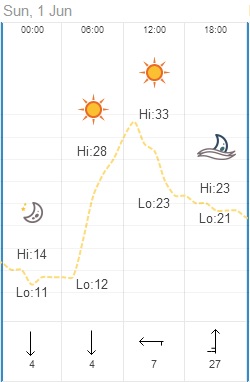
At 2010 Comrades Marathon the average temperature in Durban was 19ºC (min 14ºC; max 24ºC) with 63% humidity and 3 km/h wind speed. In 2012 the temperatures were around 23ºC with a humidity of around 38%.

On Sunday I stood in a t-shirt with a thin long sleeved top and I was perfect and that was Pietermaritzburg where the temperatures were 8 degrees. Immediately I advised the elite athletes I managed to chat with on the morning to really focus on their fluid intake and drink to thirst not more, because core body temperatures were going to rise and so would the temptation for major fluid intake. Most novices and even some pro’s land up drinking excessively to try to keep cool, however all this does is overload the system with fluid and can lead to over hydration or hyponatremia. By midday the temperature in Durban had soared to a peak measurement of 33ºC with the humidity increasing from 38% – 76% to Comrades cut off. (see below)

Image


From the onset I knew today was the day people would complain of bad water on route, cramping and nutrition used. Basically pointing the finger at anything to try to explain what happened on the day. In the last 20km’s of the race when our elite athletes came through our feeding zone, one in particular was complaining of leg cramping and a little surprised because he never cramps. We assisted him with a quick resolution to try to get him going again and it seemed to work. Post-race analysis showed over consumption of fluid. Bongmusa the Comrades winner took around 30 water sachets in the last 18km’s of the race. However of the 30 water sachets, 28 went over his head only around 2 in the mouth. This was incredibly smart, he was using the water to try to cool his core body temperature from the outside and definitely not on the inside. At that time of day, and taking in excessive fluid, it would have spelled disaster but there was plenty of wisdom in it.

Why should consuming too much fluid cause issues?

Its quite simple, in hot especially more humid conditions a lot of fluid is lost in the form of water and sodium. Taking in excessive fluid at this stage actually starts a process of what is called Hyponatremia which is basically serum sodium concentration of less than 135 mEq/L as a result of an accumulation of total body water greater than the body’s accumulation of electrolytes (sodium + potassium).
In simple terms due to the heat losing a lot of fluid in the form of water and sodium, and then consuming large amounts of water, can lead to low plasma sodium (salt level in the blood)

I was told by one group of athletes that they had been training in hot conditions for the race. However the hot climate they were training in was nowhere near the humid conditions they were racing in and they also succumbed to fluid consumption for core temperature cooling and potentially caused major issues. Another group of runners contacted me stating that with around 30km’s to go they consumed some gels and immediately began vomiting. I had some news for them it wasn’t the gels. With 30km’s to go these runners were in the thick of peak day temperatures and had also landed up over consuming fluid after careful analysis.

The symptoms for over-hydrating are crystal clear:

Nausea
Cramping
Dizziness
Disorientation
Confusion

Generally in athletes nausea and cramping are what is first experienced.

One of the issues with Comrades Marathon is that there are far too many water tables spaced too close to one another. It would be far more beneficial to space them out a little more. When running a marathon or an ultra, one tends to forget about when he consumed last how long ago, and often the mind just goes into a see and grab situation which leads to trouble.
A conversation with the Russian twins afterwards had shown excessive fluid intake. One of them landed up in hospital with close to renal failure symptoms which were declared to be a result of low blood sodium.  What’s incredible from the majority of the cases is that at the line they were diagnosed with dehydration, however results later showed this was completely incorrect. Very often dehydration symptoms are confused with hyponatremia symptoms. Athletes can perform dehydrated quite easily, but slightly overhydrate and you are toast.

During a long event such as Comrades Marathon weather conditions play an extremely critical role. The key elements are always drink to thirst, don’t over drink. If you are feeling very hot then cool from the outside not the inside.  If you are taking in a lot of fluid try consuming the water with carbs and minerals to maximize the fluid uptake. If you train in cooler climates and then suddenly race in a hotter more humid climate you could potentially look at additional sodium intake to try to mitigate this from happening.

Lastly and this is a topic that completely irritates me to no end. The runners that take NSAID’s with them. Yes you, the ones who carry myprodol, ibuprofen or any other pain killer or anti-inflammatory with them during the run. Its a fact that more athletes that have landed up with renal failure, which also starts with major symptoms of nausea, dizziness etc have been a result of consuming these types of medications during an event. In the words of my running coach “If you need to take a pain killer or anti-inflammatory during Comrades, then you should NOT be doing Comrades”. If this is you then understand you are putting your life at risk and what you are doing is absolutely nothing less than very stupid.

Its always tough on the day especially in 90km’s of running and anything can potentially happen. However the more prepared you are and the better you know your body the less chance there is of having any major issues.


Categories
Health Nutrition Performance

Performance vs Health & Convenience – The Energy Gel Debate

Most people that know me well know that I am not entirely a big fan of sports or energy gels. The main reason I have been critical of them is more from an education point of view than anything else. Consuming a very high concentrate of “glucose” requires a very specific reason and more often than not gels are used and abused under conditions that do not warrant consumption. Gels are very much not always healthy and one of my other main reasons is the fact that I see it as a massive litter item, when tearing off the top and tossing it. Let’s first look at some key sports nutrition facts to make all of this clear.

When training or racing there are a number of factors that need to be taken into account with gel consumption and these are:

  1. Type of Event
  2. Duration
  3. Intensity
  4. Digestive Impact & Palatability
  5. Temperature


The type of event you are doing more often than not will limit the type of fuelling you will be able to use during the event. Swimming, Cycling, Running and Track and Field Sports all have their technicalities, etiquette, timing, rules and regulations. Supplementation is there for convenience and an athlete will need to decide if the type of fuel feed he is looking at is simple and convenient under those conditions.
Doing a trail run or ride doesn’t make it easy for a gel feed as you cannot simply throw the tear off on the floor as this can lead to penalization and in some events disqualification. The environment needs to be taken into account.
Doing a long open water swim falls under the same category of what are you going to do with your litter. Cycling vests have pockets and make it more convenient to carry but again the used gel sachet needs to be kept intact and not just thrown away in the middle of nowhere, so from a convenience point of view they are not always ideal.

Secondly how long is the duration of the event? Is it a fast 10km run or is it a long slow ride or run. If you are going to use a gel feed for a short fast distance race it’s easy to feed prior to the event or run with one sachet and take at a later stage, but if it’s an ultra-marathon are you going to carry your big gel supply in sachets squashed in between your shorts and waist, or an additional race belt to carry them on route.

Then palatability comes into play in that the sweetness can be tolerable a couple of times but if an athlete would try to consume many gels over a long period of time the taste and feeling can become nauseating and intolerable.

Intensity plays a key role in the decision to use a gel during an event. If you are performing at a controlled pace where you are breathing quite comfortably consuming a gel might not be the best idea. Intensity often determines the feed. At a lower intensity a stability feed would be better suited to providing balance and sustainability as opposed to very high intensity where a quicker fast releasing carbohydrate feed would be required.

Taking a gel which will spike your blood glucose levels is a terrible idea when you don’t need the spike, as your digestive system won’t easily process all the glucose and this can lead to GI (gastrointestinal) distress. Another big reason for GI distress with gel consumption is often not consuming a sufficient amount of water with the gel. Consuming a large amount of concentrated carbs in a single gel dose requires a certain amount of water to be consumed with it in order to lower the osmolarity of the combined solution assisting in an increase in the absorption rate. The number of times I have seen athletes consuming gels without adequate simultaneous fluid intake has been numerous and it often leads to gastric distress.

This is why temperature plays an important role. In hot conditions it’s pretty easy to consume the amount of required fluid with a gel which I recommend to be at around 250-280ml’s of water. However on a cold day where hydration requirements are a lot lower one needs to be careful to consume a gel and then avoid the fluid consumption so as not to cause bladder discomfort. In cases where the temperature is lower I often recommend splitting the gel feed over a period of time as opposed to once every 45 minutes to an hour, to help lower the impact on the digestive system and provide a little more comfort and stability. Of course it’s not easy to open a gel and then not use it as it has the property of leaking once open which is not ideal, but I would take gastric comfort over a mess any day.

Now let’s take a closer look at the properties of a gel. Most gels are made up of a combination of carbohydrates and a few contain protein. The majority of gels use glucose, maltodextrin and fructose. Many times the straightforward name of fructose is often masked with the fancy wording of fruit juice concentrate, and in some cases they will even go as far as saying mango or apple juice concentrate, but let’s keep it simple this is fruit sugar and is fructose bottom line. Maltodextrin is not classified as a sugar due to its complex carbohydrate bonds, but a closer look at maltodextrin will tell you it is truly a blood sugar spiker of note and can reach up to 135 on the glycemic index. One of the biggest issues I have with maltodextrin is not the spiking properties but the fact that most brands use genetically modified (GMO) corn starch for maltodextrin. If I see a gel with maltodextrin in it I advocate complete avoidance unless one can ascertain 100% that the starch is not genetically modified which is rare. I haven’t found a maltodextrin based gel locally that is GMO Free.

Aside from the carbohydrate content which is the foundation for any gel, there are other additives which need to be considered. Protein as an ingredient often forms a small percentage of some sports gels on the market. Although protein is not there to provision energy during exercise, it can certainly assist with stability and a sense of fullness to keep those hunger cravings at bay. In long endurance events I always advocate some protein specifically for stability and during stage racing I am a fan of it during an event especially towards the end of the stage so that the protein in the system can immediately begin to assist post stage with the recovery process.

Flavoring, colorant and preservatives all form part of gel to provide taste, texture and of course shelf life stability. In Europe non-nutritive sweeteners in a high calorie product such as a gel are restricted and this is something to keep in mind when deciding on a gel purchase. The research into non-nutritive sweeteners such as Aspartame, Acesulfame-K has shown to be detrimental to human consumption and its best to limit intake if not completely avoid. Gels are one of the most consumed endurance sports products on the market and careful scrutiny of contents should always be in mind to ensure you put health and safety before performance.

32Gi’s new Sports Gel
I cannot even begin to tell you how many times over the years I have had requests for a 32Gi energy gel. It’s not that we never wanted to launch one it’s just that with all the above in mind it was important that we did the proper research and then extensive testing with our athletes. We had to ensure it was good from a health & performance perspective and of course made sure that the packaging we decided on was suitable to all types of sports and more specifically environmentally friendly.

Let’s review this unique gel which is going to be launched this week. Upfront I need to state that the 32Gi gel will form part of the Accelerate performance series. It is a performance gel which does cause a blood sugar spike and it has been designed this way specifically.

The 32Gi gel base we selected is natural brown rice syrup. The reason for selecting this as a base was very straightforward. We wanted a product which is as natural as possible, which in no way contains any genetically modified ingredients and is gluten free and fiber free.  Brown rice syrup (rice syrup) is the well advocated as the quit-sugar/sugar-free lobby groups. It consists of around 45% maltose, 3% glucose, and 52% maltotriose (a trisaccharide consisting of three glucose molecules joined together). The Australian GI institute has tested brown rice syrup to contain a GI of around 98 which is slightly below that of glucose but perfectly suited to high intensity exercise fuelling.  The carbohydrate itself breaks down into the 3 carbohydrate components of maltose, glucose and maltotriose which have varying properties, allowing for excellent absorption and lowered risk of GI distress. Rice syrup naturally contains a tiny portion of protein which allows for some stability. The gel contains over 90 Calories of glycemic carbohydrates which is a completely adequate feed.
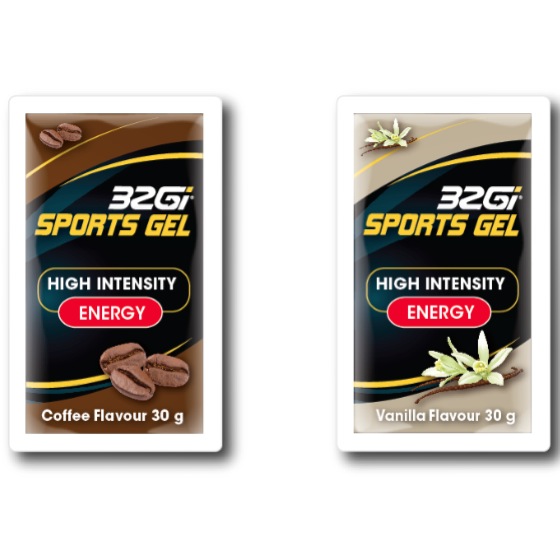
What I really like about brown rice syrup is that the actual taste is not overly sweet, the texture is not too thick and not too fluid making it fairly easy to consume and of course it is very natural.  The only other components to the 32Gi gel are that of sodium in its natural salt form and potassium which assists with mineral loss and of course fluid absorption. The gel is being launched in two flavours at first which is vanilla and coffee. The vanilla is a natural flavour and it contains no colors whatsoever, so in short it’s an extremely clean product from a health perspective.

What about the packaging?

Gel packaging is legacy and has been for many years. Most gels use a pouch packaging method which involves a tear at the top and squeezing it out. Some gel manufacturers do offer dispensing containers for those athletes that use gel bottles which can be quite convenient. We will be providing bulk gel packaging for dispensing in the near future.

We looked around in Europe, Asia and the US reviewed many variants of gel sachet packaging which we felt to be not just costly but not very convenient or environmentally friendly. We were approached by a company that does liquid packaging in a unique patented sachet format which requires no tearing at all, and once we took a closer look at this we realized this was definitely the way to go.
It’s a simple packaging which in short can be described as flat as a credit card and similar in size. It’s a one handed snap, squeeze and eat, no tearing with the teeth at all and no worries if you have gloves on a cold day, it’s simply ingenious. The best part of it is a runner can shove a fair amount around his waist on the inside of his running shorts or tights and it won’t bother him and won’t fall. A triathlete can easily carry a few in the suite without it irritating. It also easily fits into a top tube bag on the bike for those long Ironman rides when you want to carry fuel on the bike.
When we did our athlete testing we asked a number of ultra-runners to do a 56km run with at least 5-6 of our gels on them. The feedback was unanimous from a convenience point of view. It’s a runner’s dream carry.

When the cycling community tested it, we got great feedback on it being environmentally friendly and in the mountain biker community it was even more widely adopted as not just environmentally friendly but also easy to open especially on a technical terrain where focus is required on the route and not on the feed. A big thumbs up was also given on the fact that with one hand all the gel could be squeezed out of the packaging with no remains left behind. This is due to the even pressure applied by the package fold forcing the gel to exit the packaging once opened.

We have often prided ourselves on not just succumbing to the mainstream and the copy cats. We like to be innovative and we want to make sure that when we put a product into the market it has been properly tested from a functionality, taste, texture, packaging and convenience point of view. We also don’t just test our products on cyclists, we ensure the testing is carried out across a wide variety of sports, we listen to the athlete’s feedback and we go back to the drawing board if required. I personally feel that the 32Gi Sports Gel is going to make many athletes very happy in that from a health perspective there is no nonsense, from a functionality perspective it works well and from a convenience perspective it simply delivers and of course from an environmental perspective it’s definitely a brilliant no tear and drop option to keep the planet clean.

photo


Categories
Health Nutrition

The Protein Factor

There is one aspect of nutrition that traverses all sports conversations and that is the topic of protein. No matter what kind of athlete you talk to and even non-athletes there are always discussions revolving around protein supplementation and meal replacements. The protein market is one that is incredibly misunderstood and highly over marketed with so much sugar coating that any consumer will automatically feel there is a benefit to consuming it without really knowing why, how much and when. The entire idea of type of protein intake is completely misunderstood by most and I decided to write this blog to provide the necessary facts so that you as the consumer can make the right decision for yourself.

There are two main types of protein sources and these are animal based protein or plant based protein. The most common animal based proteins are dairy and egg. We can further break down the dairy based proteins into:

Dairy Proteins
Milk Concentrates
Whey Protein Isolate
Whey Protein Concentrate
Whey Protein Hydrolysate
Casein / Caseinates

Whey protein is a milk derivative which has a very strong amino acid profile. There is a major difference between whey protein isolate and concentrate. The concentrate is derived from a simple filtering process which contains a varying amount of protein, carbohydrates and fats in the form of lactose.The structure of whey concentrate is that it is not denatured and therefore provides health benefits in its natural form.
Whey isolate is derived from further processing and purification of whey concentrate. When this is done most of the biological structures that exist in whey concentrate are broken down and only the protein chains and amino acid structures remain. This makes whey protein isolate a higher concentration of pure protein. It also generally lands up being more expensive due to the further processing involved in getting it to this stage, however it does lack some nutritional benefits due to the denaturing process.

What about whey hydrolysate or hydrolyzed protein as its called. Unlike whey concentrate or whey isolate hydrolysates are enzymatically predigested for maximal speed of absorption. There are a few methods which are utilised in breaking down the whey into a pre-digested state. Personally I am completely opposed this type of protein as its completely unnatural and as humans with a digestive system our bodies are completely capable of breaking down and digesting protein in  the unique manner for which we were created.

1. Acid Hydrolysis
Acid hydrolysis is a fairly harsh process, usually carried out at high temperature. This process attacks all peptide bonds in the protein substrate, destroying some of the individual amino acids.For example, tryptophan is usually totally lost in an acid hydrolysis. Cystine, serine and threonine are partially broken down and asparagine and glutamine are converted to their acidic forms. Vitamins are mostly destroyed by acid hydrolysis. Salt may be formed during neutralization of an acid hydrolysis, resulting in a product with high salt content.

2. Enzymatic Hydrolysis
Proteolytic enzymes hydrolyze proteins more gently than acids, do not require high temperature and usually target specific peptide bonds.The material that results from a proteolytic digestion is a mixture of amino acids and polypeptides of varying lengths.For example, the enzyme pepsin will cut an amino acid chain where there is a phenylalanine or leucine bond. Papain will cut the chain adjacent to arginine, lysine and phenylalanine. Pancreatin shows activity at arginine, lysine, tyrosine, tryptophan, phenylalanine and leucine bonds.

3. Microbial Hydrolysis
Microbial proteases, proteolytic enzymes secreted by microorganisms, are becoming more widely used in peptone production. Proteases from bacterial, algal, fungal and yeast sources offer a wide variety of enzyme activities, can be produced in large scale, and usually require only simple purification. As far as I am concerned hydrolyzed protein is a chemical treatment process. Its completely unnatural and from a health point of view its completely struck off my personal list of animal proteins.

Casein protein is another milk derivative. Its not very water soluble and the attractive property of the casein molecule is its ability to form a gel or clot in the stomach, which makes it very efficient in nutrient supply. This means it is able to provide a sustained slow release of amino acids into the blood stream, sometimes lasting for several hours. It is often recommended as a pre-bed time protein snack or for weight loss when that keep you full feeling lasts for many hours. As a post exercise recovery it is too slow as far as digestion and absorption is concerned and would serve best if it was blended with a faster digesting protein to provide some post exercise stability and reduce the hunger cravings.

Plant Based Proteins
There are a number of plant based proteins on the market. The most popular vegetable proteins are of course soy and wheat protein which make up for more than 90% of the plant base protein market. Soy protein being the most popular is a vegetable protein made from soybeans. While most vegetable proteins are “incomplete” proteins, soy protein is a “complete” protein, and it is comparable in quality to many animal-based sources. Soy protein is low in saturated fat, and it has powerful antioxidant properties that have been shown to play a role in lowering cholesterol and preventing heart disease. Soy like Whey comes in a concentrate and isolate option. The soy isolate of course provides a much higher and purer form of protein content as opposed to the concentrate version.

The Soy / Whey Debate
For many years there has been an ongoing debate on which protein is better soy or whey.
There is no doubt that whey protein has a slightly stronger amino acid profile than soya. It is a faster digesting protein and quicker absorbed. Soya digests slower than whey but is 100% digested and absorbed. There has always been a lot of conversation and reference to phytoestrogens in soy however over the years this has never actually been shown to be an issue based on any solid scientific evidence. One of the things to be concerned about around hormones is actually often missed in the whey protein industry which also needs to be highlighted. Whey is a derivative of milk, which comes from cows which means high hormone levels. Its a fact that cows produce milk while pregnant which is over a large portion of the year, but moreover cows have been treated with hormones A large percentage of milk comes from cows injected with bovine growth hormone (rBGH), along with a vast array of antibiotics and other drugs. There is an expression which states a cows milk is for calf’s not for humans. Just take a look at the size of a cow. Cows milk is there to help their calf’s grow and strengthen. It was uniquely designed for a calf but not uniquely designed for a human.

Another critical element which has been pointed out is that whey of course contains IGF-1 (Insulin Growth Factor). IGF-1 has been shown in a number of medical studies to be a major contributor to cancer risk and cancer cell growth. Ref sites: (http://nutritionfacts.org/video/igf-1-as-one-stop-cancer-shop/ & http://www.enerex.ca/sk/articles/say-no-way-to-whey)

Personally I avoid dairy. I suffered the affects of dairy without realizing it for so long and once I eliminated it from my diet I began to see major benefits.

Another shadow hanging over the plant based proteins like soy was the introduction of GMO (Genetically Modified) version. Again this was another huge minus in the case of soy’s fight to stay credible as a vegetable protein in the market. Once the anti-GMO organizations began to expose the risks of GMO food (specifically soy and corn) consumption and the possible health risks, soy again became a protein to cast aside. I actually agree in that if a food is genetically modified then it should be completely avoided. This is not to say that all soy products are GMO, there are many on the market that are GMO free it just needs to be researched before purchase.

Both whey and soya have their issues and neither is perfect from a protein source point of view. In short I have provided some insight on the benefits of the major animal and plant based proteins and at the same time I have basically said avoid them.

What options does that leave us with from a protein perspective?

Well to be honest your major source of protein should be derived from proper and healthy nutrient consumption. What you consume in the form of protein from the time you get up in the morning until you go to bed at night will play the most major role in ensuring you are getting enough protein in your diet.

However as active people or someone looking for a quick protein fix, especially in the form of post workout recovery what other options are available since both whey and soya leave me with a lot of questions in my mind.

Well this is where I am headed and you can join me if you like.

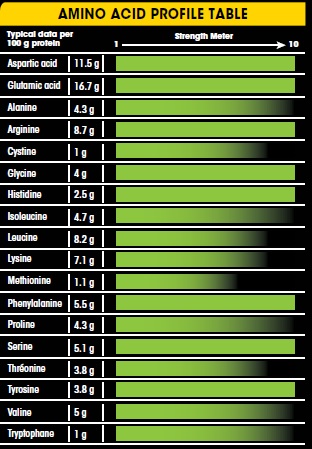
For the past 18 months I have been heavily engaged in testing a vegetable protein, which has none of the negative connotations of whey or soya associated with it. No hormone or GMO debates, no issues with lactose intolerance or digestibility.  In fact its a plant based protein which has an incredibly strong amino acid profile. With high concentrations of BCAA’s Glutamine, Lysine and Arginine. Its profile is very close to that of the ideal protein for humans as recommended by FAO/WHO
It also has an intermediate fast digestive rate which is exactly what is preferred especially for an endurance athlete.

What protein am I talking about?
Pea protein isolate 
is what I am on about. As a plant based protein it is genuinely  a very powerful, clean and healthy protein for anyone whether  pro-athlete or just a gym bunny. Aside from its strong amino acid profile, it is not unnaturally processed, it has a smooth texture and actually tastes great. It is superior not just in using it for a natural recovery shake but also in a pre training or racing meal. I feel this is the most complete protein and there can be no questions asked around allergens, hormones or food safety.

Once I was happy with the certificate of analysis from the supplier and my own testing phase. I gave it out to a large number of athletes to do some testing for me as well. The feedback was unanimous the pea protein isolate needed to come to market to provide a healthier option of protein to the health conscious consumer. It was very well received across a variety of amateur and elite athletes in various sporting disciplines. Pea protein is gaining a lot of momentum globally and it fast becoming a protein of choice.

The NEW 32Gi Recover Formula
32Gi has decided to re-formulate its 32Gi Recover. Over the next few weeks we will be rolling out our new 32Gi Recover formula to all 32Gi retailers globally. The new Pea Protein formula will be replacing our previous vegetable based protein recovery shake.

At 32Gi we are continuing to strive to provide the healthiest supplement choices to our consumers and we will continue to pioneer and innovate to ensure that all 32Gi users can be assured that we are a trusted brand in which health always comes first.

About 32Gi Recover Pea Protein Formula

32Gi Recover is a high quality ratio blend of 100% organic pea protein isolate combined with carbohydrates. 32Gi Recover contains all the essential and non-essential amino acids to maximise muscle recovery

Recover is an excellent protein supplement with no unnecessary ingredients only those critical to muscle and glycogen recovery. Recover can also be consumed as pre training or racing meal or even as a meal during a long endurance event. Recover is suitable for vegans and diabetics.

Recover Facts:

  • Assists with Muscle Repair
  • Assists with Glycogen Recovery
  • High Protein absorption rate
  • Cholesterol Free
  • Naturally High in Glutamine
  • Wheat, Gluten, Soy and Lactose Free
  • Improves Strength and Recovery
  • Strong Amino Acid profile
  • Digestive Friendly
  • Vegetarian
  • Kosher / Halaal Certified
  • Recover is available in Chocolate, Strawberry and Vanilla flavours

Image

Categories
Nutrition

The Tru Magnesium

Often I get asked by people what supplements they should be consuming. My general opinion when it comes to supplementation is that it’s just that “supplementation”. I always advocate that the proper vitamins and minerals to ensure your system functions at its optimum can mainly be acquired from proper nutrition. There can be no substitute for real nutrient dense foods. If you are not eating correctly then your body doesn’t deserve supplements. It might sound harsh but I always put health first and there are no quick fixes.

With that in mind what about those that actually do eat balanced healthy meals and exercise. One of the minerals that constantly comes to mind is magnesium. Magnesium of course exists in natural foods, pumpkin seeds, almonds, Brazil nuts, spinach rice, sesame seeds and the list goes on. Even though the magnesium found in these food sources are fairly high the volume and frequency with which they are eaten does not offer a fair supply to someone who is very active in particular an endurance athlete.  An athlete following a LCHF (Low Carb High Fat) diet, such as myself consumes these types of foods in abundance but is it sufficient?

The answer to that in my opinion is not. In all the curiosity surrounding magnesium I decided to run some blood tests. The two types of tests run are serum magnesium and red cell magnesium. In any persons case serum magnesium is critical for heart function, if it’s too low or too high you risk cardiac arrest, but this level is pretty much controlled at the expense of magnesium in the cells. Generally when a typical blood test is done it’s the serum magnesium levels that are measured and not the red cell magnesium. This is a problem as it doesn’t reflect the true status of where your magnesium levels need to sit. I insist on a red cell magnesium count, this is what you should be focused on.

In my case even with an incredibly clean diet high in magnesium rich foods, my red cell magnesium count was truly on the very low end and I was actually not surprised. I noticed it specifically worsen during harder weeks when bouts of physical fatigue or tiredness set in. The solution of course was to supplement. I know you are going to ask me if I had a low magnesium count prior to supplementation and the truth is actually not. What I discovered is that my magnesium levels were not purely dependent on what I ate, but also the volume and intensity of exercise that I performed at.

Why Exercise and Magnesium?
Quite simply, athletes need more nutrients than less-active people. We demand a lot more from our bodies than the average gym goer and there is a need to compensate with the right nutrients from foods first then supplement to ensure proper physical health, performance and recovery.

Magnesium is a vital nutrient in many of the body’s chemical processes and is required in nearly every single cell in the body for proper function. Magnesium plays a crucial role when it comes to energy production. It is a major element required for the body to produce ATP (adenosine triphosphate) which is basically what fires the muscles and gets them to function. Low magnesium in the cells will ultimately lead to lowered ATP production which will equate into fatigue, cramping, reduced power and nausea.

Some scientific studies on magnesium have found that endurance athletes that supplemented themselves with magnesium were able to perform at a maximal intensity for a longer period time and also had increased VO2 max.

There is evidence that magnesium requirements are elevated in athletes, and that performance can benefit from higher intakes. Aside from being used up in the production of energy, magnesium can also assist performance by reducing accumulation of lactic acid and reducing the perception of fatigue during strenuous exercise through its action on the nervous system. Magnesium is also lost through sweat so an athlete training in a hot and humid environment will probably require more.

Magnesium deficiency is quite common especially among the athlete population. This is mainly due to poor eating habits and also rigorous exercise where the magnesium demand is just not met. Magnesium is not produced by the body, it needs to be ingested daily through the consumption of magnesium rich foods and in an athlete’s case recommended supplementation.

The Test
I began supplementing my diet with magnesium and after 2-3 weeks I began to notice an major difference in my energy levels, ability to perform and also better sleeping patterns at night (I monitor my sleep with Azumio Sleep Time ). There was a noticeable difference and I will even put myself out there to state it was a major difference in my performance ability. A re-test of bloods 8 weeks later showed my red cell magnesium levels had climbed and it directly correlated with how I felt.

What magnesium supplements should you take?
There are so many different magnesium supplements on the market and it’s good to question what you should be looking for when it comes to selecting a magnesium supplement.  The most important thing to consider is the bioavailability and concentration of the product, in other words how much actual magnesium is there and of it how much will actually be absorbed and utilized by the system. Magnesium Citrate has been shown to have one of the highest levels of bioavailability, but a low concentrate of magnesium whereas magnesium oxide is highly concentrated but lower on the bioavailability end. Magnesium chloride lies in the middle of these two and it has moderate concentrations of magnesium but a fairly decent bioavailability. There are others but the ones that should be avoided are magnesium glutamate and magnesium aspartate they become neurotoxic due to lack of amino acid binding. Of course the preparation of the mineral will ultimately determine the outcome of impact and absorption.

What is meant by preparation?
Magnesium can of course come in its raw format often encapsulated of or coated such as an enteric coating which slows the breakdown of tablet to ensure it reaches the lower bowels where absorption is maximized. In truth this does help reduce the risk of stomach irritation by processing it lower down in a less acidic environment.

Typical magnesium absorption involves:

  • 40% of magnesium intake absorbed in the small intestine
  • 5% absorbed in the large intestine
  • 55% leaving the body as waste

Depending on the type of magnesium ingested and the magnesium status of the individual, these figures can be higher or lower. Studies have shown overall absorption of magnesium in some individuals as low as 20%.

Aside from the delivery mechanism many magnesium supplements are bound with other minerals such as calcium or zinc. Some companies that manufacturer magnesium/calcium combination supplements promote a 2:1 or 3:1 ratio as being ideal for absorption of these elements. However, there is no credible research to support this claim.

Now recently a new patented formula has been brought to market and this was something that completely caught my attention 2 years ago. A product that I used extensively in testing on myself and many athletes for a period of 18 months.
What garnered my attention was the fact that the patent holder had completed extensive bio-availability testing which demonstrated a 100% absorption rate with the highly concentrated magnesium oxide and magnesium chloride which is known to be lower on the bio-availability side. With magnesium this is unheard of. Generally we athletes take multiple large doses to get the desired result. The second thing that I found highly attractive was the fact that this magnesium supplement had a consistent release time of 8 hours. Yes, you read correct, 8 hours. Meaning that consuming this would ensure I was getting a consistent and stable release of magnesium over a long period of time and this is what made it highly bioavailable. Then a third element popped into the picture which closed the deal.

This magnesium compound was infused with L-Carnitine. This completely switched me on. L-Carnitine is critical to an endurance athlete. It transports long chain fatty acids into the mitochondria for ATP production and it also transports short chain fatty acids and metabolites out of the mitochondria. In simple terms it carries fat to the cells to be used for energy as well as slowing down lactic acid build up (it acts as a buffer). As a minimalistic fueller that predominantly relies on fat for fuel this was a shining light.

I decided to put this to some ultimate testing. Not that I didn’t trust the doctor who invented the product, but as an athlete I needed to experience it for two main reasons.

–          Digestive Comfort

–          Functionality

I am not prone to cramping and generally I blame muscle cramping on undertrained muscles in most athletes. In my case I wasn’t sure what parameters to set but decided to follow the dose directions and first off verify the impact on my sensitive digestive system.

This passed with flying colors and even under high intensity sessions when consumed prior to exercise there was no negative digestive impact whatsoever. Then within a short period of time I began noticing two major benefits of this patented compound.

  1. I could exercise at a high intensity for a lot longer than previously. There was definitely a noticeable delay to the onset of muscle fatigue
  2. DOMS (Delayed Onset of Muscle Stiffness) was reduced significantly so much so that I forgot I actually had compression garments ;-). In all seriousness after very hard sessions I had a major reduction in muscle stiffness.

After 3 months of testing I decided to give this out to some elite athletes for further testing and the feedback was completely in line with what I was experiencing. Except for one thing which I could not account for was that one of my elite athletes in particular who had a severe cramping issue noticed a difference in that the onset of his cramps were delayed or even mitigated. Once I had completed thorough testing with many professional and amateur athletes there was no doubt that this patented compound had to be made available to the public. This is where 32Gi’s Trumag® came into being.

I have tested many magnesium products over the years in many different variations and forms, but this is definitely a true slow release magnesium formula which has an incredible benefit for any endurance athlete. Another thing I found quite impressive is that for a person that cramps during sleep this becomes a simple solution due to its 8 hour release. It means that your magnesium requirements will be catered for throughout the night.
Trumag is definitely a New Generation Magnesium supplement.

CONCLUSION
In short magnesium supplementation is definitely high on my list of DO’s especially for an endurance athlete. There is more than enough evidence to support the benefits of magnesium supplementation.

I plan on holding a webinar in the coming weeks with the Doctor who invented Trumag® as well as some of the athletes that have been testing it to provide some insight and feedback on the product.

Trumag

ABOUT 32Gi TruMag®

32Gi is proud to announce the launch* of patented TruMag™ a true slow release and 100% bioavailable magnesium tablet.
TruMag™ is a unique fusion of two very important compounds required for endurance athletes, these being Magnesium & Carnitine.
Unlike most magnesium supplements on the market TruMag™ breaks down in the body of a period of 8 Hours and is completely absorbed by the system, making a single dosage extremely effective. The unique patented infused combination of Carnitine makes it a powerful formula for any endurance athlete due to Carnitines unique property of transporting free fatty acids to the mitochondria (muscle cells) to be utilized as a source of energy.

Due to the prolonged release an athlete can take a single tablet prior to a sporting event and know he will be well covered for the duration.

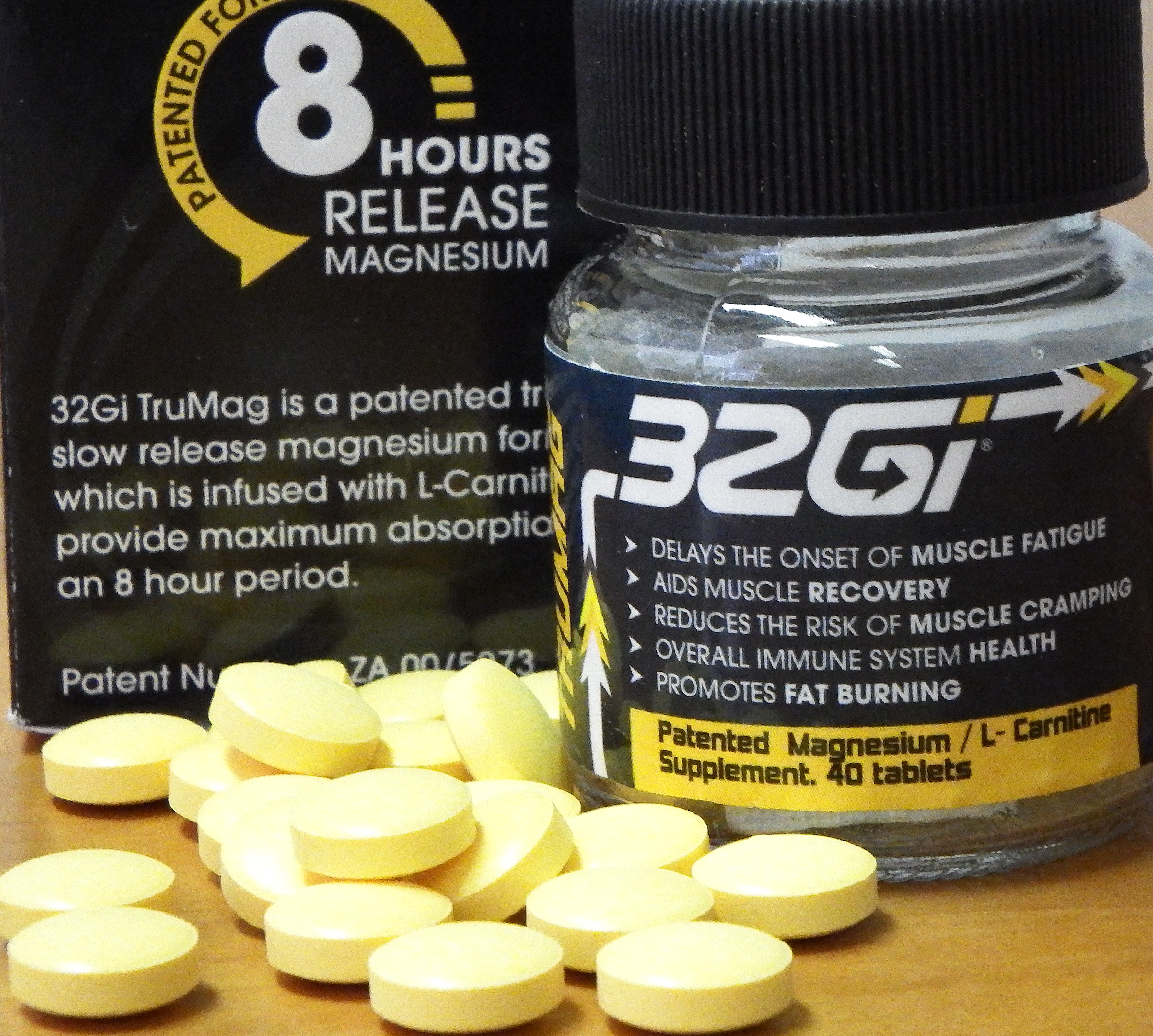
32Gi TruMag is a patented true slow release magnesium formula which is infused with Carnitine to provide maximum absorption

  • Delays the onset of muscle fatigue
  • Promotes Fat burning
  • Aids muscle recovery
  • Assists in exercise performance
  • Reduces the risk of muscle cramping
  • Overall immune system health

*32Gi Trumag is now available at Dischem and rolling out to more stores country wide

Categories
Performance Training

The Pipe Club

Image

I often see runners get asked how can they run?

In the sporting community it usually comes from the cyclists and swimmers, and when these athletes switch to triathlon the one discipline that is sometimes the toughest for them to grasp is the dreaded run.

Pushing hard on the swim, or destroying the bike hoping one has made up enough time to hold the runners back on the run. No chance. The strong runner comes cruising by with ease, leaving you behind wondering what you did wrong. A multisport athlete that comes from a running background is often at a great advantage. I often tell people that a runner can learn to ride a bike but for a cyclist to switch to running is not so easy and it takes a lot of hard work and effort to get to a stage where you feel very comfortable.

I was fortunate to have quite a bit of swimming and running in my school days, but then for many years I let it slip away and switched my focus to weight lifting and then finally coming back to mountain biking, road cycling and then to triathlon. 
My bike was always a strong leg and with all that leg power I was very confident to sit on the bike and smash the pedals for long periods of time, but once I neared transition I used to dread that run that lay ahead.
I knew it would be a hard slog and definitely not a cruise. No matter how much time I put into my competitors especially in the longer distance races they would just eat it back and some more leaving me feeling very frustrated. 

I would hear a lot of talk from the running community about the runners high and I thought man you guys are smoking some awesome pipes because I could not imagine any such thing. I decided to make a conscious effort and switch all my core focus to running, reducing my cycling and swimming focus and seeing where it would lead me. 

Day after day I would pound the tar, searching for something which in my mind was fictitious and only existed in the minds of the “Pipe Smokers”. Months went by and I was still battling through. Muscular legs and a muscular upper body didn’t help my runners frame and the conscious effort of becoming the runner was one of hard physical training, learning proper technique and training the gut with proper nutrition. More months went by and I was convinced that no such thing as the runners high existed and if it did exist why did I not experience it on the bike or the swim, why were these “runners” so special? 

I built up speed, I built up distance and my running improved dramatically but that one single thing was still eluding me.

Two years later, on a Sunday morning I was headed out on a 25km training run, and all I could think about was my reasoning for the run was because I had to. I had some races coming up and needed the mileage. Understand one thing, running was still not enjoyable for me even though I was running well and it had improved drastically. I truly dreaded long runs, I found them tedious and boring and couldn’t wait to get to the finish to bank the session. It was in my mind a painful drag.
I headed out with some music to keep me company and at around 10km’s in I was thinking man still another 15km’s of darkness to go. I just kept pushing through, legs one in front of the other and trying to keep my focus on getting to the finish.
At around 15km’s I started to feel pretty okay and then as time went on I started to feel better. I wasn’t so much focused on the finish line anymore but the present.
Then suddenly it hit me, like a molecular nuclear explosion from absolutely nowhere. Extremely heightened senses, shivers in every single part of my body where sweat ran and my mind just completely drifted into a zone where I felt completely superhuman. My pace lifted my legs floated, and my mostly used frowning facial muscles which were always there during a run slowly eased off and put an extremely rare smile on my face, which seemed so ridiculous but there was no ways it was going anywhere it was there to stay. Complete elation and euphoria, the Runners High. 

I finally became a member of the “Pipe Club” and never doubted them again. I wondered if this was a once off, or only under certain conditions. There are many articles on the subject and the physiology behind the euphoric conditions have been explained in many ways, but as runners who cares as long as its there we love it. It allows us to contemplate to strategize, to think to dream, to create, to destress and to smile its all encompassing and makes us feel alive.

Ten years later and I can honestly say this I experience the high every single time I run, it does not matter if its track, short or long, at some point in my workout that smile hits my face and every single thing around me disappears while I relish my own little piece of heaven even if it is for a short while. 

My advice to anyone taking on running or switching their focus to running, keep turning over those legs, keep persisting and I can guarantee you that the pot of gold will eventually be waiting at the end of your rainbow. 


Categories
Health Nutrition

“Tell me what you eat and I will tell you what you are.”

Image

Every day I work with so many different people from all walks of life, who all have different backgrounds and very different goals. Each has an opinion and generally most become rigid in their habitual ways. This is especially true when it comes to my favorite subject nutrition. It’s so true that old habits are so hard to break, but even more so when we do try to break them very often it’s the good habits that are broken and the bad ones that stick around.

I get bombarded daily with questions around dieting, nutrition, supplements, racing and training and the list goes on. I don’t mind the questions at all as this is what I do, I guide people, I make sure they are on the right road, and if for some reason that road hits a fork and they take the wrong route it’s my job to get them back on track. When it comes proper nutrition most people seem to know best that the way they eat is spot on. However it doesn’t matter whether you are a pro athlete or not I can say one thing for certain that we all get it wrong. There is no such thing as perfection in a diet, it’s a lifelong road with many forks, turns, bumps and hills.

It requires constant attention, tweaking decision making and this is based on so many factors that face us daily. As we age our requirements are also going to have to change drastically because our body’s change so we function differently and we need to cater for those changes. There is definitely no one fits all nutrition solution it does not exist unfortunately. Each and every person is unique and has completely different needs.

One of the biggest waves of nutrition globally at the moment is the move towards a paleo oriented diet meaning a move away from modern foods and grains to more natural animal and plant based eating. It’s no secret I am very much an advocate of this type of eating however due to my athletic lifestyle I need to truly be careful of what I ingest to ensure I can stay healthy, maintain my lean body mass and still perform.

Many people who switch to a low carbohydrate higher fat, protein consumption forget to take into account that it’s a completely different method of eating than what they were previously used to and it can take a period of adjustment. Unfortunately society has embarked on this search for the golden pot at the end of the rainbow, the quick fix and if the results don’t come hard and fast then it leads to disappointment and the perusal of a different path. There is no silver bullet and it’s a hard blow when it comes to following a nutrition plan for many weeks and not getting the desired results you hope for.

Well the truth of the matter of a Paleo diet or an LCHF (Low Carb High Fat) diet is that in actual fact they can work and work very well BUT only if you are meticulous about watching what you eat quite carefully and monitoring it regularly. I often see people going onto this type of eating plan with the opinion that they can eat as much protein and fat as they want, cut the carbs and they are on route to a whole new level of body shape fitness and health. Unfortunately it just doesn’t always happen and leaves them going back to their old bad habits.

Adopting a new nutrition plan should not be an overnight switch from your previous type of eating to the new one. I always advocate a gradual transition into a new type of eating. This means small changes at a time and over a period of time.

So you want to go the LCHF route?

Great but not so fast. The first thing is to look at your current eating routine and I don’t mean guesswork here.

I insist my clients write down a food journal over a weekly period, I want to see exactly what they are eating and drinking from the time they wake up in the morning until the time they go to sleep at night. Most are quite shocked by what they put on the piece of paper, because when we eat the mind has this funny thing of not remembering exact foods and tastes, it’s usually an emotional period of enjoyment which we tend to forget until we actually see it in black and white.

The most critical thing about current eating habits are

  1. Timing of the meals
  2. Type of meals

There is no point in taking note of a meal on its own you need to understand the timing as well, both are vitally important, especially if you are an athlete and need to fit in meals around your training regime as well.

Next is to cut out the bad. I don’t mean do this overnight. If 80% of your diet is bad and you immediately cut that 80% what are you going to put in its place? I mean slowly replace the bad with some good health options. As an example if you eat processed oats, then go with a wholegrain or rolled. If you eat wheat bread then switch to a 100% rye.


“But that’s NOT LCHF dieting, you still eating grains!” I was shouted at once. “Seriously? I didn’t know that”J.

There are not many people in this world that unless they have incredible determination and willpower will be able to make the switch overnight. Also I need to say this, if your current eating regime is unhealthy and a mess then no drastic changes will work for you. If you want to adopt a proper sustainable way of eating, then get the meals healthier, get the bad out and get the routine correct. Then only do we move to the next step which is changing the percentages of the eating game.

I often see people who eat 6-8 healthy meals a day then switch to a LCHF diet where they are still eating 6-8 meals a day. This can be a dangerous exercise, especially when I notice that most have upped their calorie intake from 1500-2000 a day all of a sudden to 3000 or higher. This is why habits and changes to the body need to be made gradually for optimum success.

Another bad habit I see when it comes to eating correctly on a LCHF diet is that the amount of protein consumed is sometimes excessive. Let me tell you that over eating protein can cause issues, in an athlete it could cause muscle weight gain which is not optimal when you are talking about power to mass weight ratio for optimum performance.  An over-consumption of protein also puts strain on the organs mainly kidneys and it’s really not the place you want find yourself in. The body building community and supporters of it have pushed this aside as a myth due to their advocating of excessive high protein diets, but then again a body builder does require a much higher protein diet than the average person. I also want to know which big body builders have really lived a very long healthy life with no issues. Very far and few between.
The second thing is under eating protein, can lead to muscle loss, which is also a drop in performance. The protein intake of a person needs to be fairly specific based on the kind of exercise he or she does and it needs to fit in with the goal of what they are trying to achieve.

Carbohydrates in the LCHF diet DO exist. Many people think it’s a complete cut, but there is no chance, they are very much part of this type of eating especially if you are an endurance athlete. Carbs are mainly in the form of healthy vegetables and grain based carbohydrates are pushed aside. However and this is something I advocate to many. To make a sudden switch from a grain based diet to a zero grain, protein fat diet overnight is hard. It’s best to introduce what I call carbohydrate type ingestion based on timing.

I do suggest to endurance athletes that carbohydrate consumption in the form of grain based complex carbs needs to remain in place in the beginning especially for those training twice a day in order to ensure proper recovery post exercise. An Ironman athlete in training who depletes his glycogen levels in a hard session, will not be able to pick it up quick enough for later sessions and I have seen many athletes hit a fatigue cycle which is difficult to come out of. So I do stand firm that carbohydrate’s play a crucial role even in a low carb high fat nutrition plan, however it doesn’t mean that it needs to be excessive but it does need to be controlled.

I suggest my preferred methodology of gradual carbohydrate depletion to find that optimal level of nutrient intake. This will completely vary from day to day depending on the kind of day, whether you are training, racing or resting. It also depends highly on the kind of training you are doing on that given day and that’s where carbohydrate timing and type come into play.

As far as the fat content goes in LCHF, it plays a crucial role and the balance is not always easy to maintain. I always mention to people that in order to lose fat you need to learn how to eat fat, and this is so true. Food selections based on fat content have driven the industry for way too long. Sugar has become the most potent drug the food industry has ever produced and used. We now have the largest global rate of addicts worldwide. Marketing is a powerful tool which has changed the minds and opinions of many for way too long and I fully agree that the world needs to move back to basics, meaning food selection based on its most natural form.
It’s so easy to make these kinds of selections if you really want to and no matter what kind of eating regime you adopt, natural food sources are best there can be no argument there. Educate yourself and learn to read the labels of food items on the shelves and in time you will find yourself making the healthier choices.

When it comes to fat, who said low fat was better? The medical fraternities that blamed it on heart disease? The dietitians that adopted low fat diets to lose weight? The sad truth is that even if you don’t ingest fat, whatever you do ingest in the form of carbohydrates or proteins that are not utilized will convert to fat regardless.
I like to use the example of the low fat yogurt which is low in fat, but sweetened with corn starch, oh wait that’s a complex carbohydrate, OK so I don’t have to add the word sugar on the label. Brilliant a low fat sugar free yogurt  Unfortunately a low fat yogurt with corn starch or whatever other sweetener is used will of course get the excess fructose metabolized by the liver and converted to fat. What happened to the low fat yogurt  well it turned out it wasn’t so low fat after all. Taking a high fat product is really the way to go for a variety of reasons. Firstly it satiates you far better and will not leave you feeling hungry afterwards causing you to overeat. Secondly fat is required for better breakdown of carbohydrates in the system and if I were to eat a boiled potatoe I would rather load it with a lot of nut butter to provide a better food combination for the digestive process.
In the words of Dr Robert Lustig (renowned Endocrinologist) “Which is worse the sugar or the fat? The sugar a 1000 times over!”


Many people worry about cholesterol when consuming fats however cholesterol plays an important part in every cell membrane. Cholesterol supports the brain and without it, the human body cannot produce certain hormones such as cortisol, oestrogen and testosterone.

Cholesterol is needed to produce vitamin D which is one of the most lacking Vitamins in people globally these days regardless of sun exposure we just don’t get enough. Across the globe the bad perceptions of saturated fats are disappearing.

Major studies have failed to find proper evidence that reducing your intake of fats reduces your risk of heart disease or cancer. They have even failed to prove that consuming saturated fat is the reason for weight gain.

Butter has also been shown to be one of the best sources of vitamin A which is known to protect against heart disease, help vision and support thyroid and adrenal gland function.

Cholesterol-lowering spreads in all honesty need to be tossed in the trash! These well marketed goods contain plant sterols or stanols a naturally occurring compound that forms part of the cell structures in plants and have a similar structure to cholesterol in humans. They are said to be a healthier choice due to their lower saturated fat content. However the medical fraternity is not convinced at all that lowering the cholesterol in the blood is necessary for good health. Unfortunately plant sterols have also been linked to the body’s inability to absorb certain vitamins, such as vitamin E.

So now that we have discussed why fat is good, let’s talk about the low carb high fat eater who actually battles to lose weight but gains weight. It’s quite simple there are areas that are completely repetitive when it comes to observing the eating habits of people that stand out.

  1. 1.    Overeating nuts
  2. 2.    Overeating dairy
  3. 3.    Overeating fat

It’s that simple. When you embark on an LCHF diet meal consumption actually is reduced. If I eat a high fat protein breakfast, it satiates my hunger for hours and I might not have my next meal until lunch time, meaning no mid-morning snack. Wait a minute but shouldn’t I be eating consistently and frequently. Well if you are on a low fat eating patter yes you will need to as hunger sets in a lot quicker.

However on a higher fat diet not at all. You need to take into account that a gram of fat is 9 calories as opposed to 4 for protein and carbohydrates. Meaning that if you consume an excessive amount of fat too frequently your calorie consumption can land up being excessive. I have witnessed people going over 3000 calories a day due to this and it becomes a disappointment when trying to achieve certain results.

The type of fats you consume are also important. I always advocate MCT’s (medium chain triglycerides) as brilliant fat to consume especially for an athlete, because these fats are not stored but utilized for energy. Take into account though if you are eating some blood glucose spiking carbs during a training session, the body will not be given a good enough reason to rid you of these nice fats that are waiting to be utilized  So do yourself a favor and watch what you consume during training because you might be doing yourself a disservice to what you are consuming daily.

Healthy fats such as Omega 3’s should definitely be consumed not in excess but sufficiently to provide your body with the nutrients it needs to function properly. Omega 6’s don’t always have a great name but there is absolutely nothing wrong with my favorites Spirulina (also an Omega 3 source) and Sesame Seed (tahini). You need to just take into account that when you eat fats the portion consumed should be carefully verified that in the term of calorie consumption it’s not in excess but within a decent daily allowance. As an athlete that has been consuming a low carb high fat diet for over 8 years now, the one thing I can honestly say is that calorie consumption on a daily basis for me has been only between 800-1800 calories on a given day. When I am consuming a lower fat diet my calorie consumption increases significantly due to the eating frequency cycles.

 Whichever route you decide to take, whether low carb high fat, low fat high carb, low carb/fat high protein, you need to be aware that there is a compete difference between all these types of nutrition regimes and requirements will be completely different. If you do attempt to bite the bullet and make a switch to a healthier form of eating understand what you are wanting to achieve, set yourself realistic expectations and let someone guide you to ensure you don’t set yourself up for failure.

Categories
Nutrition Training

“If you fail to prepare, prepare to fail.”

Image

Recently I have been receiving a lot of questions on training and racing nutrition. My last blog was focused on becoming more fat efficient, keeping your fuel intake to a minimum and adapting the body to using its natural fat stores as a predominant source of fuel in an endurance session. It’s an awesome position to be in when you can just get up and go long and not worry so much about fuelling yourself.

As mentioned previously in sessions under 2 hrs you can perform extremely well at a high intensity on no fuel at all, if you do consume anything it’s purely to make your brain happy and give you that extra mental boost to up your performance. This has been shown in the famous “Carb taste not swallow test” where athletes purely rinsed the drink in their mouths without and a percentage increase in performance was demonstrated (The Effect of Carbohydrate Mouth Rinse Cycle Time Trial Performance-Jeukendrup) It shows that the mind has a lot to do with an athlete’s ability to perform and Prof. Tim Noakes has often presented the central governor theory where the brain is completely in control by the body and understands all physiological feedback mechanisms. It determines based on conditioning and ongoing readings it gets from the body during exercise as to what point it will control your ability to perform or under perform in a means of ensuring you are protected. If you are not trained to go out and race at a particular effort, the central governor will surely tire you with feelings of fatigue under those conditions in order to slow you down and ensure the body is safe. There is of course opposition to this theory, but there is one thing that both sides still agree on and that is the body needs to be trained to perform.

Last week on a whim I decided to run 42km’s to celebrate my 42nd birthday. Maybe not a normal thing to do, but my running coach said go easy and get it out the system. Even if he said no I think I would have been stubborn enough to do it. With no race pressure, and not the best night’s sleep, I got up early had a cup of strong black coffee, took a waste belt with two 250ml water bottles and headed out with a friend. I ran at a very comfortable and evenly controlled pace, I got back home in 3h19 minutes with a little water to spare and felt great.

The big question I get asked is how you can go and run for that long and not eat anything, and the answer is simple I had all the fuel I needed for that long run inside me BUT more importantly my body was conditioned and gut trained extensively to do that quite comfortably.
That run probably didn’t touch much glycogen at all, it was primarily fuelled on fat. Also the time of running was way less than say some of the rides I do on water only which can go anywhere between 5-6 hours so it wasn’t a worry.  The point is the body is trained over a long period of time with proper nutrition consumption to allow for this. The brain and body work together to understand the body’s ability and limitations and with time you will understand as your body gives you constant feedback. (Check out a previous blog “Listen to your messages”)

The big questions I got after that is if this is how I will race? My answer to that is absolutely not. This is where the title of this blog comes into play, “If you fail to prepare, prepare to fail”.  It’s very critical to properly prepare for racing conditions as well, and even though I do a lot of water training, I definitely set aside time for what I call racing “nutrition training”. It’s an important area of being able to race at your best. There is no ways any athlete can go into a race not properly prepared for what he has to consume and under which conditions to ensure that he performs at his or her best. Racing is done at a much high pace for a longer period of time than a training session and it requires a different type of fuelling.

It’s not a difficult aspect of training but I need to stress that it’s a critical aspect and something that cannot be left to the last week or two before a race, because you will want to have your race nutrition down packed way before that in order to make sure that you have a plan and you can habitually stick to it.

My recommendation is to choose a day where you test out your race nutrition. This means waking up in the morning eating a pre-training meal as if it was your pre-race meal going out for a few hours at a fairly intensive pace (slightly slower than race pace) and checking the following:

  • Digestive Comfort  
  • Palatability
  • Energy Levels
  • Ability to Perform

I generally do a session like this once every 10 days and know a few elite athletes that will do this once a week. Sessions like this must be planned, well thought out and think about mimicking it close to your race day as possible.

Nutrition of course will vary for each sport discipline and it’s important to understand that what you do on the morning of a 10km race, marathon, triathlon and cycle race can all differ and should be planned, checked and re-tested to ensure you are on track.

If you can finish that session strong and feeling good with all the check marks in the boxes you are definitely on the right track. This does not need to be done too often as you would not want to try and mimic race day efforts too much, but you need to find a winning formula.

If you are doing a stage race it requires even more effort to test your nutrition as you will need to test your day nutrition first, and once happy with it move on to testing your stage racing nutrition. The critical area of stage racing is recovery in order to be able to keep consistent performance’s each day and keeping those energy levels constant. It would be highly recommended to do at least 3 repeat performances each day including pre, during and post racing nutrition which will give you an idea of exactly how you feel day to day and whether your nutrition strategy is working for you.

Each person is unique and what works for one person won’t necessarily work for another so you need to experiment and see what is the best for you.

As a general guideline in deciding what you are going to eat on race day I can suggest the following:

Avoid any Food Consumption that can cause Digestive Issues
There a few foods than entirely ruin a race. You might think they don’t affect you generally so when you are racing they should be fine. However you need to understand that blood i.e.: oxygen is needed to perform digestion. If you are running very fast, oxygen will be diverted away from your stomach to your heart, brain and leg muscles to cater for the exertion. The stomach needs an adequate amount of electrolytes, roughly equal to that of the body tissues outside of the stomach, to perform digestion. If digestion doesn’t occur and the contents of the gastrointestinal tract don’t move, the muscles in the walls of the tract may begin to spasm, bringing on uncomfortable stomach cramps. Triathletes tend to experience more digestive issues than most sport as the positions of 3 disciplines vary. The swim is a lying down position not very conducive to easy digestion and there is buoyancy on top of that, this is usually the setup for cramping that occurs later on during the bike or run. Secondly a triathlete cannot consume during the swim or hydrate so if he or she has consumed something not suitable to that discipline a fair amount of time will pass before the first bit of water can be consumed to try to create some form of balance. In long distance events like Ironman very often consuming a glucose spiking product at the onset will cause GI distress pretty early on. A common mistake that many endurance athletes make.

Running moves the bowels around quite a bit more as the body’s movements gets the organs bouncing and shaking nicely. I am emphasizing that what you eat that’s generally comfortable will still need to be tested during exercise which is what I call digestion under stress.

The main foods to avoid before a race are definitely anything that is high in fiber as this is a certain way of getting your bowels to work nicely and that’s the last thing you need before a race or during it, especially while pre-race nerves are finding their way into every part of your body. Another recommendation I make it to avoid high lactose products. Dairy is a very common cause of digestive problems. Even if you are not lactose intolerant you don’t know what it can do to your body while under stressful conditions. Heavy meats or cheeses are a big no. You want to consume foods that are easy on the digestive system and leave you feeling comfortable.

Size of Meals
Another issue is that many athletes over eat and over hydrate pre-race leaving them feeling bloated heavy and uncomfortable. That is a guaranteed curse under racing or exercise conditions. You need to play with your portion sizes to see what your comfort zone is. I generally recommend a +-300 Calorie food portion pre-race.

Timing and Type of Meals
The timing of your pre-race meal is also critical. I can use a personal example for this one. A few weeks ago, I had a 25km trail race. I made a BIG rookie mistake. I though the start time of the actual race was 7am. There were two races that day and I for some reason just never read the details properly which is not like me, but I was chilled about it nevertheless. I woke up at 4:30am had a nice rolled oats and nut butter meal. I got a lift to the race and on route I get told the race is actually starting at 6am. I was thinking in my mind this is going to be even harder and it was. The timing of my meal to my 7am race was perfect, but to the 6am race it was not. I had to suffer some serious heart burn through the event and I expected to. At least the pain could mentally be bypassed and allow me to come out on top. I am just using this example to stress the importance of meal timing. Preferably minimum 2hrs before the race you want to be done and dusted with your pre-race meal, only requiring some top ups in between. To be honest in this case I shouldn’t have had a pre-racing meal maybe just a small shake or drink before, it wasn’t required at all especially at that time of the morning and I hadn’t run a trail race in years so my nutrition prep was not exactly where it should have been.

I guess this leads into another question. When should I eat a proper pre racing meal and when is it not absolutely necessary. In this case I always look at the type of the event, my pace and expected time. Generally any race for me taking less than 2hrs I won’t eat. I might take a small shake but I certainly don’t require any food. These shorter events as I define them will generally be raced on water. If the pace is extremely high and is closer to the 2hr mark then chances are I will consume some sugary stuff on route to keep my brain a little happier and ensuring a little bit of glycogen sparing on route.

Race Fuel
When events get longer 3hrs or more, you need to understand that at a very high pace you will deplete your glycogen levels and will need to eventually rely on fat as the predominant fuel source. Your body will naturally slow down to cater for the fuel change as fat burning requires oxygen and at too high a pace that’s not going to happen. However this is where fat efficient training plays a massive benefit, because if you have trained your body to adapt to this sort of fuelling it can be trained to do it a slightly higher intensities and this is a great benefit. Also the switch from glycogen to fat caused by glycogen depletion is a shock for some a feeling of fatigue and not being able to move any more. The trained athlete will move through this quite a lot more easily. There is another way around this and that’s to try to pace yourself properly in an endurance event where you won’t burn your glycogen completely and have saved it towards the end where you really need it. In a cycling race it’s sometimes very difficult as the effort or intensity is determined by the bunch and this is where most people get burned, as they are forced to perform at a high intensity to stick with it even if they don’t want to. The wise thing is to try to stick it out in the middle and draft as much as possible to conserve your energy stores. However in an ultra-distance triathlon or long running race you have the ability to determine your own pace and control your intake and predominant energy fuel based on that.

It’s important to remember that if you are going at a controlled pace or intensity consuming a blood glucose spiking product will mitigate you from being able to use your fat stores as energy, so keep fuel intake to lower insulin spiking products which allow for this. When performing under very high intensity conditions you are best suited to taking a blood glucose spiking product as fat is not easily accessible. There of course is a combination of both glycogen and fat being used when doing long events, as pace varies through the event, but fuel intake will ultimately determine this as well, and can upset the balance.

Another point I want to enforce is that endurance fuelling should never be complicated. The simpler you keep it the better. I advocate drip feeding in endurance events. This means smaller more frequently timed feeds as opposed to feeding every hour. It’s easier on the digestive system and it keeps the body and energy levels in a nice equilibrium. I generally will feed every 20-25 minutes in a long endurance event.

Plan and Train the Gut
I was invited to chat to the participants of Ironman 70.3 Western Australia this year as we were event sponsors. The first question I received was shouldn’t we be consuming between 60-90 grams of carbohydrate per an hour of exercise during the event. My immediate response to that was has your gut been trained to consume 60-90 grams of carbohydrates per an hour. The amount of carbohydrate consumption per an hour during exercise is not based on the number of carbs you are consuming, but more importantly how much of those carbohydrates your body is capable of absorbing and using. If your body is only capable of absorbing 50 grams of carbohydrate per an hour because that’s the food you use and that’s what you are used to, then how would your system cope under excessive intake meaning, your gut completely under-trained to deal with the increased consumption. The answer is it won’t. In long endurance events I can easily get away with between 20-50 grams of carbs per an hour in an event. I have never needed to venture into the 60-90 range ever and I don’t feel I would cope in that range either. Another thing that is important to note is the 60-90 gram carb intake is based solely on the fact that you are fuelling with carbs only which means racing at a very high intensity, its doesn’t take into account controlled pace and fat usage. Scientific studies have shown that a combination of specific carbohydrates in unique ratios can maximize the absorption rates however I have witness many an athlete opt for those test results only to be left with severe stomach issues on route. Another thing I don’t agree with is relying on drinking ones calories. I definitely feel that food solids are a far better form of fuelling. Dr Allen Lim well known scientist especially with his involvement in premier Tour de France cycling teams has shown a lot of science behind this and you can view it here.

There are many ways to approach nutrition when it comes to training and racing. It’s something that always needs to be taken into consideration and never left on the side. So the next time you sit down look at your training and racing schedule. Plan your workouts, your swims, cycle and runs, but add another training session into that called nutrition. Train your gut, get on track and make sure you give yourself the best opportunity to perform well and hassle free at your next event.


Keep at it 

all the best

M

Categories
Nutrition Training

“With all thine offerings thy shalt offer salt”

Image

This quote is a famous text straight out of the bible. In biblical times all sacrificial offerings had to include salt. This was a covenant conceived between the Israelite’s and God.

In today’s times the sacrificial salt offerings have reappeared in a huge margin in the sports industry where an athlete feels if he does not consume a certain amount of salt during an event he will become the sacrificial offering along route.

The energy drink providers have certainly ingrained that into the minds of most athletes and today a covenant exists between sports drink manufacturer and athlete where salt is part of the parcel of their products. Any endurance sport newbie I bump into especially triathletes and ultra-marathoners the first bit of advice they seem to be given is to take salt tablets. As far as carbohydrate drinks go I often get questions on why has this drink only got 60mg’s of sodium yet another has 500mg’s of sodium and so the search for salt continues.

Why is it that athletes feel the need to take salt? It’s quite simple they are all looking for that cure for cramping or prevention of cramping. No wants to land up in an event which they have prepared so hard for and then succumb to the dreaded muscle cramp which is debilitating, and often ends ones event.

A few weeks ago I was watching Ironman Mont Tremblant, as one of our awesome athletes Liz Blatchford was doing her 2nd ever Ironman in hoping of qualifying for Kona which by the way she did in style. While watching the race another story was unfolding and that was of Luke Bell who came into T2 with three other well-known athletes Guillaume, Ambrose, Berger. The first 10km’s saw Bell losing time to Guillaume & Ambrose who were running at an incredible pace more like a 10km. He slowly began pulling back time and eventually landed up 1:25 ahead of them and then started to grow a nice gap on the run. Holding this pace would surely see him winning the North American Championship in style. Luke Bell is said to be the most talented Ironman athlete never to win an Ironman however he took his first win in May of this year at Ironman Australia.
It was awesome to see him so comfortable at the front of the race looking for that 2nd victory and then the trouble started at the 20km mark. Suddenly Luke Bell stopped with a cramp in the leg. He tried to walk it off and then went into a stretch mode to release the cramp. He lost some time during this episode but then eventually carried on running and held a nice pace again. Kilometers later the same thing happened but this time the cramp was worse and he had to stop a little longer, stretching it out and walking a fair amount. In the meantime some top marathoners from behind were starting to gain momentum and slowly ate into Luke Bells gap. The cramps kept reoccurring and at one stage the stop and stretch took such a significant amount of time to release the muscle that even the crowd was beginning to wonder if he would be able to continue.

In the end Luke Bell won the race and in a record time of 8:26:06, an incredible performance. He actually never panicked at all when cramping just handled it like a true professional and worked through it properly.

The story above provides a lot of insight into cramping and we can learn from it.

Where was Luke cramping? In his right leg.

How did he release the cramp? By proper stretching technique and slowly getting back into a running rhythm.

Was the cause of his cramping sodium depletion? Absolutely not.

If an athlete cramps due to loss of electrolytes how would it be possible to stretch out the cramp and continue. Electrolytes don’t get recreated by stretching unless there is some new physiological breakthrough we have not yet been informed of.

The other thing that is worth mentioning is why a single muscle would be targeted if when there is electrolyte depletion it occurs over the entire body. If an athlete had to tell me he was cramping all over from his hands down to his feet I would sit up and take notice. However any athlete I deal with mostly cramps in a localized area and this is certainly not due to sodium depletion as many tend to believe.

It’s a fact that the main cause of cramping is due to an undertrained muscle. It does not mean you have not trained properly but it means you have pushed your muscles passed a threshold which you were comfortable with during your training. I have a simple example which I see all the time. An athlete does an Ironman distance race where usually his pace for a 180km ride would see him finish in say 6 hours, of course terrain and weather dependent. However all of a sudden in a particular race his pace is much higher than in training probably due to competition and ego. It can even be a time difference of 15 minutes faster which his legs are just not used to, and suddenly the dreaded cramps set in.

In the particular example of the Ironman above Luke was pushed beyond his comfort zone by his two competitors at least in the first 10km’s he just could not keep their pace and he had work to do to catch them back. A good chance that the first 20km’s were harder on his legs than what he was expecting and that was also after a tough bike course which Mont Tremblant is known for. So muscle overuse was definitely a major factor in his cramping.

It’s important to understand in any race of any nature what your body is capable of. If you don’t put it through the paces and train the muscles properly to cope with the intensity and time on them you can land up in trouble. I often hear athletes saying you must never race when you train. I cannot agree.
If you you don’t do any race pacing when you train then how can you race? You need to train your muscles to cope at any given pace.

Now let’s take a look at the electrolyte facts which have been scientifically demonstrated through experimentation and research.

The first factual statement is that sweat itself is hypotonic. This simply means that you lose more fluid than sodium when sweating. In actual fact when you sweat your sodium levels become more concentrated triggering the mechanism of thirst. Drink some water dilute the concentration of sodium, thirst disappears and your body is happy.

Your body is an incredibly finely balanced machine, it knows exactly what it needs and when, you just need to learn how to listen to it. In order for a person’s body to have a proper equilibrium the normal blood sodium level should be around 135 – 145 millimoles/liter (mmol/L). If a person’s sodium levels drop towards the 130 zone or under you are at severe risk of hyponatremia.
This is actually quite common in endurance athletes and in common terms it’s what’s classified as over-hydration. Over-hydration has become quite common among athletes who drink not to thirst but who drink an amount per an hour because they have been told to in order to prevent dehydration. Any athlete trying to consume the exact amount of fluid that he is losing to sweat could be a contender in the over-hydration department.

Let me make one thing clear, an athlete that dehydrates can still perform and at a very high level. You will find every elite athlete at the end of a marathon or ultra with fluid loss and slightly dehydrated, that is quite normal. However over consumption of liquid will see your demise and very quickly. It’s easy to resolve a dehydrated state by taking in fluid, but to get rid of fluid when you over drink in an event is not simple and the world of sport has seen a number of deaths related to hyponatremia.

Another thing to take into account is that symptoms for dehydration and over-hydration can be similar and in certain cases athletes have mistaken the symptoms and then over consumed liquid to try to reverse the situation they thought they were in. This only made matters worse and put them into a dangerous situation.

So what does a sports drink that contain fairly high levels of sodium do for me?

Actually it does not do much. The carbohydrates play a role in provisioning energy and helping maximize the absorption rate of the fluid ingested. The sodium simply makes you drink more and will slightly help increase the absorption rate. It will cause that thirst mechanism to be unnatural and remain there for a long period of time causing you to drink more because you think you are thirsty.

A sports drink that has a nice high sodium content will surely prevent dehydration, BUT you still run the risk of over-hydration. Actually more so than just drinking plain water because with drinking water your thirst trigger is accurate, but with salt thrown into the equation it now tricks you and this needs to be monitored carefully. I always recommend a drink with a lower sodium content for an athlete which makes it easier to manage their fluid intake more naturally.

The next question I get asked is surely if I consume sodium in a drink, my sodium levels rise substantially in order to justify additional fluid intake? The answer to that is no. The differential is actually so insignificant it won’t play a role at all.

I did a lot research on the matter a few years ago and two sports scientists I have a lot of respect for are Professor Tim Noakes and Dr Ross Tucker. Professor Noakes has published a book called Waterlogged which is an incredible read for anyone that is fascinated by the subject of hydration. Dr Tucker did extensive research on the causes of cramping, which was documented in 2007 and you can gain a lot of insight at the following link at his “The Science of Sport” website. Over and above my own studying and research into the subject I have worked with many athletes over the past few years and seen their ability to perform while managing fluid intake properly, including myself.

Another issue which sometimes causes athletes to over-drink is heat. It happens often where an athlete will attempt to cool down their body by drinking fluid, especially if it’s cold fluid. Unfortunately this does not work well at all. You not really cooling down your core temperature and you are in a situation where over consumption of liquid can occur. The most efficient way to cool down your core temperature is to actually get cold water or liquid into the lower abdomen or groin area (a future blog ;-)). Throwing over one’s head is not as effective but it’s still better than consuming liquid in an attempt to stay cool.

Another fact I want to mention is that of course training in cool conditions will get your body used to fluid loss under those cool conditions. Suddenly moving to a much hotter more humid climate will of course put you under far more stress during exercise. Fluid loss will increase and you will need to manage it a lot more carefully. Its always good to acclimatize and mimic training conditions to predicted race conditions. I actually have a training partner who when he races in the overseas summer while he is training in our winter does a number of indoor treadmill and bike sessions with heating in the room in order to ready the body for temperature changes.

In conclusion I would like to mention that each and every person is unique in the amount of liquid they require for proper hydration and electrolyte balance. Some athletes can run 30km’s without any water while others cannot go more than 10km’s without a drink. This comes down to getting to know your body and understanding how much fluid consumption is perfect for you. It will of course vary under different conditions as weather will determine our fluid loss in the form of sweat.

The only accurate trigger that we have and it’s a brilliant tool that we are born with is called thirst and if we listen to it properly we cannot go wrong. Remember that water is best or a low sodium drink if you really want your thirst trigger to be hitting the bull’s eye constantly. Lastly the next time your friend suggests he has a cure for cramping please do me a favour and turn to him and just say, yeah we know “just train properly”.

Keep going

M

Categories
Nutrition Performance Training

Minimalistic Fuelling

Image

As far back as I can remember its always been very rare to cycle or run with a group of athletes who don’t have some form of colored drink in their water bottles or some spare change for that awesome sugar stop at the petrol station at around the half way mark. It seems that dependency on some sort of fuelling has not become just a necessity, but also the norm and I battle to find an athlete that even has the confidence to exit home without his or her fuel stash for fear of hitting the dreaded wall.

Now before you think here comes another weirdo who advocates keeping it all natural and only train and race on water, which I admit I am ;-), I am also the director of an endurance supplement company which provides fuel :-).

So how is it that on one hand I market endurance supplements yet on the other I am giving you a hard time for using them? It’s quite simple, supplements have a time and a place when they are suitable but they are not something to be completely dependent on. In actual fact the less dependent you are on a supplement the better the effects when you do use it. 

So firstly lets talk simply about how your muscles get their fuel to function. Muscles need energy to contract and this is done utilizing a chemical called ATP (adenosine triphosphate) which is primarily produced by our mitochondria. Carbohydrates, Fats & Proteins all get converted to ATP under a variety of conditions. Carbohydrates are more easily converted when exercise is done at a high intensity while fat is converted at lower levels of intensity. Protein is not a nutrient that is generally used to power muscle activity. Simply its a poor form of fuel and primarily used more for tissue repair.
So lets keep the focus on carbohydrates and fat. 

Glycogen (natural carbohydrate stores) is the quickest accessible fuel in the body and a person who has topped up glycogen stores will be able to provide anything from 90-120 minutes of energy to their system while performing at a high rate of intensity. Fat is a longer access path, but a truly desirable one as a gram of fat has twice the power as a gram of carbohydrate. Have you ever seen fat fall off a grill into a fire, it bursts into flames, this is very similar to what happens in your body, it fires the muscles extremely well when harnessed, it’s an incredibly strong form of fuel and if you are efficient at using your fat stores it will see you a long way. 

Now the next question is how do you tap your fat stores? This is really dependent on the type of athlete you are, what you consume before and during exercise and the rate of intensity you are performing at.
Fat requires oxygen to be properly utilized (aerobic level of activity). If you can picture someone racing at a high intensity and he can barely breathe well then you are not tapping into your fat stores as you are not able to take in sufficient oxygen to be utilized for fat conversion. In this case glycogen will primarily be used. At this high rate of intensity an athlete will on average see 90 minutes of fuel, if he is really in a good condition up to 120 minutes of fuel. Lactic acid build up takes place at the same time that glycogen is primarily used and its really very difficult for the general athlete to sustain an incredibly high rate of intensity for such a long period of time. So what actually happens is a combination of glycogen and fat become your energy sources, as pace will land up varying.

This just demonstrates the importance of pacing yourself during an event in order to ensure you are able to spare as much glycogen as possible by using fat as the primary source of fuel if you are able to. The above is just a general idea of how the concept of fuelling works based on intensity.

Now lets throw fuel or supplements into the picture. If an athlete is performing at an extremely high intensity for longer than a 120 minute period you will want to try and spare the glycogen levels by consuming carbohydrates which are co-utilized for fuel as opposed to glycogen only. A percentage of glycogen is spared but not continual sparing, it will still deplete in time. The carbohydrate intake will just extend its rate of depletion, and the sugar to the brain will give that “feel good” feeling which assists performance perception. A carbohydrate dependent athlete actually has to have that brain feel otherwise he goes downhill :-). 

Fat on the other hand is an unlimited resource, you could easily do 50 marathons on your fat stores alone, even if you are lean its incredibly powerful. There are some issues with using fat though. The first is most people are carbohydrate lovers, and the brain will be magnetized towards sugar intake 🙂 and the second is that he rate at which fat is burned for fuel is too slow to support an extremely hard effort. 

The issue of wanting carbohydrates during exercise can obviously be resolved easily by consuming carbohydrates during exercise, however if you still want to harness your fat it would be in your best interests as an athlete to train your body to utilize fat as a fuel source at a higher rate of intensity which can be done. That way when your glycogen stores are depleted and fat becomes your sole fuel source you will not have to slow your rate of performance down too much in order to stay in a zone where you don’t bonk (hit the wall). 


What are the advantage to becoming a fat efficient athlete:

1. Definitely you will  notice a difference in body composition and lean muscle mass which will bode well for performance as you might be at a very optimum race weight which previously might have been too heavy.

2. Health – Preventing the excessive carbohydrate cravings and endurance athletes truly do fall into this trap of excessive sugar cravings post exercise. This causes pendulum swinging of blood glucose and insulin levels and you do put yourself at risk later on in life for weight issues, cholesterol or diabetes. Pendulum swinging leaves athletes especially endurance athletes eating inconsistently, I see it often. Lindt Chocolates become the order of the day. 

3. Performance – I can tell you this, you will start to perform far more consistently when you are fat efficient. The longer the event the far better you will manage. Your nutrition worries will be quite easily sorted and your focus will be mainly on effort. You will become an expert at managing your training and training nutrition where your energy levels will be far more balanced. When an athlete experiences sudden dips in energy levels its a terrible feeling and leaves you feeling fatigued and weak, however when you are fat efficient these peaks and troughs are so much closer together on the height scale that you don’t go through that personal hell most athletes tend to find themselves in at some point in a long endurance event.

4. The dreaded bonk – What bonk??? seriously if you are fat efficient chances of you hitting that wall are so slim. The transition from glycogen depletion to fat fueling is so transparent you wont feel it as much as an athlete who really has to have his glycogen because he is not fat efficient. 

5. Time – Yes you will have more time :-). Imagine waking up in the morning and having a cup of green tea then going out on a 3 hr run or a 5 hr ride and all u needed was water. No prepping your food intake or bottles etc and having to stress about things that much. 

6. Save Money – Yes, you will save a lot of money. OK, the fact that I own an endurance company means you will buy less of my product as you will use it more sparingly :-). However your health is far more important to me and I mean that sincerely. No need to live on a supplement, use it when you need it. You will also save money on food expense. If you are fat efficient you definitely wont eat as much as you do when you are pigging out on carbs and Lindt chocolates ;-). You eat less frequently so its a savings. I have run the numbers and even though carbs are cheaper, lets face it sugar is cheap you will save. You will also save on medical bills in the long run ;-).

So how do you become more efficient at utilizing fat for energy. Its actually quite simple, BUT I will say this you need to be consistent and disciplined. It also takes time, its not something that changes overnight but with time you will notice differences in your ability to fuel efficiently and you will start to find a zone of awesome balance, without the big roller coaster ups and downs experienced by most endurance athletes.

How do I become a fat fuel efficient athlete?:

1. Nutrition, Nutrition Nutrition 
I cannot stress nutrition enough. It does not help to have a very high carbohydrate diet, especially consuming carbohydrate foods which cause blood glucose spikes. You are doing yourself a complete disservice not just from a performance point of view but also from a health point of view. The way to naturally become fat efficient ie: burn off fat through proper nutrition is to reduce your carbohydrate intake, and when you do consume carbohydrates ensure the timing of consumption but especially the types of carbohydrates that you consume. Ensure they are stability carbs and not those that send you on roller coaster rides, so stick to low GI carbs its far better, only use higher GI carbs post hard workouts, unless you are racing.

I always tell people if you want to use and lose fat you need to learn how to eat fat. Its amazing how many people avoid fat, however fat is good for you don’t be persuaded into thinking the opposite. Paleo is a very big diet path these days and I don’t object to anyone going the low carb high fat route, I actually do myself however with slight modification.

An endurance athlete putting in around 20 hours or more of training a week will find that time for glycogen replenishment on a low carb high fat diet might be a little longer than usual and this is because of frequency of training which will ultimately lead to fatigue and decreased levels of performance. So I generally recommend two types of modifications and either one is actually OK.
My preference is to increase carbohydrate intake dependent on training days, time and intensity based. As an example on a single training session day my carbohydrate intake could be around 75-100 grams of carb intake, but on a double session day it could go as high as 175-200 grams. With experimentation over the past 12 years I have found this to work best for me, however some of my clients require as much as 300-400 grams and some can get away with less. Each person is unique and my advice would be to deplete carbohydrates slowly and then find that point where you feel performance and balance is achieved. The type of carbohydrates consumed and the timing of those types of carbohydrates are also significant.

The second method is what is called periodization so this could be following a low carb high fat diet for 6-8 days, followed by a carbo-loading period of around 3 days. This still allows the body to be fat adapted so that even during exercise your body will be trained to utilize fat very efficiently. The problem with periodization is of course timing, if you get it wrong especially before a race you might land up in trouble and flat. The second thing is that when you are consistent on a diet and you suddenly make a change expect some digestive issues and some discomfort. Some athletes still like it, I tend to avoid it. I rather focus on fat efficient eating based on the kind of training day and I find this to work best.


2. Training 
If you want to burn fat during exercise then you need to train accordingly and this means watch your fuel intake before and during training. The only reason to take on supplements during a training session is to for three things.

1. Very long hard session and you need to keep your glycogen stores topped up as you have another session shortly after.
2. The intensity and duration of the session is very high and without a supplement you will not achieve your session goal.
3. Training your gut (You cannot race on a supplement you have not tried, tested and gotten used to and I always recommend setting aside one or two sessions a week to mimic race nutrition to ensure you have it down packed). 
My advice is quite simple, and this is what I follow which works for me, but time periods will vary for many people depending on how efficient they are and how good their nutrition and fitness levels are. 

  • Up to 2 hrs of even a very hard session there is no need for fuel water is sufficient. However you HAVE to ensure a quick intake of carbohydrates and protein immediately afterwards in order to start the recovery process right away. Secondly you need to then consume a proper recovery meal which I suggest is balanced, complex carbs, protein and fat. A hard 2 hr session will deplete glycogen so you want to recover for the next. If your next session is only a few hours later than you might want to pre-fuel or fuel during this kind of session.
  • Long Slow Sessions -Whether cycle, run or swim, if this session is at a fat burning intensity then DONT fuel it with anything except water, if you are able to. Confidence will come with time, BUT the worst thing you can do on a session like this is take in gels or other spiking carbohydrate products because you are completely mitigating your ability to burn fat and you are most likely just gaining weight as opposed to losing.
    Make these session productive. I have done many rides of 5 hours or more on water alone, even 36-40 km runs BUT I have been doing this for years and my body has become very adapted over time to using fuel as fat at these intensities. People often ask me whats low intensity and that really needs to be perceived effort, or within a comfortable HR zone. As an example, my run pace over 36km’s on water can be 4:40 pace BUT for someone else it might be way to hard and they would need something slower. Some of the elite athletes I deal with can run on fat at 4 minute or just sub 4 minute pace which is incredible, BUT that is a very comfortable pace for them and they are in a fat burn zone.
    Last week I did a 5 hour water ride at 31 km’s/hr average, but just to demonstrate that I did not weaken as I often get told but you battle to finish without proper fuel its not actually true. On the way out on this out an back ride, I was averaging only 27-28 km/h on the way back I had to ride significantly harder to average out that pace but was fine. I was still within my limits. 15 years ago if I tried something like this even for a 2.5 hr ride I probably would have hit the wall so bad someone would have had to come and fetch me ;-).
    So I understand there is a start to this, it is a process but in time you will definitely become a fat efficient athlete.
  • Now lets say its just NOT possible for you to go on water, you are not adapted and not confident. It’s quite simple. Fuel yourself on your session BUT with a difference, fuel with non-glucose spiking products. Something that’s low to medium GI something that keeps your insulin levels low enough to ensure you are still burning fat yet making your brain happy and there are products that allow you to do this. 32Gi Endure I have to mention is exactly designed for that. It releases glucose at a slow enough rate making your brain happy and allowing you to still tap your fat stores. The other thing you can do is only take on water for 2 hrs and then introduce your nutrition so that your body has moved into a fat burning zone before you start consuming and this is done by many elite athletes, until they can increase the time on water.
  • Lastly I don’t suggest water training like this every single week and every single session. Start with a one or two and slowly build up, remember you need to recover you need to also understand what your next workout is and you need to fuel yourself accordingly.

In conclusion I just want to emphasize that at first glance maybe you think this is crazy or not for you, but I can tell you from personal experience and from the many people I deal with on a daily basis, this is certainly the direction to take, not just from a performance but from a health point of view. Remember baby steps get you there it does not happen overnight.
Get stuck into this journey and you will never look back.

Good luck

m 🙂