Categories
Nutrition Performance Training

Minimalistic Fuelling

Image

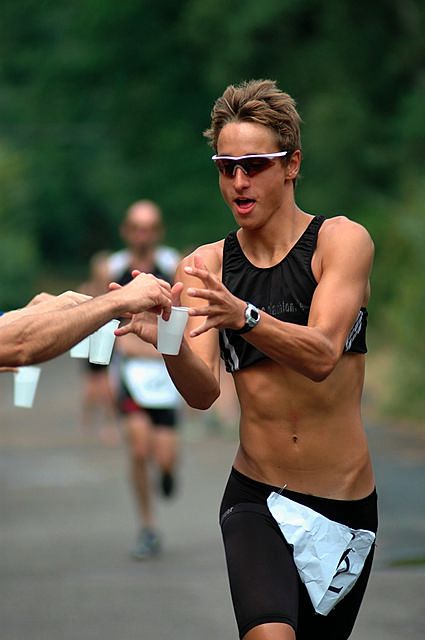
As far back as I can remember its always been very rare to cycle or run with a group of athletes who don’t have some form of colored drink in their water bottles or some spare change for that awesome sugar stop at the petrol station at around the half way mark. It seems that dependency on some sort of fuelling has not become just a necessity, but also the norm and I battle to find an athlete that even has the confidence to exit home without his or her fuel stash for fear of hitting the dreaded wall.

Now before you think here comes another weirdo who advocates keeping it all natural and only train and race on water, which I admit I am ;-), I am also the director of an endurance supplement company which provides fuel :-).

So how is it that on one hand I market endurance supplements yet on the other I am giving you a hard time for using them? It’s quite simple, supplements have a time and a place when they are suitable but they are not something to be completely dependent on. In actual fact the less dependent you are on a supplement the better the effects when you do use it. 

So firstly lets talk simply about how your muscles get their fuel to function. Muscles need energy to contract and this is done utilizing a chemical called ATP (adenosine triphosphate) which is primarily produced by our mitochondria. Carbohydrates, Fats & Proteins all get converted to ATP under a variety of conditions. Carbohydrates are more easily converted when exercise is done at a high intensity while fat is converted at lower levels of intensity. Protein is not a nutrient that is generally used to power muscle activity. Simply its a poor form of fuel and primarily used more for tissue repair.
So lets keep the focus on carbohydrates and fat. 

Glycogen (natural carbohydrate stores) is the quickest accessible fuel in the body and a person who has topped up glycogen stores will be able to provide anything from 90-120 minutes of energy to their system while performing at a high rate of intensity. Fat is a longer access path, but a truly desirable one as a gram of fat has twice the power as a gram of carbohydrate. Have you ever seen fat fall off a grill into a fire, it bursts into flames, this is very similar to what happens in your body, it fires the muscles extremely well when harnessed, it’s an incredibly strong form of fuel and if you are efficient at using your fat stores it will see you a long way. 

Now the next question is how do you tap your fat stores? This is really dependent on the type of athlete you are, what you consume before and during exercise and the rate of intensity you are performing at.
Fat requires oxygen to be properly utilized (aerobic level of activity). If you can picture someone racing at a high intensity and he can barely breathe well then you are not tapping into your fat stores as you are not able to take in sufficient oxygen to be utilized for fat conversion. In this case glycogen will primarily be used. At this high rate of intensity an athlete will on average see 90 minutes of fuel, if he is really in a good condition up to 120 minutes of fuel. Lactic acid build up takes place at the same time that glycogen is primarily used and its really very difficult for the general athlete to sustain an incredibly high rate of intensity for such a long period of time. So what actually happens is a combination of glycogen and fat become your energy sources, as pace will land up varying.

This just demonstrates the importance of pacing yourself during an event in order to ensure you are able to spare as much glycogen as possible by using fat as the primary source of fuel if you are able to. The above is just a general idea of how the concept of fuelling works based on intensity.

Now lets throw fuel or supplements into the picture. If an athlete is performing at an extremely high intensity for longer than a 120 minute period you will want to try and spare the glycogen levels by consuming carbohydrates which are co-utilized for fuel as opposed to glycogen only. A percentage of glycogen is spared but not continual sparing, it will still deplete in time. The carbohydrate intake will just extend its rate of depletion, and the sugar to the brain will give that “feel good” feeling which assists performance perception. A carbohydrate dependent athlete actually has to have that brain feel otherwise he goes downhill :-). 

Fat on the other hand is an unlimited resource, you could easily do 50 marathons on your fat stores alone, even if you are lean its incredibly powerful. There are some issues with using fat though. The first is most people are carbohydrate lovers, and the brain will be magnetized towards sugar intake 🙂 and the second is that he rate at which fat is burned for fuel is too slow to support an extremely hard effort. 

The issue of wanting carbohydrates during exercise can obviously be resolved easily by consuming carbohydrates during exercise, however if you still want to harness your fat it would be in your best interests as an athlete to train your body to utilize fat as a fuel source at a higher rate of intensity which can be done. That way when your glycogen stores are depleted and fat becomes your sole fuel source you will not have to slow your rate of performance down too much in order to stay in a zone where you don’t bonk (hit the wall). 


What are the advantage to becoming a fat efficient athlete:

1. Definitely you will  notice a difference in body composition and lean muscle mass which will bode well for performance as you might be at a very optimum race weight which previously might have been too heavy.

2. Health – Preventing the excessive carbohydrate cravings and endurance athletes truly do fall into this trap of excessive sugar cravings post exercise. This causes pendulum swinging of blood glucose and insulin levels and you do put yourself at risk later on in life for weight issues, cholesterol or diabetes. Pendulum swinging leaves athletes especially endurance athletes eating inconsistently, I see it often. Lindt Chocolates become the order of the day. 

3. Performance – I can tell you this, you will start to perform far more consistently when you are fat efficient. The longer the event the far better you will manage. Your nutrition worries will be quite easily sorted and your focus will be mainly on effort. You will become an expert at managing your training and training nutrition where your energy levels will be far more balanced. When an athlete experiences sudden dips in energy levels its a terrible feeling and leaves you feeling fatigued and weak, however when you are fat efficient these peaks and troughs are so much closer together on the height scale that you don’t go through that personal hell most athletes tend to find themselves in at some point in a long endurance event.

4. The dreaded bonk – What bonk??? seriously if you are fat efficient chances of you hitting that wall are so slim. The transition from glycogen depletion to fat fueling is so transparent you wont feel it as much as an athlete who really has to have his glycogen because he is not fat efficient. 

5. Time – Yes you will have more time :-). Imagine waking up in the morning and having a cup of green tea then going out on a 3 hr run or a 5 hr ride and all u needed was water. No prepping your food intake or bottles etc and having to stress about things that much. 

6. Save Money – Yes, you will save a lot of money. OK, the fact that I own an endurance company means you will buy less of my product as you will use it more sparingly :-). However your health is far more important to me and I mean that sincerely. No need to live on a supplement, use it when you need it. You will also save money on food expense. If you are fat efficient you definitely wont eat as much as you do when you are pigging out on carbs and Lindt chocolates ;-). You eat less frequently so its a savings. I have run the numbers and even though carbs are cheaper, lets face it sugar is cheap you will save. You will also save on medical bills in the long run ;-).

So how do you become more efficient at utilizing fat for energy. Its actually quite simple, BUT I will say this you need to be consistent and disciplined. It also takes time, its not something that changes overnight but with time you will notice differences in your ability to fuel efficiently and you will start to find a zone of awesome balance, without the big roller coaster ups and downs experienced by most endurance athletes.

How do I become a fat fuel efficient athlete?:

1. Nutrition, Nutrition Nutrition 
I cannot stress nutrition enough. It does not help to have a very high carbohydrate diet, especially consuming carbohydrate foods which cause blood glucose spikes. You are doing yourself a complete disservice not just from a performance point of view but also from a health point of view. The way to naturally become fat efficient ie: burn off fat through proper nutrition is to reduce your carbohydrate intake, and when you do consume carbohydrates ensure the timing of consumption but especially the types of carbohydrates that you consume. Ensure they are stability carbs and not those that send you on roller coaster rides, so stick to low GI carbs its far better, only use higher GI carbs post hard workouts, unless you are racing.

I always tell people if you want to use and lose fat you need to learn how to eat fat. Its amazing how many people avoid fat, however fat is good for you don’t be persuaded into thinking the opposite. Paleo is a very big diet path these days and I don’t object to anyone going the low carb high fat route, I actually do myself however with slight modification.

An endurance athlete putting in around 20 hours or more of training a week will find that time for glycogen replenishment on a low carb high fat diet might be a little longer than usual and this is because of frequency of training which will ultimately lead to fatigue and decreased levels of performance. So I generally recommend two types of modifications and either one is actually OK.
My preference is to increase carbohydrate intake dependent on training days, time and intensity based. As an example on a single training session day my carbohydrate intake could be around 75-100 grams of carb intake, but on a double session day it could go as high as 175-200 grams. With experimentation over the past 12 years I have found this to work best for me, however some of my clients require as much as 300-400 grams and some can get away with less. Each person is unique and my advice would be to deplete carbohydrates slowly and then find that point where you feel performance and balance is achieved. The type of carbohydrates consumed and the timing of those types of carbohydrates are also significant.

The second method is what is called periodization so this could be following a low carb high fat diet for 6-8 days, followed by a carbo-loading period of around 3 days. This still allows the body to be fat adapted so that even during exercise your body will be trained to utilize fat very efficiently. The problem with periodization is of course timing, if you get it wrong especially before a race you might land up in trouble and flat. The second thing is that when you are consistent on a diet and you suddenly make a change expect some digestive issues and some discomfort. Some athletes still like it, I tend to avoid it. I rather focus on fat efficient eating based on the kind of training day and I find this to work best.


2. Training 
If you want to burn fat during exercise then you need to train accordingly and this means watch your fuel intake before and during training. The only reason to take on supplements during a training session is to for three things.

1. Very long hard session and you need to keep your glycogen stores topped up as you have another session shortly after.
2. The intensity and duration of the session is very high and without a supplement you will not achieve your session goal.
3. Training your gut (You cannot race on a supplement you have not tried, tested and gotten used to and I always recommend setting aside one or two sessions a week to mimic race nutrition to ensure you have it down packed). 
My advice is quite simple, and this is what I follow which works for me, but time periods will vary for many people depending on how efficient they are and how good their nutrition and fitness levels are. 

  • Up to 2 hrs of even a very hard session there is no need for fuel water is sufficient. However you HAVE to ensure a quick intake of carbohydrates and protein immediately afterwards in order to start the recovery process right away. Secondly you need to then consume a proper recovery meal which I suggest is balanced, complex carbs, protein and fat. A hard 2 hr session will deplete glycogen so you want to recover for the next. If your next session is only a few hours later than you might want to pre-fuel or fuel during this kind of session.
  • Long Slow Sessions -Whether cycle, run or swim, if this session is at a fat burning intensity then DONT fuel it with anything except water, if you are able to. Confidence will come with time, BUT the worst thing you can do on a session like this is take in gels or other spiking carbohydrate products because you are completely mitigating your ability to burn fat and you are most likely just gaining weight as opposed to losing.
    Make these session productive. I have done many rides of 5 hours or more on water alone, even 36-40 km runs BUT I have been doing this for years and my body has become very adapted over time to using fuel as fat at these intensities. People often ask me whats low intensity and that really needs to be perceived effort, or within a comfortable HR zone. As an example, my run pace over 36km’s on water can be 4:40 pace BUT for someone else it might be way to hard and they would need something slower. Some of the elite athletes I deal with can run on fat at 4 minute or just sub 4 minute pace which is incredible, BUT that is a very comfortable pace for them and they are in a fat burn zone.
    Last week I did a 5 hour water ride at 31 km’s/hr average, but just to demonstrate that I did not weaken as I often get told but you battle to finish without proper fuel its not actually true. On the way out on this out an back ride, I was averaging only 27-28 km/h on the way back I had to ride significantly harder to average out that pace but was fine. I was still within my limits. 15 years ago if I tried something like this even for a 2.5 hr ride I probably would have hit the wall so bad someone would have had to come and fetch me ;-).
    So I understand there is a start to this, it is a process but in time you will definitely become a fat efficient athlete.
  • Now lets say its just NOT possible for you to go on water, you are not adapted and not confident. It’s quite simple. Fuel yourself on your session BUT with a difference, fuel with non-glucose spiking products. Something that’s low to medium GI something that keeps your insulin levels low enough to ensure you are still burning fat yet making your brain happy and there are products that allow you to do this. 32Gi Endure I have to mention is exactly designed for that. It releases glucose at a slow enough rate making your brain happy and allowing you to still tap your fat stores. The other thing you can do is only take on water for 2 hrs and then introduce your nutrition so that your body has moved into a fat burning zone before you start consuming and this is done by many elite athletes, until they can increase the time on water.
  • Lastly I don’t suggest water training like this every single week and every single session. Start with a one or two and slowly build up, remember you need to recover you need to also understand what your next workout is and you need to fuel yourself accordingly.

In conclusion I just want to emphasize that at first glance maybe you think this is crazy or not for you, but I can tell you from personal experience and from the many people I deal with on a daily basis, this is certainly the direction to take, not just from a performance but from a health point of view. Remember baby steps get you there it does not happen overnight.
Get stuck into this journey and you will never look back.

Good luck

m 🙂

 

Categories
Nutrition Training

“A good archer is not known by his arrows but by his aim”

Image


To live a life with direction and purpose one has to set goals. It is not good enough to take a couple of steps which will one day ultimately lead to a goal, but every single step and decision you make will need to be a goal itself. Small goals & baby steps ultimately lead to long term achievements.

As a health, nutrition, fitness and wellness coach I frequently get approached by various kinds of people with completely unique goals, seeking my assistance in helping to achieve them. Goals that I often see are weight loss goals, sports or athletic achievements, general health whether for a family or individuals and even some whose goals have completely shifted due to illness or injury where I assist in getting them back on track.

Reviewing a goal that anyone sets requires an element of responsibility and I don’t always agree to assist a person in achieving their goal. I need to review the goal, review current health & lifestyle status and then decide if the goal they are aiming for is realistic.

I can honestly say that more than 90% of the time, the goals are completely unrealistic. Not in the sense that they are not achievable but in the sense that they are just not realistic to do in that space of time. The general person aims extremely high, and if you understand archery you know that aiming to high causes you to miss your target, of course in the same token if you are aiming to low that’s also not good.  If you are aiming to high you are not only setting yourself up for disappointment but potentially ill health depending on what that goal might me.

Let me enlighten you a little more, and then it will make it easier for you to follow ;-).
A person that has spent the last 10years eating unhealthily and completely letting themselves go cannot realistically expect to turn those 10 years around in 6 months it’s just not going to happen. That kind of a goal is something that does not have an end, it’s a lifetime of consistency and smaller weight and health goals on route to ultimately help achieve the long term goal with complete sustainability and good health.

Another example is the amount of people that approach me and say “I want to do Ironman next year”. Well that’s all well and fine, then my next question is “have you ever done a triathlon before?” and the answer in short is no or yes a sprint distance. Wow so in 12 months a person who has never trained for an ultra-triathlon suddenly wants to do an Ironman. No chance, not on my watch. It’s not that I don’t want them to achieve it. It’s more the point that this is an event just like an ultra-marathon that puts a lot of stress on the body, not the event itself but the entire volume and intensity of training leading up to the event. I was once doing an ultra-distance triathlon overseas, and a woman approached me the night after that race while I was standing at the entrance of the athlete’s hotel. She asked what the event was and I explained to her. She then asked me if I thought that such an event was “healthy” surely no she insisted. My answer was pretty clear, in agreeing that for most of the people the event is by no means healthy, however for some it’s absolutely fine.

The two groups of athletes I am speaking about are clearly defined. There are those that have in a utopic world have  been active their entire lives and over many years have built up endurance slowly and properly over a decent period of time, watching their nutrition, health and pretty much leading a healthy lifestyle consistently. An event like this is hard, but their bodies well equipped & serviced to handle the journey.

The second type of athlete is the kind that has gone out on a whim decision to fast-track himself into an endurance event which he mentally might think he is ready for but his body definitely is not yet his mind will drive him through thick and thin to get him to the finish line. This is the high risk individual the one that does the damage, the one that will go beyond his capabilities achieve, achieve some more, but then eventually it all caves in and believe me it actually does, illness injury, emotionally, it’s way too much too soon and life is not a 10 or 20yr period, its life. Most of these kinds of athletes are around 20-40yrs old, the problem is they are not looking to 50, 60 and beyond.

It’s when I analyze these individuals I need to reshape their goals, explain the risks and if they insist I would rather turn them away then play a role in their ultimate demise. I am not interested in taking on an individual for the sake of it, I need to know that the path I am guiding them down is one of health, comfort and achievability.

The same goes for a person who is a carbohydrate junky and in one day he switches to a LCFH (Low Carb High Fat) diet. Good luck, thousands succeed, but it was not a success overnight it was a process.

Goal setting really requires thought and wisdom, not irrationality and compulsion. It’s an element of life that has no quick fixes. It’s a process that guides our short term decisions in long term achievements and it’s a crucial driver for happiness, fulfillment and accomplishment.

Remember to aim that arrow well, don’t just look at the target but assess the wind direction and speed, stay steady in the pull and release with intended purpose.

All the best

M

Categories
Health Nutrition Training

Listen to your messages……………..

Man-with-hand-to-ear-006

I am a very military oriented personality, just the kind of life I have lead since birth. A naval officer father, nutrition strict mother and then my own life experiences which followed very much similar routes. My clients know when I take them on there is black and white, tolerance levels are low and I demand results.

I travel quite a bit and come into contact with all types of cultures and personalities on many different levels. South Africans generally I see as quite a soft sort of courteous kind of nation, mainly rule followers and breaking them will definitely command some sort of reaction but generally in a very subtle kind of a way to start. In Israel where I currently am it’s a completely different ball game, you can be sure people will be telling you what to do on a daily basis, because they always know better, yet the rules are consistently broken by the big mouths.

It often gets my back up and I am often in a defensive mode which in military terms means strike them down before they even get close to doing or saying something, that way you won’t have to defend. It’s an aggressive approach but generally one that has won many warsJ.

So my resistant personality wherever I am is constantly ready to go to war, don’t tell me what to do or else, because I know my boundaries, I know what I am doing and if I need your advice I will ask for it. Most people tend to similar so I am not unique ;-).

Yesterday I was out on a training ride, I was around 80minutes into the ride, in the country side and just started a climb out of the valley, music in my ears and really just soaking up the view when all of a sudden a car slows down next to me the window open and I can see muttering and hands waving. The sound completely drowned out by some Armin van Burin ASOT in my ears.

My instinctive thoughts was to tell her to shut the hell up and leave me to my training session, I know the rules of the road and I am within my right to ride here. Instead I just ignored her completely she tried several times to shout at me, but Armin kept me calm. Eventually she just drove off and I carried on with my ride.

This is not an unusual situation for me, when running, swimming or cycling, I get told why you riding here, why you running without a water bottle, where is your hat. I know sometimes they mean good but geeeez most of these people have never trained in their lives and they talking to someone that lives it. The frustration of being told what to do just wants to put me into war, sometimes I long for it hoping it will result in vented anger and then some more peace of mind.

Just the other day I was doing a swim session, I did my warm ups and some drills. By the way in South Africa 2 swimmers to a lane is like max, unless you are group training, however in Israel you have to swim counterclockwise, and if you need to overtake then do it with caution because 3, 4 or 5 people can get in your lane without warning, because it’s their right and they know better. I have had many head bashings here and the fast lane means nothing. Even though it’s labelled for fast swimmers you get back floaters, because they consider themselves fast. Anyway back to my story on my swim session. So I get into nice rhythm and start with some clockwork intervals. I was focused on my set, however at around the 4th interval I noticed something strange. Each time I swam passed a woman in the other lane “slow lane” she splashed water on my face as I turned to breathe. I thought ok she is doing some sort of exercise creating splashing, giving her the benefit of the doubt. However as my session continued I realized this was intentional splashing she kept shoving water in my face every time I did a pass. I just ignored her put my head down and finished my set. While taking a breather at the end of the pool I waited for her to reach my side. When she arrived, I asked her why she was splashing me. Of course sniper rifle in my hands ready to take aim and blow her away. She said to me I was splashing her eyes when I swam????? WTF, you in a pool lady wear some goggles and learn to swim. You afraid of water I asked. She said no but my splashes were irritating her and I must get out the pool, and she threw more water at me??

I went a little mad, I unleashed my M23A4 on her, it was locked loaded and I sent a couple of waves in her direction ensuring the water bullets hit her right between the eyes. Of course she carried on throwing water at me. I took a step back and thought no ways, is this what I am resorting to a water fight between 40 and 50yr olds in a pool no ways I was like in shock, like kids having a tantrum in a pool.

I just motioned the rest of my unit “The Lifeguard” and said tell her to stop or get out I need to train. He did just that, war over. I felt an empty victory, thinking could I have handled this slightly differently, but then I thought no screw her, I was within my right.

Anyway back to my training ride. I kept wondering about the car stopping next to me screaming and shouting at me and here I had made judgment and executed her. Something just did not seem right, but I kept on going. Eventually it hit me, I reach around to my rear bottle cage and there it was, the reason for my insubordination. My 600ml water bottle had been flung out of the cage. Leaving me with only 600ml’s of water in 33degrees of heat on a long ride. I should have maybe listened to this driver, however I was stubborn, in attack mode waiting just waiting to unleash my ammunition once again. How mistaken could I have been this time as it was a call to help.

I kept riding conserving my water, and thinking over and over about what had just happened. How stubborn I was and how I had made judgment without listening and giving someone the benefit of the doubt. Eventually at the turn around point I made my way back to that climb out the valley and tried to climb it again from the halfway point and reenact what happened to see if I could track my bottle. There it was lying in the ditch just where that lady was attempting to inform me of the incident. In the end I listened to my message, however the lesson learned was I needed to listen a lot earlier.

I guess you are wondering why I am writing about this?

The truth is most of us are very much the same. Every single day, messages come our way and each and every single one has a meaning. The thing is how many of us actually listen to these messages. We don’t we ignore them because we know better.

I especially see this when it comes to health and wellness. When injured we don’t listen we always know better we focus on the race, on the end goal and absolutely nothing will stop us from getting to the start line. When sick, we brush it off as a head cold, we can’t stop training we cannot lose fitness we just push through it. The overweight will keep eating their pizzas because a large stomach or a double chin is not a strong enough message to make them change their ways.

So which messages do make us change? It’s the messages that come with severity or shock when it’s a little too late to listen and we need to face the consequences of our actions.

When an injury becomes unbearable and crippling, when an illness becomes severe and bed ridding, and when weight issues lead to organ, heart problems or blood pressure and cholesterol worries. Why is human nature generally so stubborn as to know better when it comes to interpreting messages?

A wise man once said ” The most basic of all human needs is the need to understand and be understood. The best way to understand people is to listen to them”, and another

“Big egos have little ears”

The basis of this blog was to instill some thoughts into your minds and get you to understand the importance of listening. Listen to your messages whether from the mouth of another or from your body signaling your brain. You cannot go wrong you can only become wiser stronger, fitter and healthier.

Keep Going……………………..

all the best

m

Categories
Health Training

Acceptance is the First Port of Call

Image


I often get inundated with requests on how to deal with illness or injury, It is something that every person will eventually have to face whether an athlete or not. Even the healthy get sick :-).

One of the most noticeable things I always see, is that whether injured or ill, especially when it is an athlete they are living in complete denial. They are focusing on the next workout, a day or two away, even if bed ridden and the chances of that are close to zero. This is what I call the stage of complete denial, the person refuses to acknowledge they are ill or injured.

“How can it be, I am in the best condition of my life, its not possible”. When there is refusal to accept & acknowledge illness or injury it makes the road to recovery that much longer. The person wont accept and deal with the situation to find a solution to overcome it, instead they wallow in their own misery thinking about lost training sessions, or missed races and it completely demotivates them causing far more setback than wanted.

Recently a colleague of mine was extremely ill, I told him he needed at least 7-10 days rest & even then he might not be ready to start training again. He was so impatient that after 5 days he was back on his bike, needless to say this resulted in 6 weeks of reoccurring infections & he is far worse off now. He caused a complete loss of quick & proper recovery due to stubborn inclination.

I myself have been through severe illness and in a positive light I think the heavens put me in these situations in order to use my own experiences to be able to help others :-).

At the beginning of this year, after an awesome start to the first half of the racing season, I was in top racing condition.
A week out from a championship race with eyes set firmly on a podium spot, I fell ill. Thinking it was flu at first I took complete rest.
After a week I was still not getting any better, and decided this is not a normal feeling & decided to have some blood tests run. Behold my liver function was elevated which for me is usually a sign of viral infection. Unfortunately I had to miss the race that I had prepared so hard for.
However my complete focus had shifted, I had to accept what I was going through and get to the bottom of what was causing this. It took about 8 weeks before a choice of several doctors managed to figure out what was going on. A parasite infection!

Never dreamed of that before but this was the case. The immunologists involved wanted to pulse me with a variety of antibiotics every month for 8 months, which to me had zero credibility, and I sought out other opinions.
Generally the human immune system is capable of keeping these little bastards under control, however in my case there was no control at all.

I was recommended an incredibly good sports doctor who was a thorough diagnostician.The thing I liked about her was that she never knocked ideas or those of the immunologists she actually tended to agree that they were possibly onto something. However she would run additional testing before coming to any conclusions.

Examinations were very granular from ultrasounds & blood tests, to ECG’s & lung function testing. Finally the puzzle started to piece together. 

At age 41 I was diagnosed with chronic asthma, a lung function of only 50%. I was dumbfounded questioning the authenticity of her diagnosis. My reasoning was how can an athlete who trains, races & also gets to podium every now & then suffer from chronic asthma. Her answer to me was quite simple. “You have been training & racing by breathing through a straw your entire life, you  never knew any better, you thought this was normal”. 

It turned out the parasite infection was very real, and the reason my immune system was not dealing with the infection was due to the fact that it was completely run down because of my asthmatic condition. I was always putting in a major effort during training & racing without realizing it at all, and this was the trigger to immunity suppression.

16 weeks in and 2 courses of antibiotics down, with 7 to go, asthma treatment, an incredibly strict eating regime & proper rest, finally I could start some mild exercise. I began slowly and very gradually. Within 3 weeks my running was up to around 20-30km’s a week, and in between only focused on some core and strength training. A far cry from where I was 4 months earlier. 

A 3rd course of antibiotics, and more improvement, running increased again now to around 50-70km’s a week & started swimming again. What I noticed now was my lungs were not tiring, it was the body first. I guess in a way its amazing that once you can utilize your complete lung capacity you are in a totally different space. Month 6, and swimming & running is now back to where I was, however with a difference, my speeds & times are faster than I was at peak fitness 6 months earlier with less effort. 

Its got to a stage where I can honestly look back now and say, the rest was completely worth it. It enabled me to focus on the issue at hand and not side track myself with thoughts of misery & denial of not being able to train. I appreciate the fact that the body just shut down and said time out friend, you need to recover. 

I always tell my clients, you can only come back stronger from illness & injury if you rest & recover properly. For me a huge black hole in my life has finally been filled with an answer as to why I tended to get run down, even though I am so completely focused on nutrition & health. For me its a lifestyle and in my case it was probably even a harder pill to swallow. But acceptance was the key to dealing with it properly.

The reason I am using myself as an example is to really emphasize the fact that many people are out there, not feeling 100% yet they often think it was a bad nights sleep, or they ate something terrible or they have a slight cold. But do they really completely understand exactly what is going on. Most of my clientele never really understand what its like to feel on top of the world. Their definition is only the best day they have ever experienced, but whose to say that experience can not be a better one. Below are some thoughts on how you should understand your health status and know how to deal with it when it takes a turn for the worst.

Do you understand your health intimately. 
It is important to have a snapshot of your health, a starting point from where you are working. This means knowing if your blood is 100% normal, or are you lacking any vitamins, minerals etc. Do you know your cholesterol, blood sugar levels, are your heart and lungs functioning correctly. Do you know if your body is in a condition where you can sleep at night and have peace of mind that everything is in good working order. If not then you need to have a medical, and get yourself knowledgeable with your own physiological state in order to ensure your journey is a transparent one. The interesting thing is I have a thorough medical examination every year before the onset of racing season, but I have never ever had a lung function test done. It shows how thorough a medical actually needs to be.

Listen to your body
I know many people that when ill, injured or fatigued they just don’t listen to their body. This is the first thing you need to accept. You not feeling 100%, you wont be able to give a quality workout, then why do it. Remember training is what breaks us down, recovery is what builds us up and makes us stronger. You wont lose any fitness, trust me I know I was out for many months, a few days to weeks is a weak excuse in comparison :-). As a rule of thumb, I take my Rest Heart Rate when I get up in the mornings, if its slightly elevated and by that I mean around 10%, I will not train. It can mean recovery needed due to fatigue, it can also be a sign as to the onset of illness.

Fear of the Doctor
There are a majority of people out there that fear doctors. They wait until the last possible moment, when infection or injury is at a pinnacle. This only means one thing, longer recovery time. If you are ill or injured don’t wait for it to get worse, pay the relevant medical specialist a visit as soon as possible, before it gets to latter stages when it will be too late and you will truly be setback.

The Fear Factor
The two main fear factors of illness or injury is loss of fitness & weight gain. This is very common among athletes specifically. Well the good news is neither should be a worry.
When a person is ill or injured it gives them the opportunity to actually focus on their nutrition, whereas previously they would not. Many just figure if they are putting in so many hours of training, they can eat pretty much what they feel like weight is not an issue. However stop training and you cannot just keep eating what you want. This is where you truly have an opportunity to train your gut instead of your muscles. Its an area that requires discipline, but is even more important than training and is often an area that lacks focus. The truth of the matter is that when a person is ill or injured it should be associated with weight loss not weight gain, however many people eat emotionally due to the stage of denial they are living in and over do it. Monitor your intake, plan your meals, get an expert to help you if you require it. Certain illnesses & injuries can be more quickly eradicated with various nutrient intake. Remember calorie consumption will need to be adjusted as you are now burning less.
As for fitness, I mentioned earlier you will come back stronger and that is a fact don’t worry about that at all.

Knowledge is Power
When ill or injured, you need to understand everything there is to know about the illness or injury. You know your body better than anyone. You will understand if a treatment is working or not, and how you are feeling at any given time. A doctor is a human being and they do make mistakes especially when it comes to diagnosing correctly. The more information you can give a medical specialist the better it will enable him to make a more informed decision to get to the bottom of what is causing your ailment. Do the research speak to people, use the internet.

Staying Motivated
This can be very difficult especially when you have missed your big race or you know that you will not be prepared for something down the line because illness or injury is too close to the event. I completely understand how a one feels under these circumstances. However in life our goals are forever changing and shifting. We also don’t just have one goal we have many, and on route to our bigger goals are smaller ones.

Once you understand the extent of the illness or injury and the time period you are going to be out of action for, you should set aside time to plan your future goals. This can be exciting and help motivate you even more especially since it gives you something else to look forward to. Make sure the goal is realistic and achievable you don’t want to set yourself up for disappointment. 

Finally I just want to stress that we are all human, life often throws curve balls at us which are unexpected. How we deal with them will ultimately determine the outcome. Failing to deal with them will leave you with an unknown which is not a space that you want to be in.

Everything we experience in life on a physical level does happen for a reason, its up to us to listen to those messages our body is giving us and not ignore them. Get rid of that stubbornness for a short period of time, it will be well worth it in the long run.


Categories
Training

“Train, don’t strain.” – Arthur Lydiard – One of the world’s greatest athletic coaches

I am sure most of you have experienced the exhilaration of constant improvement through regular training. Going from strength to strength, always feeling good after a workout, and then all of a sudden the dreaded feeling of despair kicks in and we feel like we are starting to go backwards. Suddenly we feel more fatigued, ill, loss of strength or speed and we are not enjoying our workouts like we used to. Something feels wrong but we tend to ignore it as if its just a bad patch.

We all have ideas as to what we think is causing the problem, lack of sleep, bad nutrition or stress and we make major modifications without any results. The truth of the matter is that most are looking for any external reason as to why they are suddenly feeling this lack of strength or stamina, and although it’s staring them right in the face, most tend to ignore the symptoms and keep hitting the exercise regime to make sure they do not go insane.

You see us humans are quite emotional, our bodies are begging us to rest, to recover to change our routine, but our endorphin pumped minds are saying, I can’t stop, I will put on weight, I will lose strength or fitness, I must continue or all the effort I put in would have gone to waste.

Sound familiar?
Of course because we are all prone to our stubborn sense of what we think is right. But now, listen to this and you might actually change your mind set. Most athletes know that resting sufficiently after periods of exercise is crucial to performing at a top level, but many still over train and when they take a day off they feel very guilty.
What is important to know is that the body repairs and strengthens itself during rest periods, and continuous training will weaken you.

Rest days from training are so key to achieving your performance goals. When an athlete goes hard for long periods of time and there is no sufficient recovery in between, over-training syndrome will kick in, and the following symptoms will be a sure sign that you have reached that point:
– Lack of energy
– Mild stiffness
– Decrease in performance
– Insomnia
– Headaches
– Irritability
– Loss of enthusiasm for training
– Drop in quality workouts
– Increased risk of injury or injury

If any of these sound familiar then I would insist on taking some time off exercise and re-thinking your training regime. When you train you want to feel good during and after the workout and become passionate for the next. It should not become my body does not feel like it, but I am going to train anyway routine. This is will surely lead to regression.

If you suspect that you are over-training  then stop immediately, allow the body to recover for a few days, take in plenty of liquid and modify your diet if necessary. Don’t let your emotions get the better of your body’s needs.